
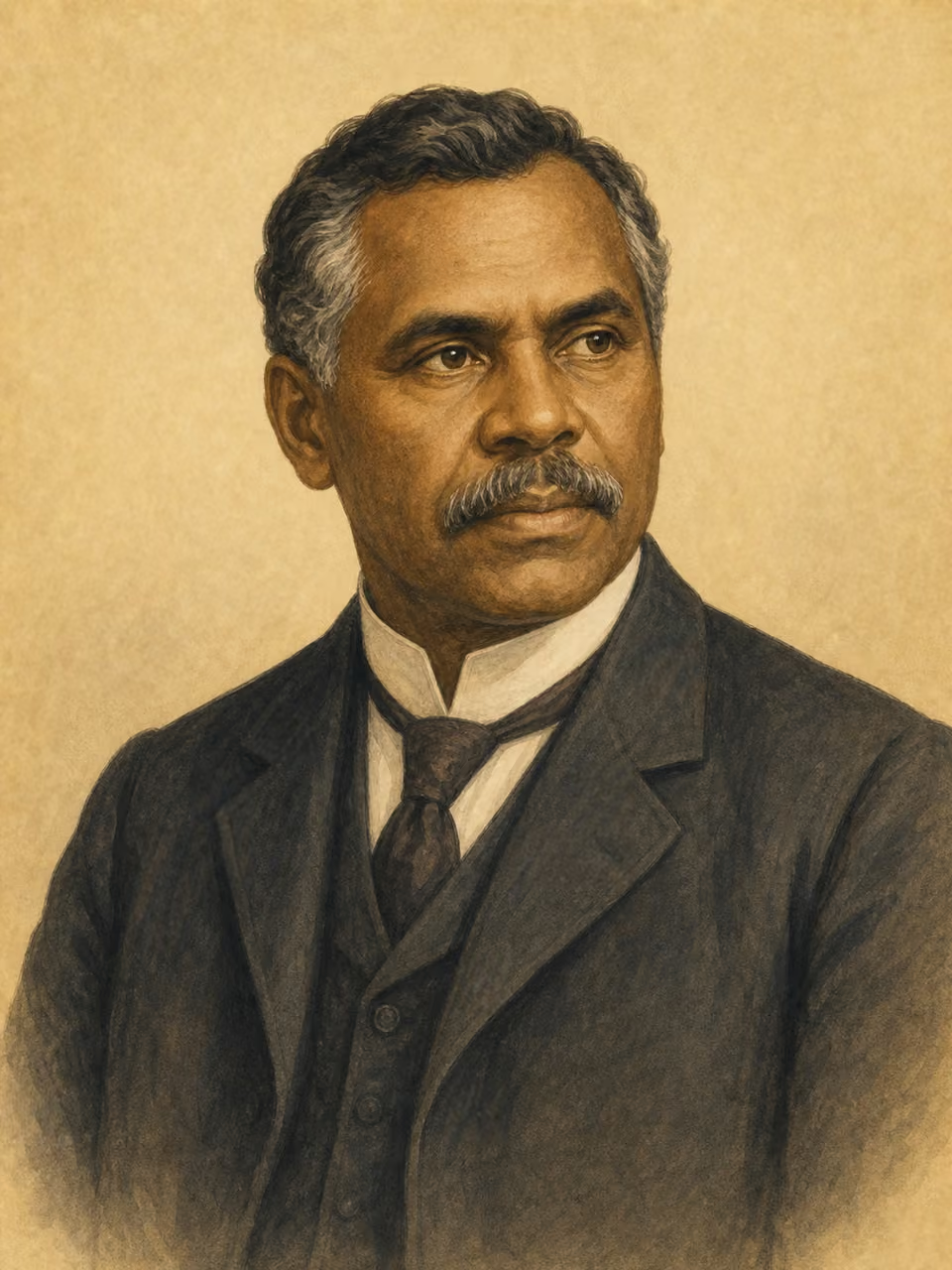
David Unaipon

Portrait: AI-generated imagined likeness

David Unaipon

Inventor · Writer

Years
1872–1967
Birthplace
Australia
Birth polity
Colony of South Australia
Era
Modern
Field
Invention
Occupations
Inventor · Writer

Teaching himself mechanics and letters within the mission world of South Australia, Unaipon moved between invention, preaching, lectures, and writing rather than staying inside one profession. His work on devices such as shearing mechanisms and his public presentation of Aboriginal stories both matter, and the fact that he often lacked capital or patent protection shows how unevenly colonial society rewarded Indigenous knowledge.

View in catalog

Historical context

Places

  • Raukkan

    Birth

Works & achievements

  • Native Legends

    1929

    Book

  • Shearing handpiece

    Invention

Origins

Origins map
Birth country
Birth country
Australia

Map: Natural Earth (PD)

Biography

Early life

David Unaipon was born in 1872 at the Point McLeay Mission in South Australia in a Ngarrindjeri family. Without access to higher formal education, he taught himself through reading, observation, and practical curiosity, developing a strong interest in mechanics as well as in preaching and public speaking.

Achievements

He became known for inventive ideas related to mechanical devices, including shearing technology, and for a broader habit of technical experimentation. Unaipon also worked as a preacher, lecturer, and writer who recorded and presented Aboriginal stories and spoke publicly about the conditions facing Indigenous people in Australia.

Character & anecdotes

Many of his inventions lacked the financial backing or legal protection needed to secure lasting rewards for him, a pattern that reflected the unequal structures around Aboriginal innovators. Even so, his public presence made Indigenous intellectual life more visible within a society that often tried to ignore or marginalize it.

Historical Impact

Unaipon remains significant not only in Australian invention history but in the history of Aboriginal intellectual life and public speech. His image on the fifty-dollar note marks official recognition, yet his deeper historical importance lies in showing how technology, authorship, religion, and advocacy could be joined in one Indigenous career despite structural exclusion.