
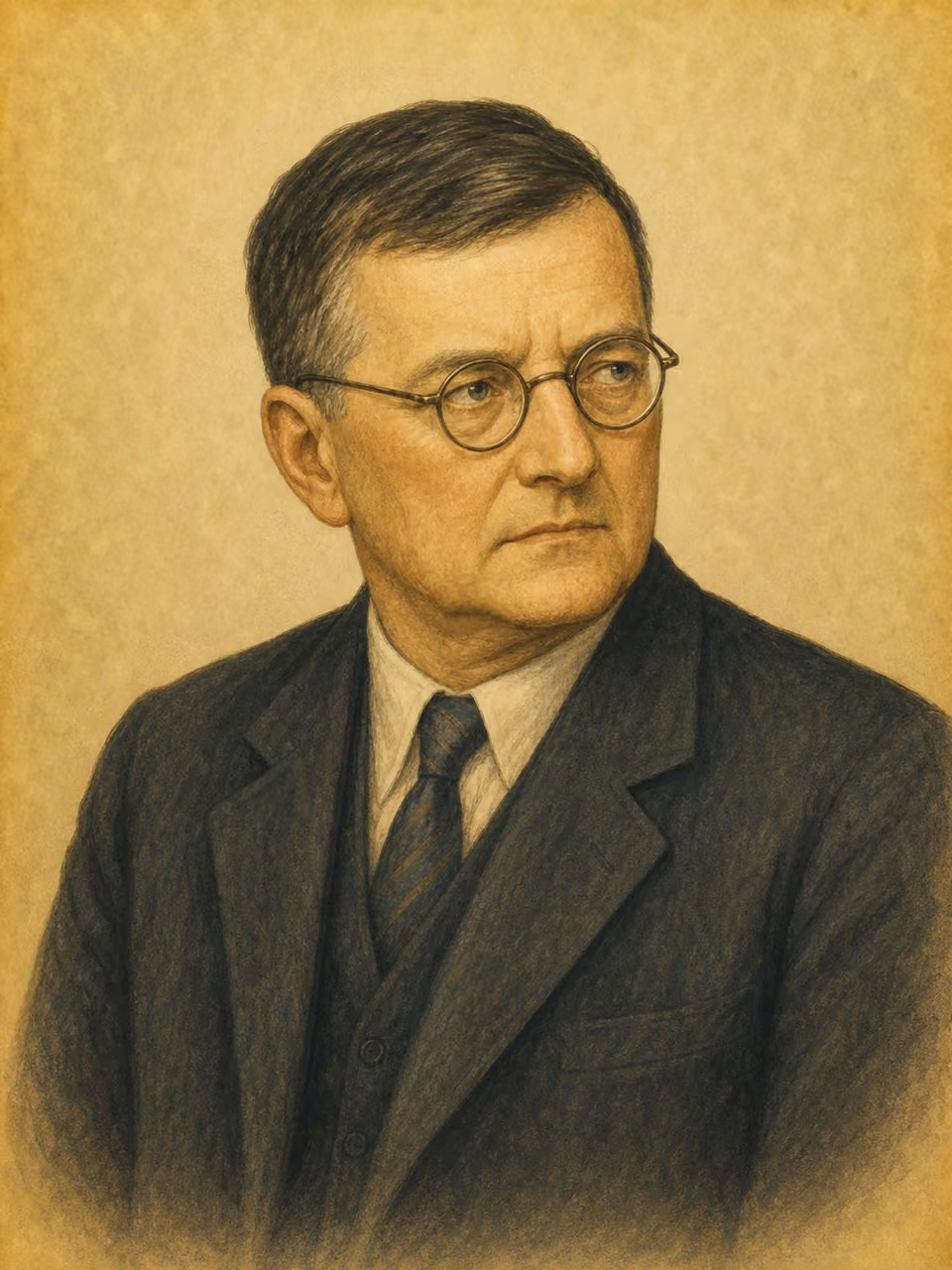
Dmitri Shostakovich

Portrait: AI-generated imagined likeness

Dmitri Shostakovich

Composer

Years
1906–1975
Birthplace
Russia
Birth polity
Russian Empire
Era
Contemporary
Field
Music
Occupations
Composer

Composer representing the Soviet Union. He left behind symphonies and chamber music amidst the tension between national cultural control and artistic expression, and is a symbol of 20th century music. It connects local history and world history and provides clues for deciphering changes during the same era.

View in catalog

Historical context

Places

  • Saint Petersburg

    Birth

  • Leningrad

    Work

Works & achievements

  • Symphony No. 5

    1937

    Music

  • Symphony No. 7 Leningrad

    1941

    Music

Events

  • Soviet cultural policy

    1936–1975

    Political event · Subject

Origins

Origins map
Birth country
Birth country
Russia

Map: Natural Earth (PD)

Biography

Early life

Born in St. Petersburg, he received his musical education in the post-revolutionary Soviet Union. Although his talent was recognized at a young age, under Stalin's regime, his statements as an artist were always intertwined with politics.

Achievements

He gained international acclaim for his Symphonies No. 5 and 7, ``Leningrad.'' While formally maintaining a classical structure, the music is imbued with anxiety, irony, and tragedy.

Character & anecdotes

After the opera received official criticism in 1936, Shostakovich reportedly lived in fear of arrest. The memories of that pressure have been overlaid in the echoes of his works.

Historical Impact

When we study Shostakovich, we understand that modern art was not only created through free expression, but also under the conditions of state power, war, and censorship. He is an important figure in 20th century cultural history. When you look at the people's activities and works together, it becomes easier to understand the terms in textbooks as concrete historical trends.