
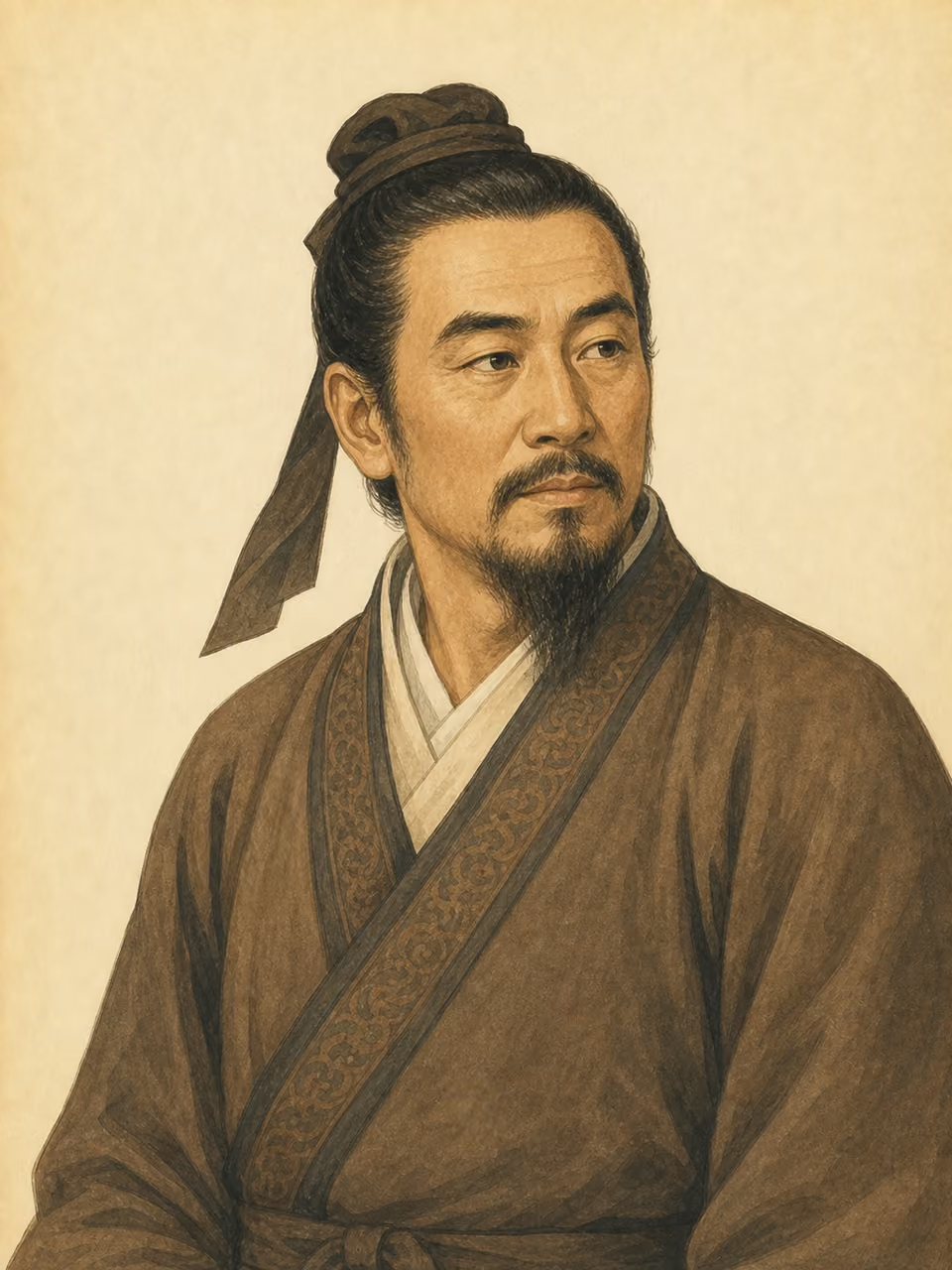
Dong Zhongshu

Portrait: AI-generated imagined likeness

Dong Zhongshu

Philosopher · Writer · Politician

Years
179 BC–104 BC
Birthplace
China
Birth polity
Western Han dynasty
Era
Ancient
Field
Philosophy
Occupations
Philosopher · Writer · Politician

A thinker and politician from the former Han Dynasty. He developed a theory that placed Confucianism at the center of national governance, and influenced the formalization of government during the period of Emperor Wu. He is a person who thinks about the ancient Chinese nation and Confucianism.

View in catalog

Historical context

Places

  • Chang'an

    Work

Works & achievements

  • Luxuriant Dew of the Spring and Autumn Annals

    c. 140 BC–c. 104 BC

    Book

Events

  • Elevation of Confucian learning in Han statecraft

    c. 136 BC–c. 124 BC

    Political event · Participant

Origins

Origins map
Birth country
Birth country
China

Map: Natural Earth (PD)

Biography

Early life

Born during the Western Han Dynasty, he studied Spring and Autumn Gongyang studies. In the Han Dynasty, which had passed under the rule of the Fa family from the Qin Dynasty, a major challenge was how to legitimize imperial power and how to integrate the vast empire.

Achievements

Using the theory of correlation between heaven and man and the Confucian order, he linked imperial politics to morality and cosmic order. It strengthened the direction of placing Confucianism at the center of official training and political ideology, and influenced later Chinese dynasties.

Character & anecdotes

Dong Zhongshu's ideas were not based on the teachings of Confucius, but were restructured to suit the political issues of the Han Empire. It shows the process by which ideas are incorporated into the national system.

Historical Impact

By studying Dong Zhongshu, we can understand the process by which Confucianism transformed from a mere ethical philosophy to a state ideology that supported bureaucracy, education, and imperial rule. The long-term foundations of East Asian political culture can be considered. You can also see the connection between ideas and institutions.