
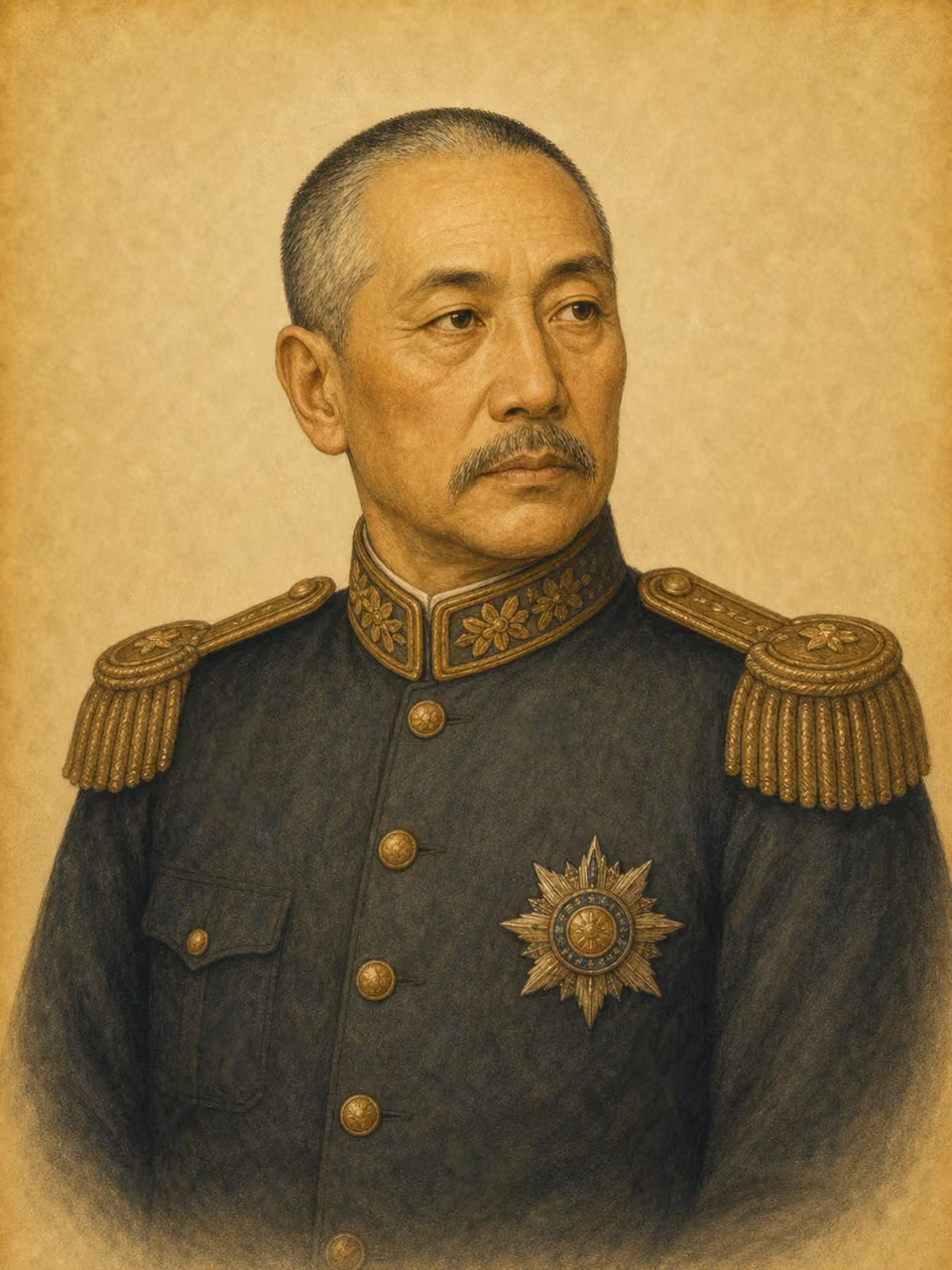
Duan Qirui

Portrait: AI-generated imagined likeness

Duan Qirui

Politician · Military leader

Years
1865–1936
Birthplace
China
Birth polity
Qing dynasty
Era
Modern
Field
Politics
Occupations
Politician · Military leader

A politician and military officer in the early days of the Republic of China, and an influential member of the Beiyang military clique. He is a figure who shows the situation in China, where the central government was influenced by military forces after the Xinhai Revolution. It connects local history and world history and provides clues for deciphering changes during the same era.

View in catalog

Historical context

Places

  • Hefei

    Birth

  • Beijing

    Work

Events

  • Beiyang warlord politics

    1912–1926

    Political event · Leader

  • Anhui clique

    1916–1920

    Movement · Leader

Origins

Origins map
Birth country
Birth country
China

Map: Natural Earth (PD)

Biography

Early life

Born in Anhui Province, he received military education in the late Qing Dynasty. He belonged to Yuan Shikai's Beiyang Army and was promoted as a modern military officer, and was involved in political changes from the end of the Qing Dynasty to the beginning of the Republic of China.

Achievements

He served as Prime Minister of the Republic of China, and as a leader of the Anhui faction, he influenced the politics of the Beijing government. He had a great influence on foreign policy and loan issues during World War I.

Character & anecdotes

During the era of Duan Qirui, the title of the Beijing government was that of a modern state, but actual politics was driven by power relations between warlords. This shows the characteristics of the early Republic of China, where the system and actual power were misaligned.

Historical Impact

If you study Duan Qirui, you will understand that China did not immediately become a stable republic after the Xinhai Revolution, but suffered from warlord politics and great power relations. It is an important point of contact in modern Chinese history. When you look at the people's activities and works together, it becomes easier to understand the terms in textbooks as concrete historical trends.