
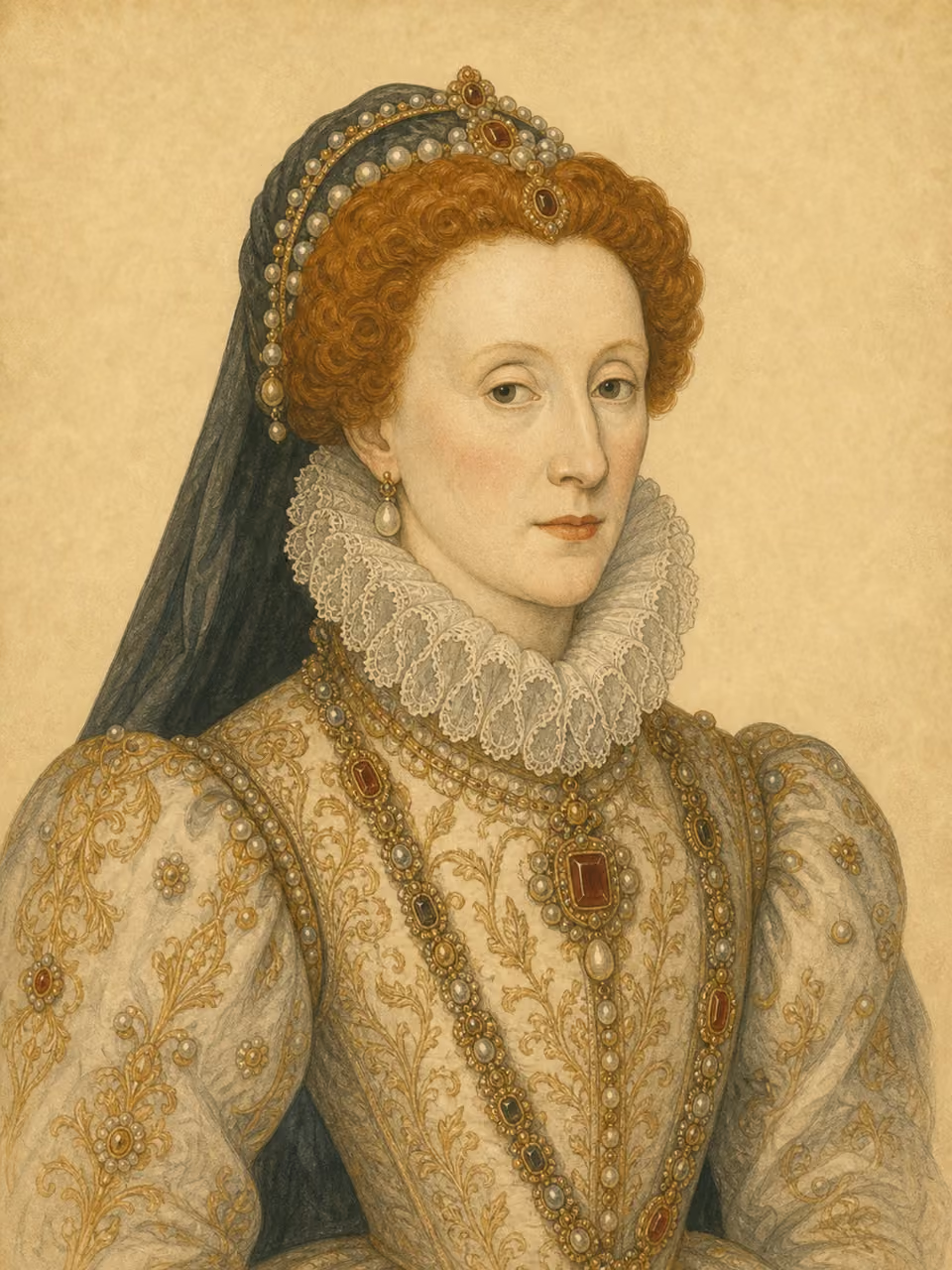
Elizabeth I

Portrait: AI-generated imagined likeness

Elizabeth I

Monarch · Politician

Years
1533–1603
Birthplace
United Kingdom
Birth polity
Kingdom of England
Era
Early modern
Field
Politics
Occupations
Monarch · Politician

When Elizabeth I took the throne in 1558 after years of succession danger, she used religious settlement, court management, and careful public performance to stabilize a vulnerable monarchy. Responses to the Armada crisis and the long theatre of marriage negotiations turned moments of uncertainty into defining episodes of rule.

View in catalog

Historical context

Places

  • Palace of Placentia

    Birth

  • London

    Residence

Events

  • Elizabethan Religious Settlement

    1559

    Political event · Leader

  • Spanish Armada

    1588

    War · Leader

Origins

Origins map
Birth country
Birth country
United Kingdom

Map: Natural Earth (PD)

Biography

Early life

Elizabeth was born in 1533 as the daughter of Henry VIII and Anne Boleyn. Her early life was shaped by succession crises, courtly danger, and a strong humanist education that equipped her with languages, self-control, and political intelligence before she came to the throne in 1558.

Achievements

Once queen, she oversaw a religious settlement that gave the English church a more durable shape and tried to manage division without surrendering royal authority. Her reign also became identified with the defeat of the Spanish Armada, expanding overseas ambition, and the flowering of courtly and theatrical culture.

Character & anecdotes

Elizabeth cultivated the image of the Virgin Queen with great skill, turning unmarried status into political theater as well as diplomatic leverage. Famous scenes such as the Tilbury speech endure because they condensed performance, monarchy, and national anxiety into a single public image.

Historical Impact

Her reign became a template in English memory for Protestant stability, dynastic longevity, and cultural brilliance, helping frame the later story of an Elizabethan age. Yet that prestige also rests beside confessional coercion and the early growth of colonial ambition, so her historical importance cannot be reduced to a comforting national legend.