
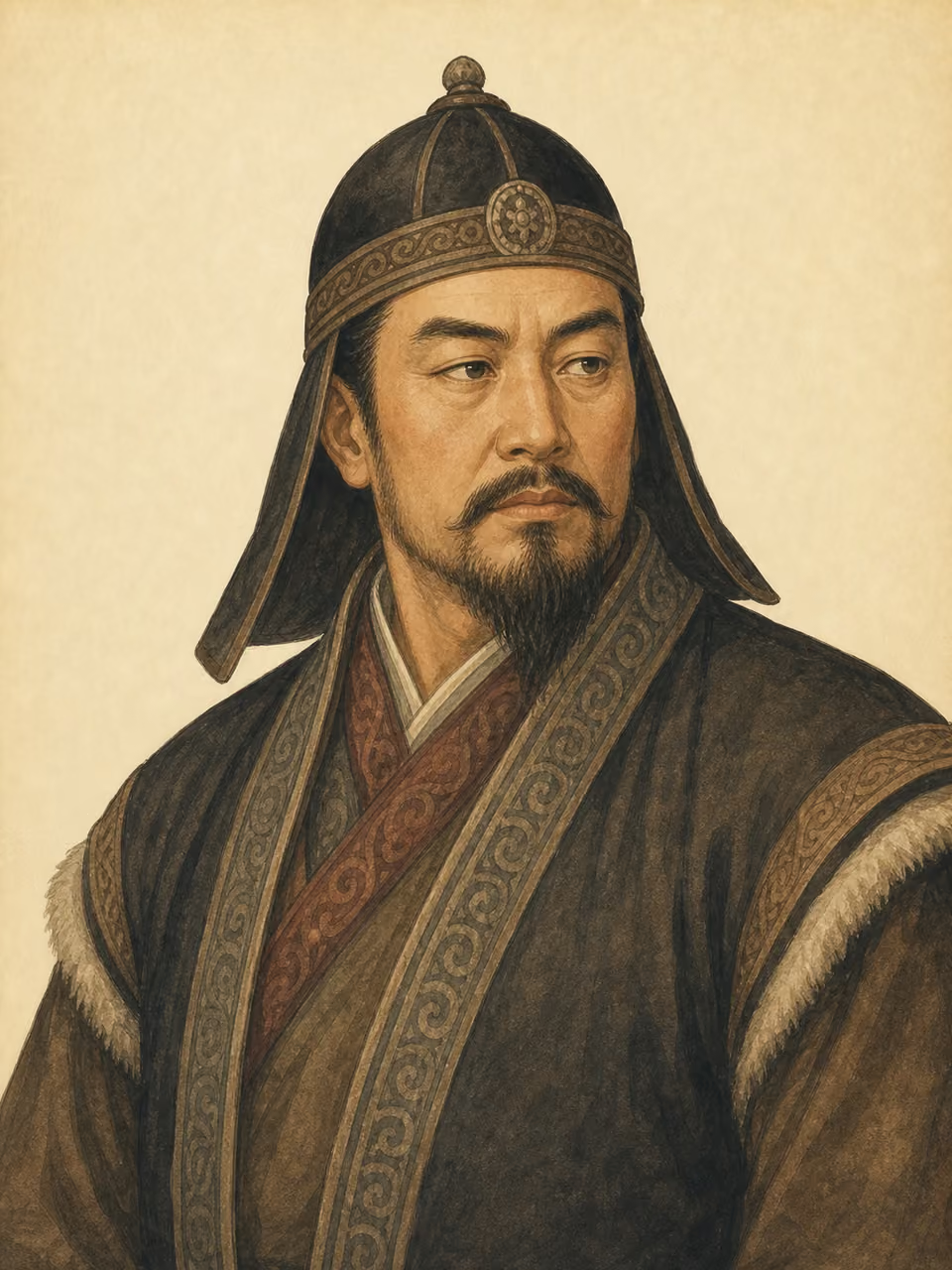
Emperor Taiwu of Northern Wei

Portrait: AI-generated imagined likeness

Emperor Taiwu of Northern Wei

Emperor · Monarch

Years
408–452
Birthplace
China
Birth polity
Northern Wei
Era
Ancient
Field
Politics
Occupations
Emperor · Monarch

Emperor of Northern Wei. He promoted the unification of northern China and expanded the control of the Xianbei dynasty. It is also known for its oppression of Buddhism. He is a person who thinks about state formation and religious policy during the Nanbokucho period.

View in catalog

Historical context

Places

  • Pingcheng

    Work

Events

  • Northern Wei expansion and unification of North China

    424–439

    War · Leader

  • Emperor Taiwu's suppression of Buddhism

    446

    Political event · Leader

Origins

Origins map
Birth country
Birth country
China

Map: Natural Earth (PD)

Biography

Early life

He was born into the Northern Wei imperial family and ascended to the throne at a young age. During the era when the Sixteen Kingdoms of the Five Hus turned into the Northern and Southern Dynasties, nomadic and Han Chinese forces intermingled to form a nation in northern China.

Achievements

He fought against Rouran, Beiyan, Beiliang, and others, and achieved the unification of northern China in 439. While promoting strong military power and centralization, it also suppressed Buddhism in 446, greatly shaking the relationship between the state and religion.

Character & anecdotes

Emperor Taiwu's policy shows that Northern Wei was not just a nomadic power, but tried to establish itself as a Chinese dynasty. At the same time, this shows that religion can also become a target of concern for state power.

Historical Impact

When we learn about Emperor Taiwu, we learn that China during the Northern and Southern Dynasties was reorganized, facing issues of ethnic migration, military unification, religious policy, and Hanization. He is an important figure in the history of the Northern Dynasty following the unification of Sui and Tang. The character of the Northern Dynasty state can also be traced in detail.