
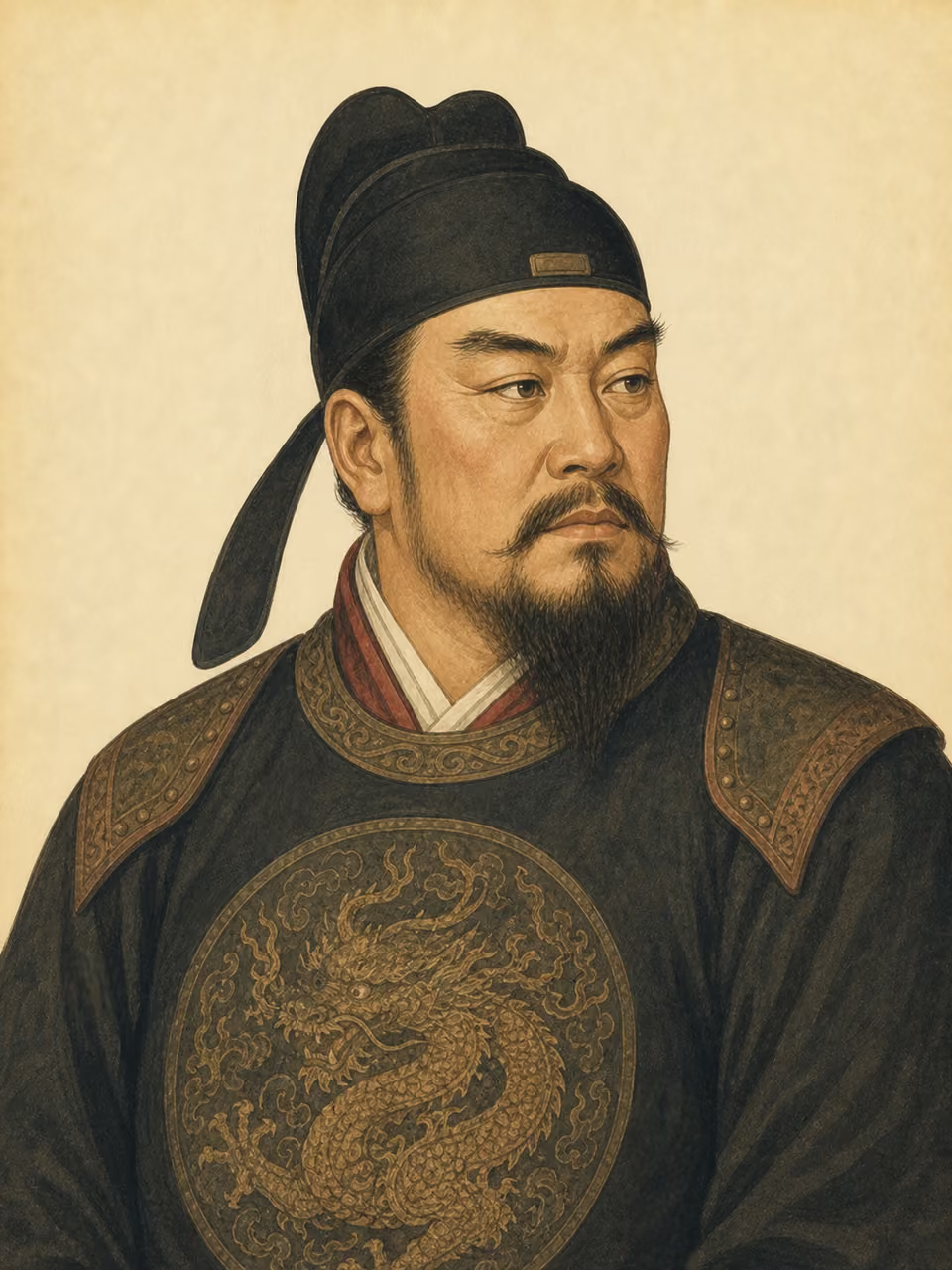
Emperor Taizu of Later Liang

Portrait: AI-generated imagined likeness

Emperor Taizu of Later Liang

Emperor · Monarch · Military leader

Years
852–912
Birthplace
China
Birth polity
Tang dynasty
Era
Medieval
Field
Politics
Occupations
Emperor · Monarch · Military leader

Founder of Hou Liang. It rose to prominence as a military faction at the end of the Tang Dynasty, destroyed the Tang Dynasty, and ushered in the Five Dynasties and Ten Kingdoms era. He is a person who thinks about dynastic change and military government in medieval China.

View in catalog

Historical context

Places

  • Kaifeng

    Work

Events

  • Huang Chao rebellion

    875–884

    War · Participant

  • Founding of Later Liang

    907

    Political event · Leader

Origins

Origins map
Birth country
Birth country
China

Map: Natural Earth (PD)

Biography

Early life

Born during the social unrest at the end of the Tang Dynasty, he joined the Huangchao Rebellion, then moved to the Tang Dynasty and expanded his military power. The central control of the Tang dynasty was rapidly weakening as local government envoys became more powerful.

Achievements

He consolidated his power in northern China as the Emperor of the Xuanwu army, and in 907, he received a transfer from the Tang emperor and built Later Liang. This led to the fall of the Tang Dynasty and the beginning of an era of division into five dynasties and ten kingdoms.

Character & anecdotes

Zhu Quanzhong was a man who changed from a military man who protected the Tang Dynasty to an emperor who ended the Tang Dynasty. His career clearly shows that in late Tang politics, warlords came to control the fate of the dynasty.

Historical Impact

If you study Zhu Quanzhong, you will realize that the fall of the Tang Dynasty was not a sudden event, but was the result of an accumulation of rebellions, the independence of the Zhudu envoys, and the privatization of military power. It is the starting point for understanding the Five Dynasties and Ten Kingdoms period. A change of government by military force is also considered.