
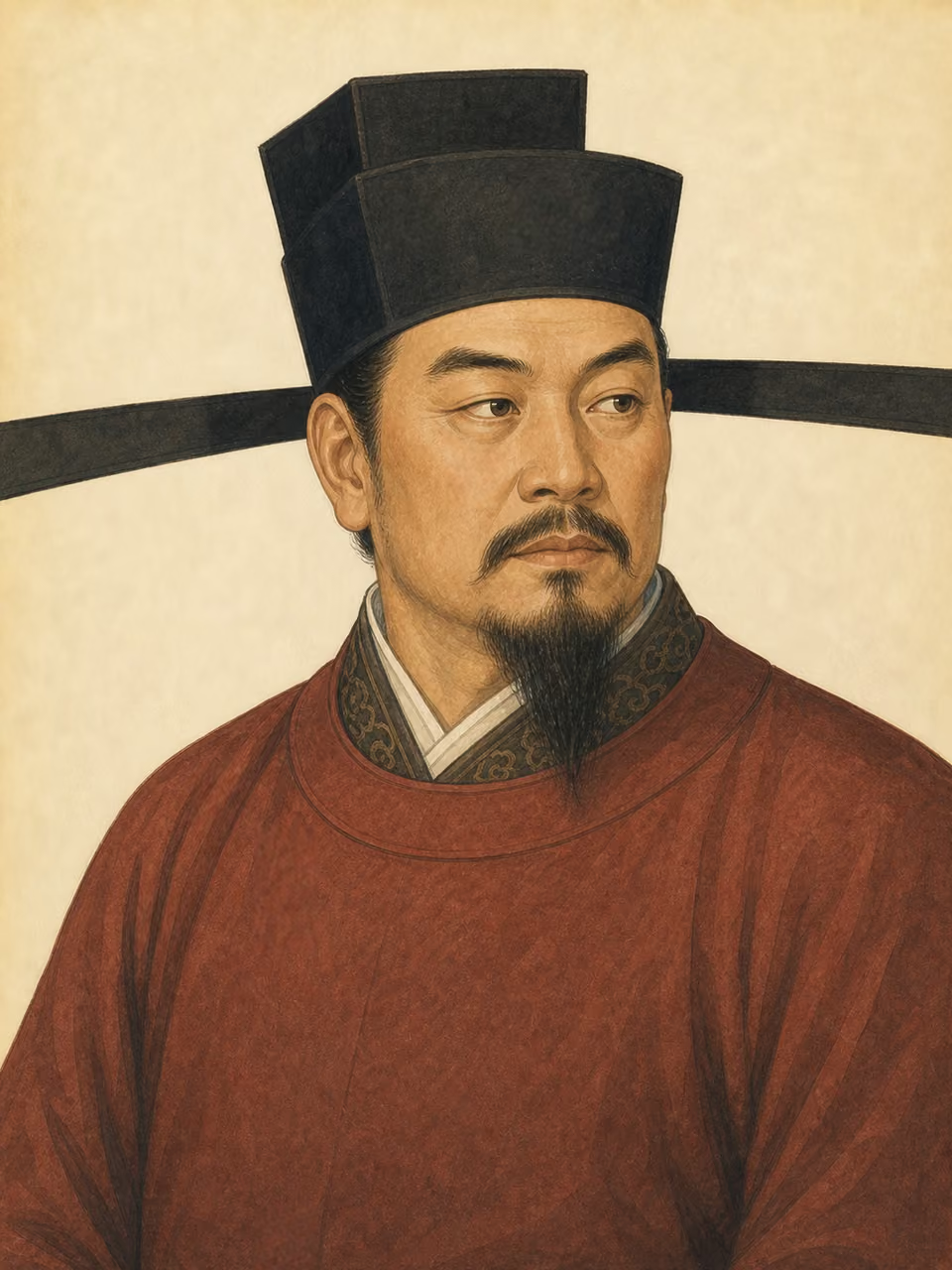
Emperor Taizu of Song

Portrait: AI-generated imagined likeness

Emperor Taizu of Song

Emperor · Monarch · Military commander

Years
927–976
Birthplace
China
Birth polity
Later Tang
Era
Medieval
Field
Politics
Occupations
Emperor · Monarch · Military commander

The first emperor of the Northern Song Dynasty. He rose to prominence as a military man and founded the Song Dynasty after the Chenqiao Incident. He promoted civil rule and brought an end to the division of the Five Dynasties and Ten Kingdoms. He is a person who thinks about the starting point of the Song Dynasty nation. The rebuilding of order after the Five Dynasties and Ten Kingdoms is also in sight.

View in catalog

Historical context

Places

  • Kaifeng

    Work

Events

  • Chenqiao mutiny

    960

    Political event · Leader

  • Founding of the Song dynasty

    960

    Political event · Leader

Origins

Origins map
Birth country
Birth country
China

Map: Natural Earth (PD)

Biography

Early life

He distinguished himself as a military officer during the late Zhou Dynasty. After the fall of the Tang Dynasty, China had a series of short-lived dynasties and local governments, and a period in which military leaders became emperors.

Achievements

He ascended the throne in 960, founded the Song dynasty, and promoted the unification of countries. By establishing a system that suppressed the power of the military and placed emphasis on civil servants and bureaucrats, he laid the foundations for the civilized state of the Song Dynasty.

Character & anecdotes

There is an anecdote about Zhao Kuangyin who forced his worthy subjects to surrender their military rights at a drinking party. Beyond the truth or falsehood, it symbolizes the Song Dynasty's shift from military politics to civilized politics.

Historical Impact

Studying Zhao Kuangyin reveals that Song Dynasty China reorganized imperial power, bureaucracy, and military control in order to end the era of warlords. This is the key to understanding the state structure of medieval East Asia. There may also be a relationship between the military and bureaucracy.