
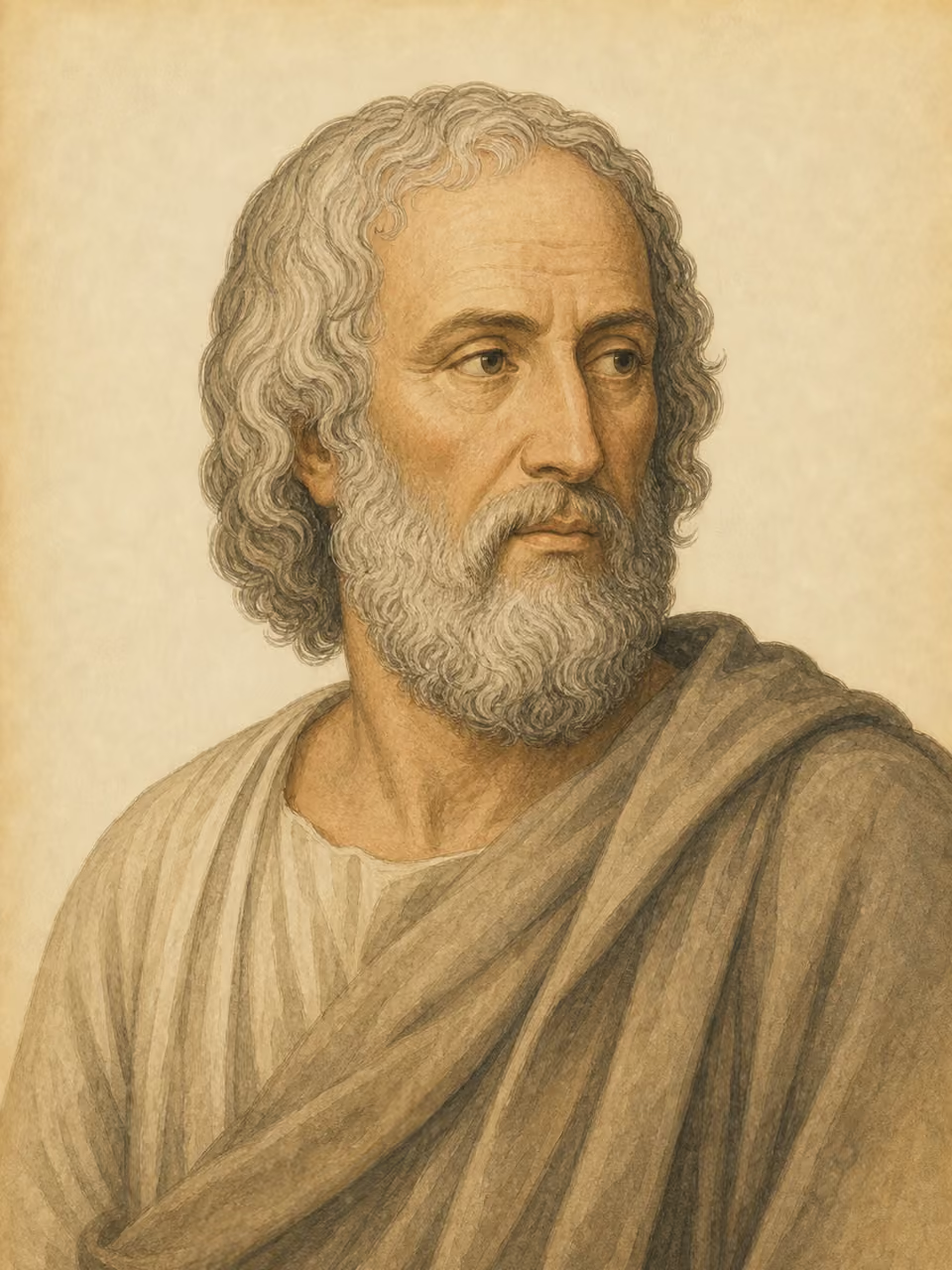
Euripides

Portrait: AI-generated imagined likeness

Euripides

Playwright · Poet · Writer · Philosopher

Years
481 BC–407 BC
Birthplace
Greece
Birth polity
Classical Athens
Era
Ancient
Field
Literature
Occupations
Playwright · Poet · Writer · Philosopher

One of the three great tragic poets of ancient Greece. By giving mythological characters human conflicts and doubts, he questioned the values ​​of Athenian society. He is a person who thinks about classical literature.

View in catalog

Historical context

Places

  • Athens

    Work

Works & achievements

  • Medea

    431 BC

    Play

  • The Bacchae

    Play

Origins

Origins map
Birth country
Birth country
Greece

Map: Natural Earth (PD)

Biography

Early life

Raised in post-Persian War Athens, he experienced the tensions of democracy, imperial development, and the Peloponnesian War. Theaters were important public spaces where citizens thought about politics and religion.

Achievements

In works such as ``Medea,'' ``The Trojan Women,'' and ``The Bacchus,'' she depicted stories of heroes and gods as human suffering, women's voices, and criticism of war. He is an author who has deepened his psychological depiction of tragedy.

Character & anecdotes

Euripides was a controversial writer of his time, and was even lampooned by the comedy writer Aristophanes. This is because he doubted traditional myths and posed disturbing questions to the audience.

Historical Impact

When you study Euripides, you realize that Greek tragedy was both a religious ritual and an ideological stage that dealt with questions of war, family, gender, and reason. It had a great influence on later theater. It can also be used for comparison with surrounding areas from the same era.