
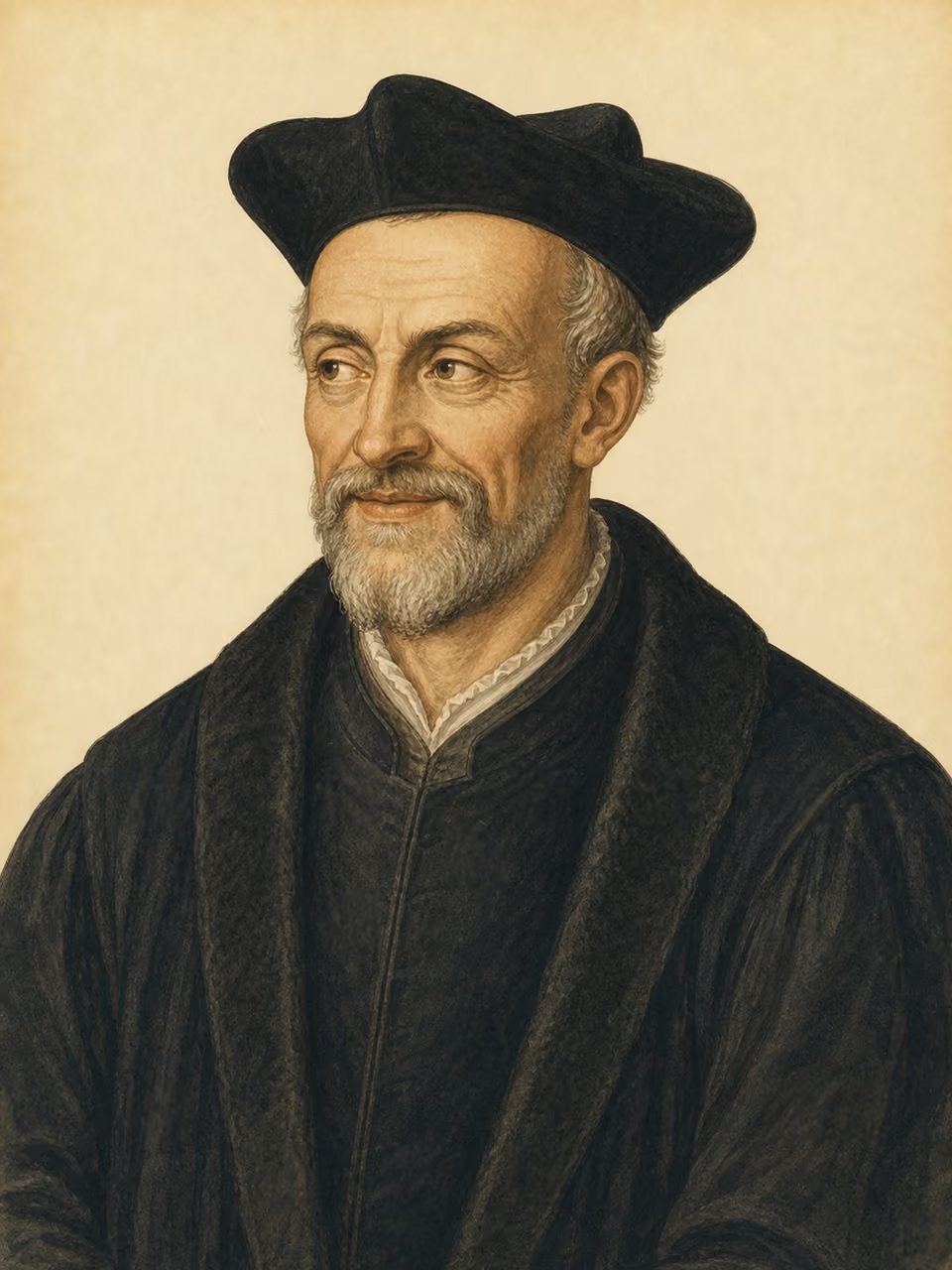
François Rabelais

Portrait: AI-generated imagined likeness

François Rabelais

Writer · Novelist · Physician

Years
1494–1553
Birthplace
France
Birth polity
Kingdom of France
Era
Early modern
Field
Literature
Occupations
Writer · Novelist · Physician

French Renaissance writer and physician. In Gargantua and Pantagruel, he portrayed humanity through satire and laughter. He is a person who thinks about humanist literature.

View in catalog

Historical context

Places

  • Lyon

    Publication

Works & achievements

  • Gargantua and Pantagruel

    1532–1564

    Book

Events

  • Renaissance humanism

    1532–1553

    Movement · Participant

Origins

Origins map
Birth country
Birth country
France

Map: Natural Earth (PD)

Biography

Early life

He studied as a monk in France and later trained in medicine. In Europe during the Renaissance, tensions between classical studies, print culture, and the Reformation were drastically changing the activities of intellectuals.

Achievements

It is a long novel that uses the story of a giant to boldly satirize academia, the church, law, education, and war. Expanding the rich expressions of slang French, he depicted human freedom and intelligence through laughter.

Character & anecdotes

Rabelais's works were full of unbridled wordplay, which sometimes caused him to be wary of the authorities. He is unique in that he tells serious ideas not in formal essays, but in humorous stories.

Historical Impact

Studying Rabelais reveals that Renaissance humanism was not only a revival of the classics, but also a literary movement about the body, laughter, education, and free thought. He is an important figure in early modern European literature. The social role of satirical literature can also be seen.