
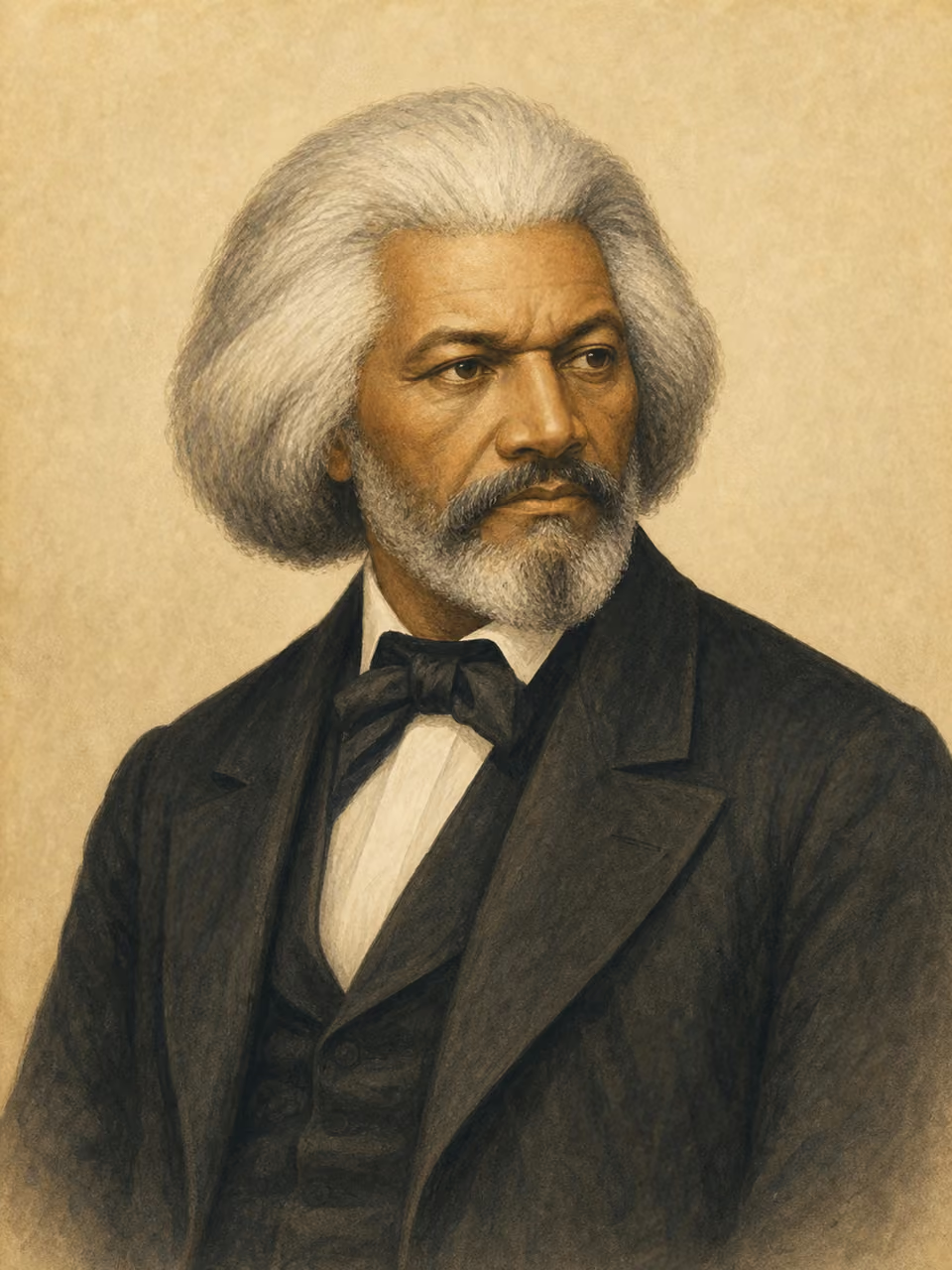
Frederick Douglass

Portrait: AI-generated imagined likeness

Frederick Douglass

Writer · Abolitionist

Years
1818–1895
Birthplace
United States
Birth polity
United States
Era
Modern
Field
Social reform
Occupations
Writer · Abolitionist

After learning to read and write under slavery and then escaping, Douglass turned autobiography, lecture tours, and newspaper work into sustained public attacks on the slave system. During the Civil War and Reconstruction he pushed beyond denunciation alone, pressing Lincoln and the wider republic to connect emancipation with Black military service, citizenship, and durable political rights.

View in catalog

Historical context

Places

  • Talbot County, Maryland

    Birth

  • Rochester, New York

    Work

Works & achievements

  • Narrative of the Life of Frederick Douglass

    1845

    Book

  • The North Star

    1847

    Essay

Events

  • Abolitionism in the United States

    Movement · Leader

Origins

Origins map
Birth country
Birth country
United States

Map: Natural Earth (PD)

Biography

Early life

Frederick Douglass was born into slavery in Maryland in 1818. In a world that tried to keep enslaved people from literacy, he found ways to learn to read and write, and that struggle for knowledge shaped his sense of freedom. He escaped in 1838 and began building a new life in the North.

Achievements

Through autobiographies beginning with Narrative of the Life of Frederick Douglass, he exposed the brutality and moral contradictions of slavery through firsthand testimony. He also became a major lecturer, newspaper editor, and political advocate for Black citizenship, women's rights, and a more meaningful Reconstruction after the Civil War.

Character & anecdotes

Douglass understood that public image mattered and became one of the most photographed figures of the nineteenth century. He also met with Abraham Lincoln and pressed directly on questions involving emancipation, Black military service, and the practical meaning of freedom.

Historical Impact

Douglass mattered because he showed that lived experience, sharpened into argument and publication, could alter the terms of national debate. Histories of abolition, journalism, photography, Black intellectual life, and Reconstruction still return to him as a figure who linked voice, print, and democratic struggle with unusual force.