
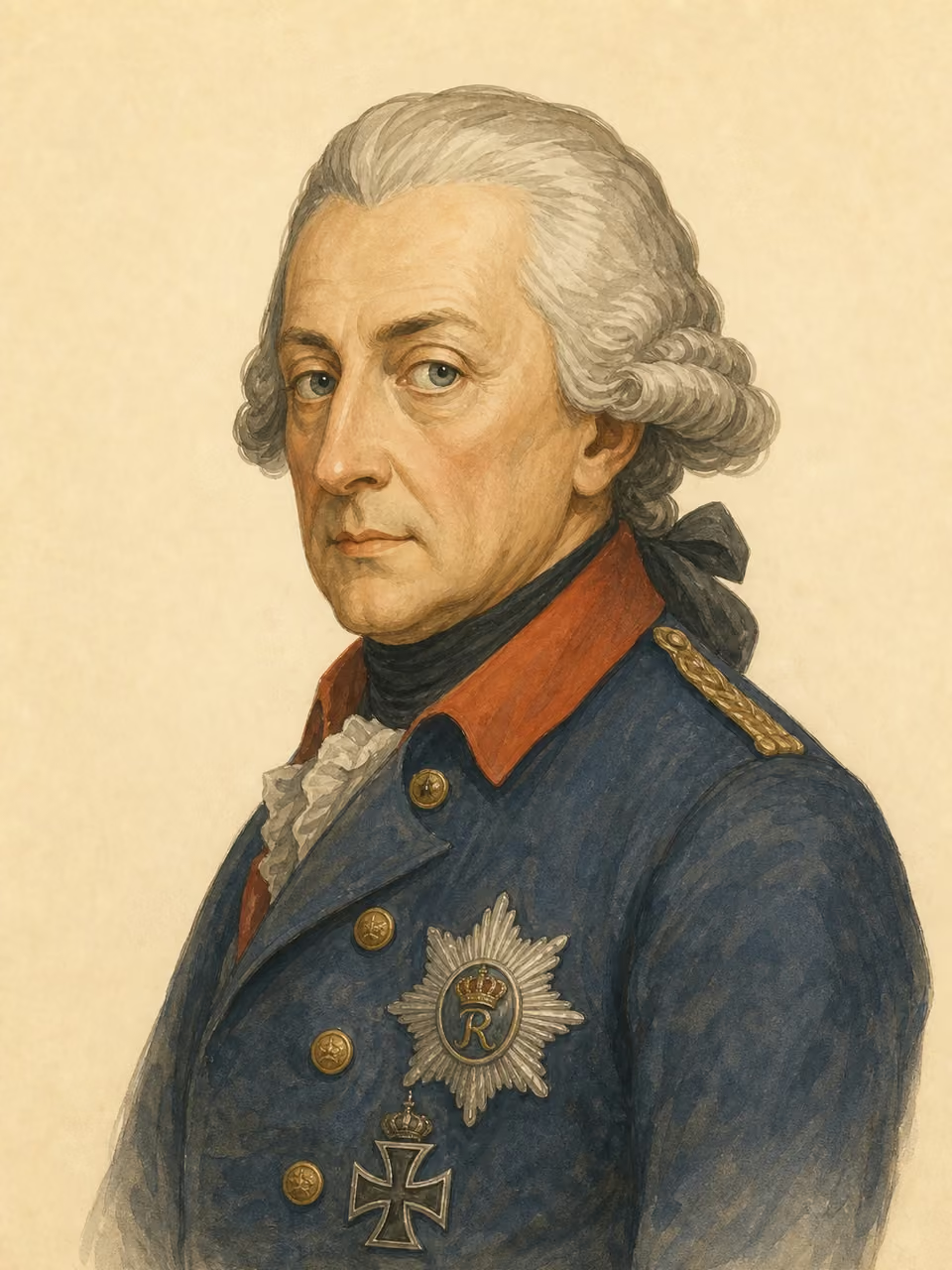
Frederick II of Prussia

Portrait: AI-generated imagined likeness

Frederick II of Prussia

Monarch · Military leader · Philosopher

Years
1712–1786
Birthplace
Germany
Birth polity
Kingdom of Prussia
Era
Early modern
Field
Politics
Occupations
Monarch · Military leader · Philosopher

Frederick II turned Prussia into a major European power in the eighteenth century. He combined interest in Enlightenment culture with disciplined military and bureaucratic rule, making him a standard example of the so-called enlightened despot.

View in catalog

Historical context

Places

  • Berlin

    Birth

  • Potsdam

    Death

Works & achievements

  • Anti-Machiavel

    1740

    Book

Events

  • Silesian Wars

    1740–1763

    War · Commander

Origins

Origins map
Birth country
Birth country
Germany

Map: Natural Earth (PD)

Biography

Early life

Born in Berlin in 1712, Frederick was the son of Frederick William I of Prussia. As crown prince he loved literature, music, and French culture, which brought him into sharp conflict with his militarily minded father. Those tensions shaped his later mixture of cultivated taste and hard statecraft.

Achievements

After taking the throne in 1740, Frederick used the War of the Austrian Succession to seize Silesia from the Habsburg monarchy. The Silesian Wars raised Prussia’s status, while administrative, judicial, agricultural, and military reforms strengthened the state he ruled.

Character & anecdotes

Frederick corresponded with Voltaire, wrote in French, played the flute, and cultivated the court culture of Sanssouci. At the same time, he treated the army and bureaucracy as central tools of rule, revealing a constant tension between Enlightenment sociability and reason-of-state politics.

Historical Impact

His reign made Prussia a permanent great-power rival of Austria and changed the balance of central Europe. Frederick’s model of reform from above also became a classic case for discussing both the possibilities and limits of Enlightenment monarchy.

Notes

He is widely known in English as Frederick the Great.