
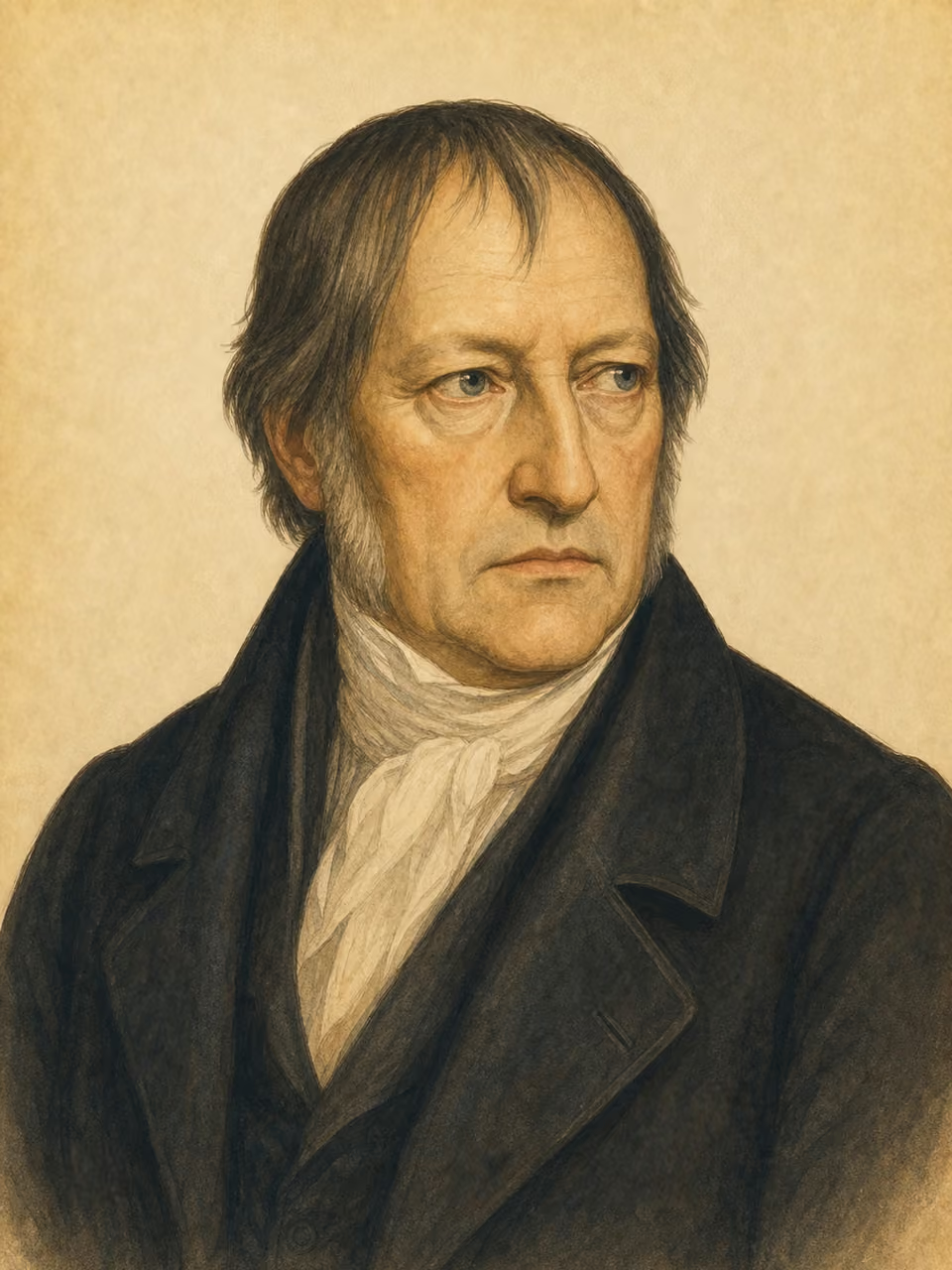
Georg Wilhelm Friedrich Hegel

Portrait: AI-generated imagined likeness

Georg Wilhelm Friedrich Hegel

Philosopher · Writer

Years
1770–1831
Birthplace
Germany
Birth polity
Duchy of Württemberg
Era
Modern
Field
Philosophy
Occupations
Philosopher · Writer

A philosopher representing German idealism, who systematically considered the development of history, the nation, and the spirit. It is important for understanding its influence on modern thought, philosophy of history, and Marxism. It became a key point for grasping the spread of German thought in the 19th century.

View in catalog

Historical context

Places

  • Stuttgart

    Birth

  • Berlin

    Work

Works & achievements

  • Phenomenology of Spirit

    1807

    Book

Origins

Origins map
Birth country
Birth country
Germany

Map: Natural Earth (PD)

Biography

Early life

Born in Stuttgart, he studied theology and philosophy in Tübingen. He lived through the era of the French Revolution and the Napoleonic Wars, and conceptualized the changes in history.

Achievements

In his ``Phenomenology of Spirit'' and ``Philosophy of Law,'' he viewed consciousness, society, the state, and history dialectically. It also had a great influence on university philosophy during the Prussian period.

Character & anecdotes

Hegel's writings are known for being difficult to understand, but in the background lies the question of how to institutionalize freedom after the revolution. Abstract ideas and political reality were intertwined.

Historical Impact

If you study Hegel, you will see that the idea of understanding history as progress and development spread in 19th century Europe. This is an entry point to trace the influence of Marx, theory of the state, and philosophy of history. Discussions regarding the relationship between the state and freedom can also be seen.