
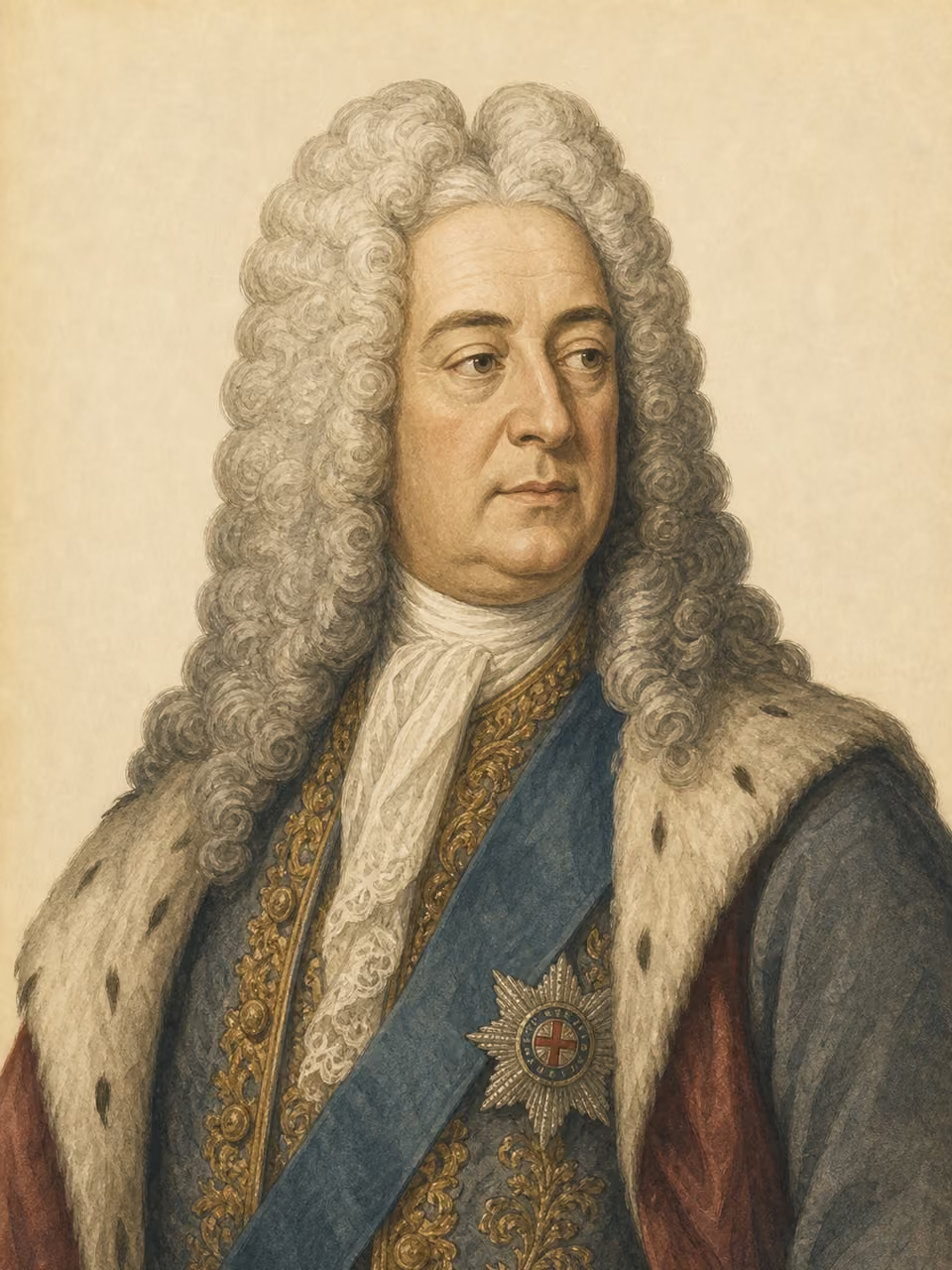
George I of Great Britain

Portrait: AI-generated imagined likeness

George I of Great Britain

Monarch · Politician

Years
1660–1727
Birthplace
United Kingdom
Birth polity
Duchy of Brunswick-Luneburg
Era
Early modern
Field
Politics
Occupations
Monarch · Politician

The first king of England's Hanoverian dynasty. He ascended the throne under the Throne Succession Act and became a monarch at a time when parliamentary politics and cabinet politics were developing. He is a person who thinks about British politics in the 18th century.

View in catalog

Historical context

Places

  • Hanover

    Birth

  • London

    Work

Events

  • Beginning of the Hanoverian succession

    1714

    Political event · Leader

  • Rise of Walpole ministry

    1721–1727

    Political event · Context

Origins

Origins map
Birth countryAssociated countries
Birth country
United Kingdom
Associated countries
Germany

Map: Natural Earth (PD)

Biography

Early life

Born in Hannover, Germany, he grew up as an elector in the Holy Roman Empire. In England, emphasis was placed on Protestant succession to avoid Catholic succession.

Achievements

After the death of Queen Anne in 1714, he became King of Great Britain. Because he was unfamiliar with English and had an interest in continental territory, the role of parliament and the cabinet became stronger, promoting Walpole's rise to power.

Character & anecdotes

George I had strong ties to Hanover and frequently returned to the continent. The absence of the king and the language barrier conversely pushed cabinet management and politics based on parliamentary majorities to the fore.

Historical Impact

If you study King George I, you will see that in England after the Glorious Revolution, royal power was not simply weakened, but that succession to the throne, religion, parliamentary majority, and finance were linked to create cabinet politics. It can also be used for comparison with surrounding areas from the same era.