
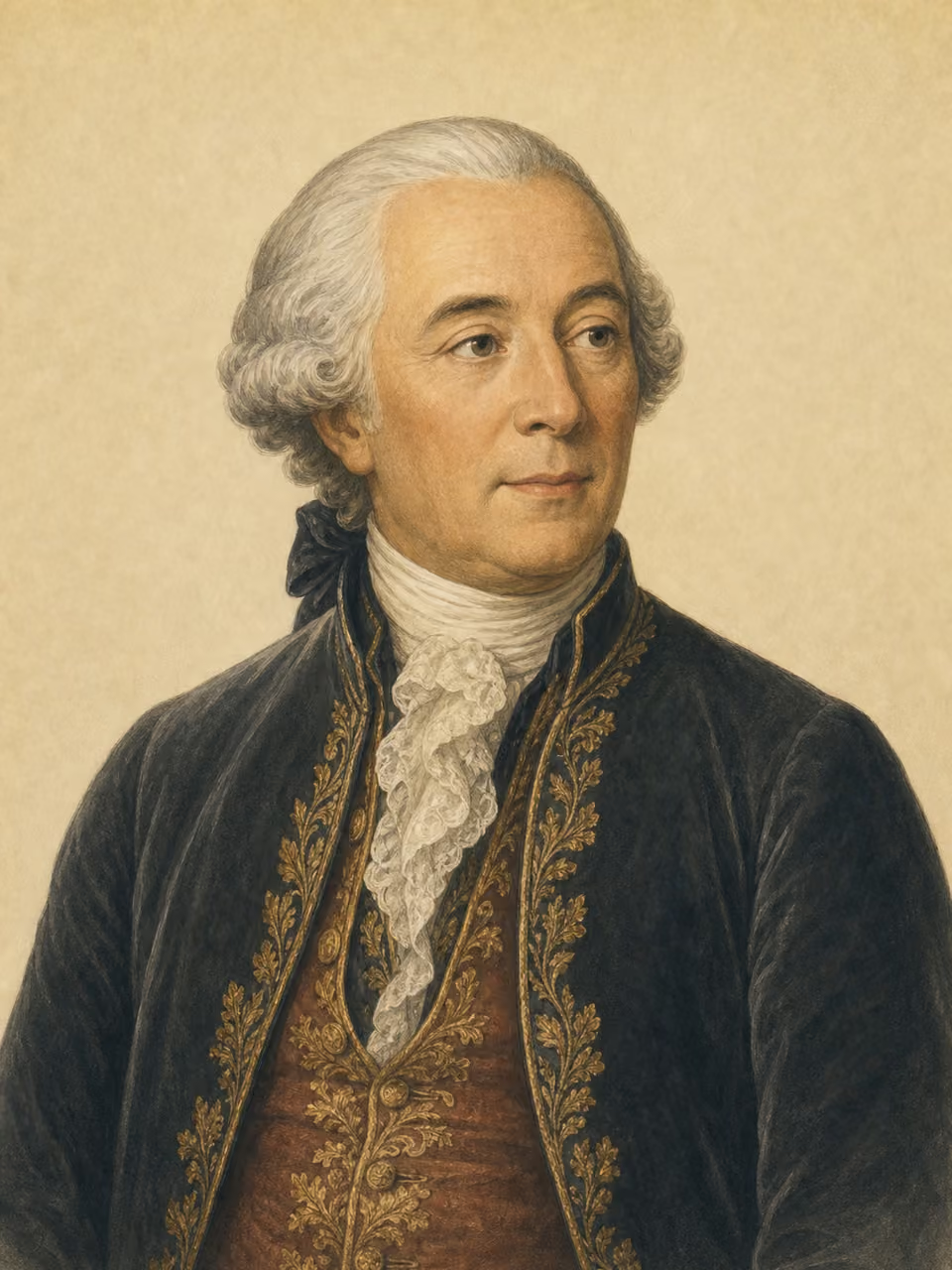
Georges-Louis Leclerc, Comte de Buffon

Portrait: AI-generated imagined likeness

Georges-Louis Leclerc, Comte de Buffon

Naturalist · Biologist · Writer

Years
1707–1788
Birthplace
France
Birth polity
Kingdom of France
Era
Early modern
Field
Science
Occupations
Naturalist · Biologist · Writer

He was an 18th century French naturalist who systematically described the natural world through his vast ``Natural History.'' It represents knowledge classification and observational research during the Enlightenment. It provides a clue to understanding the view of nature before modern biology.

View in catalog

Historical context

Places

  • Montbard

    Birth

  • Jardin du Roi

    Work

Works & achievements

  • Histoire naturelle

    1749–1788

    Book

Events

  • Enlightenment natural history

    Movement · Participant

Origins

Origins map
Birth country
Birth country
France

Map: Natural Earth (PD)

Biography

Early life

Born in Montbard in the Burgundy region, he studied mathematics and law before moving on to study nature. He became director of the Royal Botanic Gardens, which provided him with an extensive research environment with specimens, animals, and minerals.

Achievements

In ``Natural History,'' he extensively discussed animals, minerals, and earth history, and tried to think about nature not only through theological explanations but also through observation and comparison. He also showed an interest in the changes in species and the long history of the Earth, and became a prehistory of later evolutionary thinking.

Character & anecdotes

Buffon was known for his bold views on natural history, and he also made arguments that could conflict with the Biblical view of chronology. The tension between Enlightenment ideas and the old system can be seen in the careful expressions and pressures for retractions at the time of publication.

Historical Impact

Studying Buffon shows that modern science grew not only in laboratories, but also in specimen collecting, publishing, royal institutions, and the spread of Enlightenment ideas. It is also possible to understand how natural history before Darwin began to consider the history of life and the earth over a long period of time.