
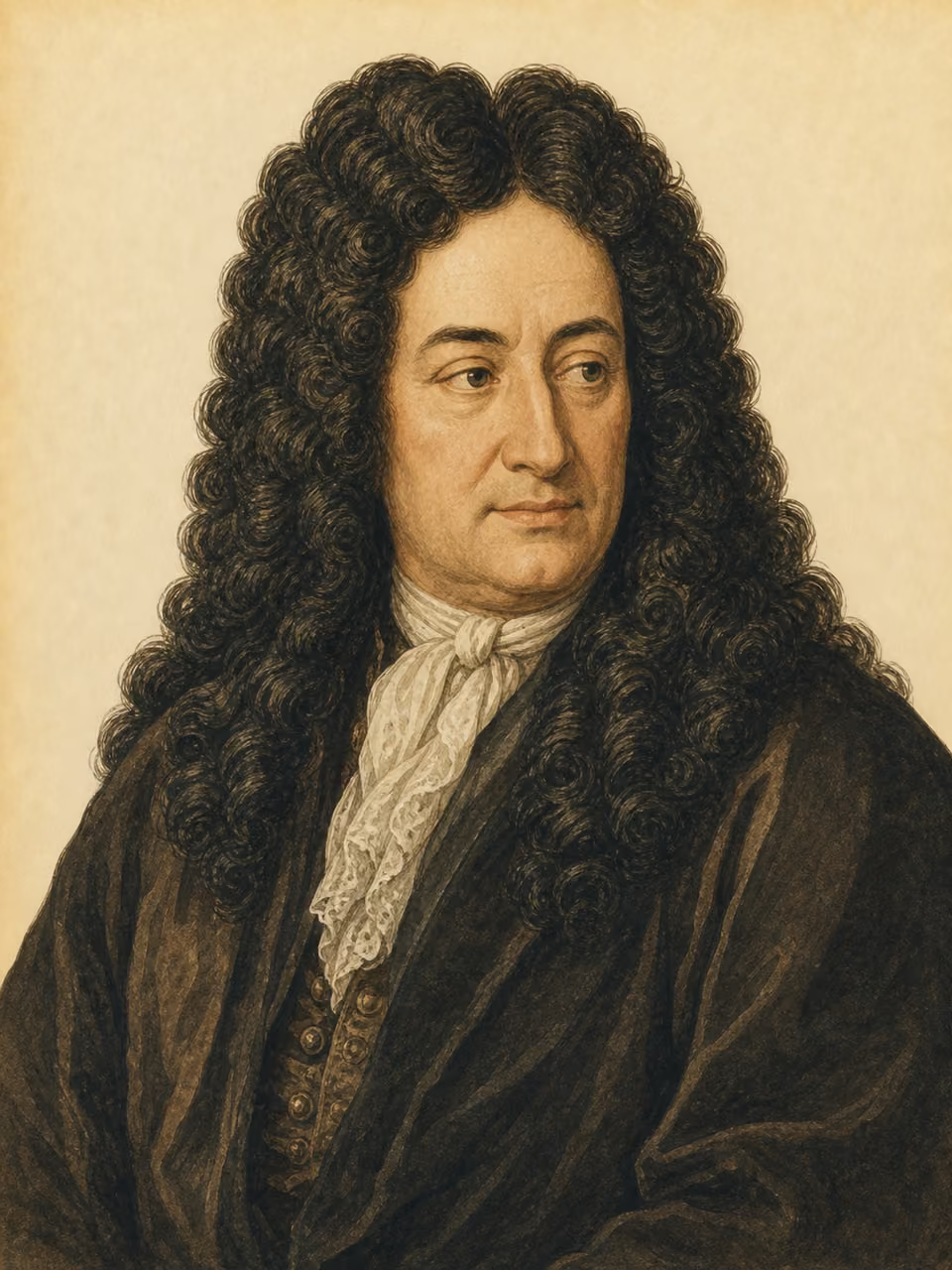
Gottfried Wilhelm Leibniz

Portrait: AI-generated imagined likeness

Gottfried Wilhelm Leibniz

Philosopher · Mathematician · Physicist · historian · Writer

Years
1646–1716
Birthplace
Germany
Birth polity
Holy Roman Empire
Era
Early modern
Field
Philosophy
Occupations
Philosopher · Mathematician · Physicist · historian · Writer

German philosopher and mathematician. Known for his calculus, monad theory, and rationalist philosophy, he represented modern European intelligence. He is a person who thinks about the scientific revolution and the Enlightenment.

View in catalog

Historical context

Places

  • Hanover

    Work

Works & achievements

  • Development of calculus

    c. 1675–c. 1684

    Discovery

  • Monadology

    1714

    Book

Events

  • Early Enlightenment

    c. 1680–c. 1716

    Movement · Participant

Origins

Origins map
Birth country
Birth country
Germany

Map: Natural Earth (PD)

Biography

Early life

Born in Leipzig, he studied law, philosophy, and mathematics. In Europe in the 17th century, political reconstruction after the Wars of Religion and a scientific revolution were progressing at the same time.

Achievements

Apart from Newton, he developed calculus and showed an interest in binary system and logical calculations. In philosophy, he developed the theory of monads and tried to understand the order of the world through reason.

Character & anecdotes

Leibniz was not only a philosopher, but also involved in diplomacy, libraries, technology, and historical research. He is characterized by his attempt to synthesize knowledge and create a universal symbol system.

Historical Impact

When you study Leibniz, you realize that modern knowledge was a comprehensive endeavor that crossed over mathematics, philosophy, machinery, politics, and religious mediation. He was a man who bridged the gap between the Scientific Revolution and the Enlightenment. The modern challenge of integrating knowledge can also be seen.