
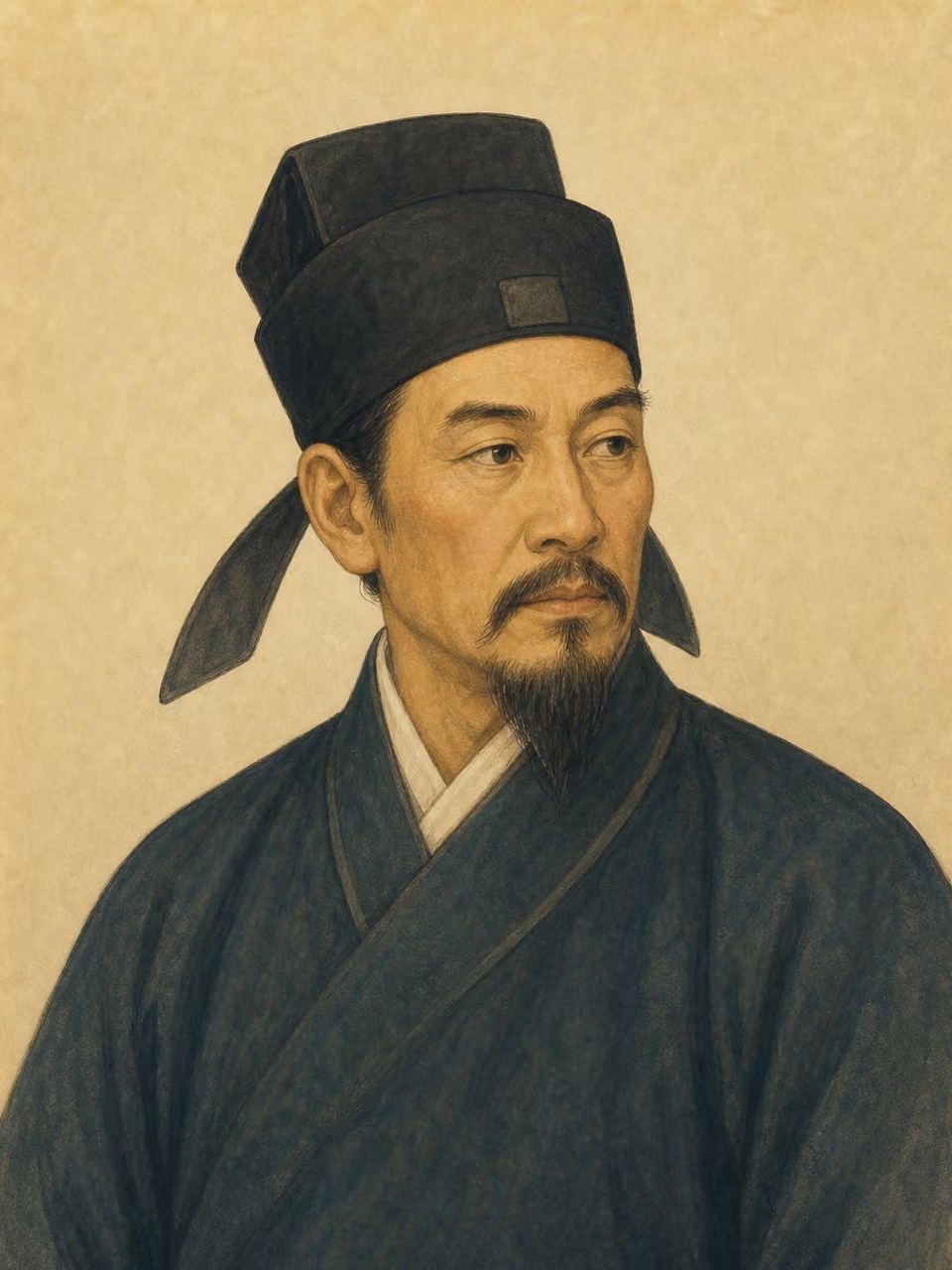
Gu Xiancheng

Portrait: AI-generated imagined likeness

Gu Xiancheng

Politician · Philosopher · Teacher

Years
1550–1612
Birthplace
China
Birth polity
Ming dynasty
Era
Early modern
Field
Politics
Occupations
Politician · Philosopher · Teacher

A bureaucrat and thinker at the end of the Ming Dynasty who was involved in the revival of Donlin Shoin and the formation of the Donlin School. He criticized political corruption and linked scholarship and public debate. He is an important figure who knows the tensions in late Ming politics and the sense of responsibility of Shidafu.

View in catalog

Historical context

Places

  • Wuxi

    Birth

  • Donglin Academy

    Work

Events

  • Donglin movement

    Movement · Leader

Origins

Origins map
Birth country
Birth country
China

Map: Natural Earth (PD)

Biography

Early life

Born in Wuxi, Jiangnan, he became a bureaucrat after passing the imperial examination. In court politics during the Wanli Emperor's era, the power of eunuchs and high-ranking officials, financial issues, and party disputes were involved, and the participation of samurai in politics was a major point of contention.

Achievements

After his downfall, he rebuilt Torin Shoin and promoted political ethics and public opinion formation through lectures. The Donglin faction played a central role in criticism of bureaucrats and clean-up efforts, and had a large presence in party disputes at the end of the Ming Dynasty.

Character & anecdotes

In Torin Shoin, there is a couplet that is said to be ``The sound of the wind, the sound of the rain, the sound of reading, listening to voices. Housework, national affairs, world affairs, and interest in affairs.'' This symbolizes the attitude that academia is inseparable from interest in realpolitik.

Historical Impact

If you study Gu Xiancheng, you will understand that the crisis at the end of the Ming era was not just about finances and the military, but also about the ethics of the bureaucratic society, public debate, and factional conflicts. We can understand how Chinese samurai were involved in politics through their studies, and we can also see the social tensions on the eve of the Ming and Qing transition.