
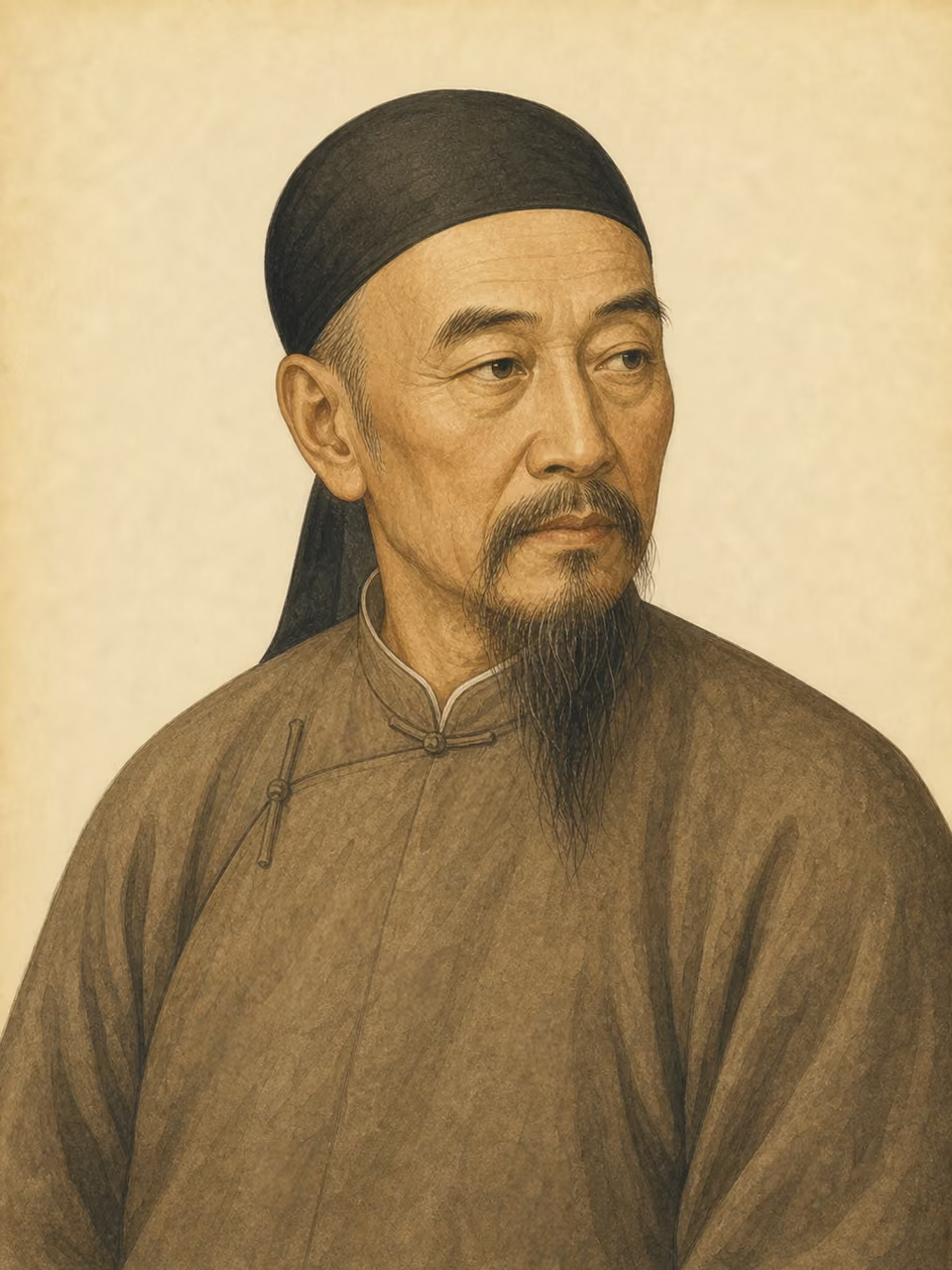
Gu Yanwu

Portrait: AI-generated imagined likeness

Gu Yanwu

Philosopher · historian · Writer · Poet · Astronomer

Years
1613–1682
Birthplace
China
Birth polity
Ming dynasty
Era
Early modern
Field
Philosophy
Occupations
Philosopher · historian · Writer · Poet · Astronomer

A thinker and scholar from the late Ming and early Qing dynasties. As a pioneer in archival studies, he avoided empty discussions and placed emphasis on empirical research on literature and institutions. He is a person who considers the intellectuals of the Ming and Qing transition period.

View in catalog

Historical context

Places

  • Jiangnan

    Work

Works & achievements

  • Record of Daily Knowledge

    c. 1670–c. 1682

    Book

Events

  • Evidential scholarship after the Ming-Qing transition

    1644–1682

    Movement · Participant

Origins

Origins map
Birth country
Birth country
China

Map: Natural Earth (PD)

Biography

Early life

Born into a samurai society in Jiangnan, he experienced the fall of the Ming Dynasty and the establishment of the Qing Dynasty. The change in dynasties posed important questions to intellectuals about how they should think about loyalty, practical science, and political responsibility.

Achievements

He extensively considered history, geography, systems, and phonology in works such as Nichiroku. He valued the good of society and pursued scholarship that was useful for real politics and society, and had a great influence on archeological studies during the Qing dynasty.

Character & anecdotes

Gu Yanwu avoided serving in the Qing Dynasty and continued his research while traveling around the country. His scholarship is supported by his commitment to demonstration and practice, which was born from his experience in exile.

Historical Impact

Studying Gu Yanwu reveals that early modern Chinese intellectuals, influenced by the change in dynasties, turned not only to moral theory but also to historical materials, geography, and institutional research. He is a person who thinks about East Asian practical thought. You can also follow the social background of historical research.