
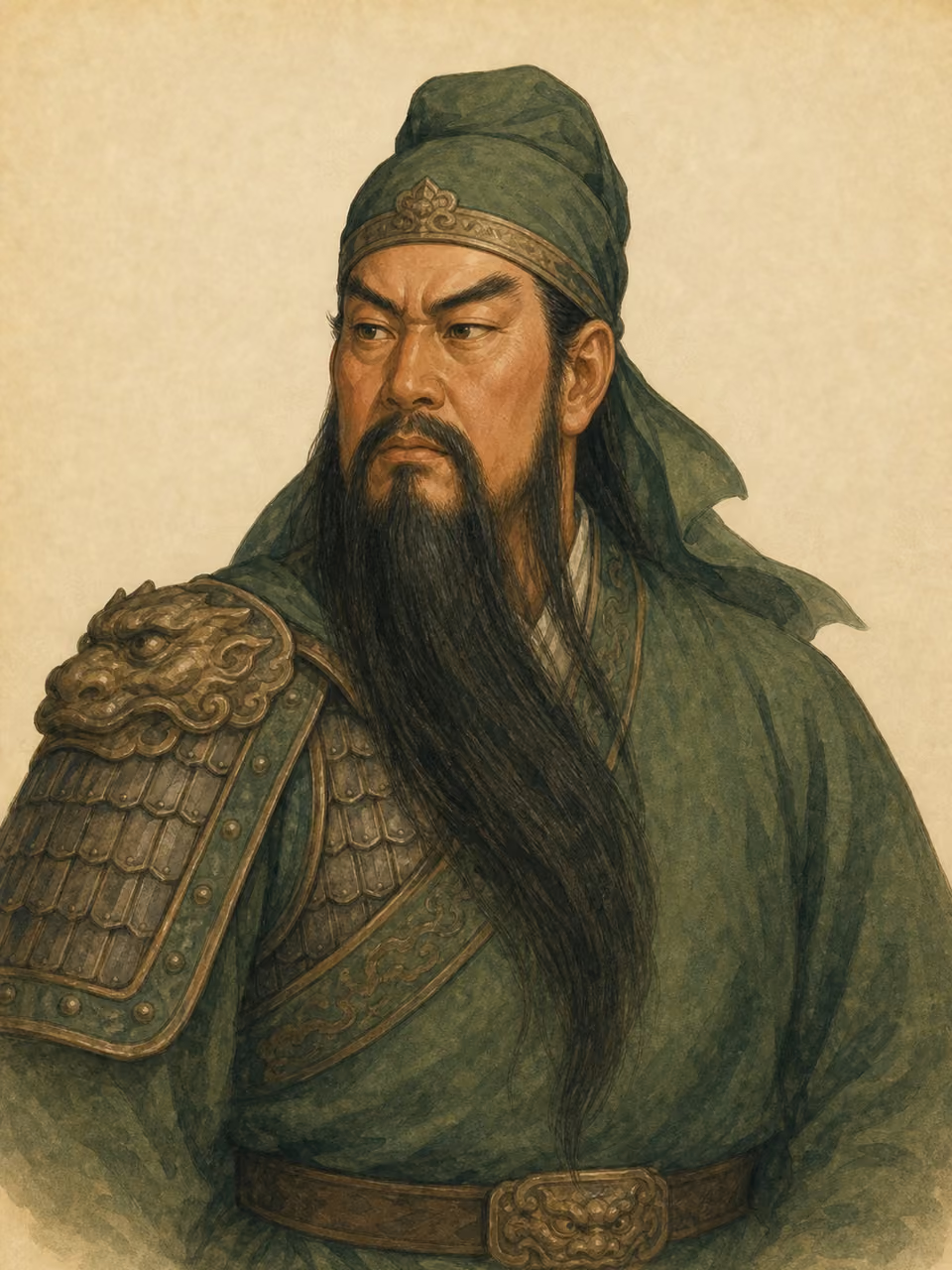
Guan Yu

Portrait: AI-generated imagined likeness

Guan Yu

Military commander · Military leader

Years
160–220
Birthplace
China
Birth polity
Eastern Han
Era
Ancient
Field
Military
Occupations
Military commander · Military leader

A military commander at the end of the Later Han Dynasty. He served Liu Bei and participated in military conflicts during the Three Kingdoms period. He was later deified as a symbol of loyalty, and is a figure who reads Chinese culture, where history and stories intersect.

View in catalog

Historical context

Places

  • Xie County

    Birth

  • Jingzhou

    Campaign

Events

  • Civil wars at the end of the Han dynasty

    184–220

    War · Commander

Origins

Origins map
Birth country
Birth country
China

Map: Natural Earth (PD)

Biography

Early life

He is said to have been born in Kaixian, Hedong, and worked alongside Liu Bei during the turmoil at the end of the Later Han Dynasty. After the Yellow Turban Rebellion, he rose to prominence as a military commander in an era when local powers competed in military power.

Achievements

He led the army in the Jingzhou area and fought against the forces of Cao Cao and Sun Quan. Although his historical activities are limited, the image of a brave and loyal military commander spread widely through the Romance of the Three Kingdoms.

Character & anecdotes

Guan Yu was widely revered by merchants, soldiers, and folk believers, and was worshiped as Emperor Guan. This is an example of a historical warlord being transformed into a symbol of stories, religion, and social morality.

Historical Impact

When you study Guan Yu, you can see not only the political and military history of the Three Kingdoms period, but also the process by which the image of a historical figure was reshaped by later literature and folk beliefs. It can also be used to compare East Asian cultures. It can also be used for comparison with surrounding areas from the same era.