
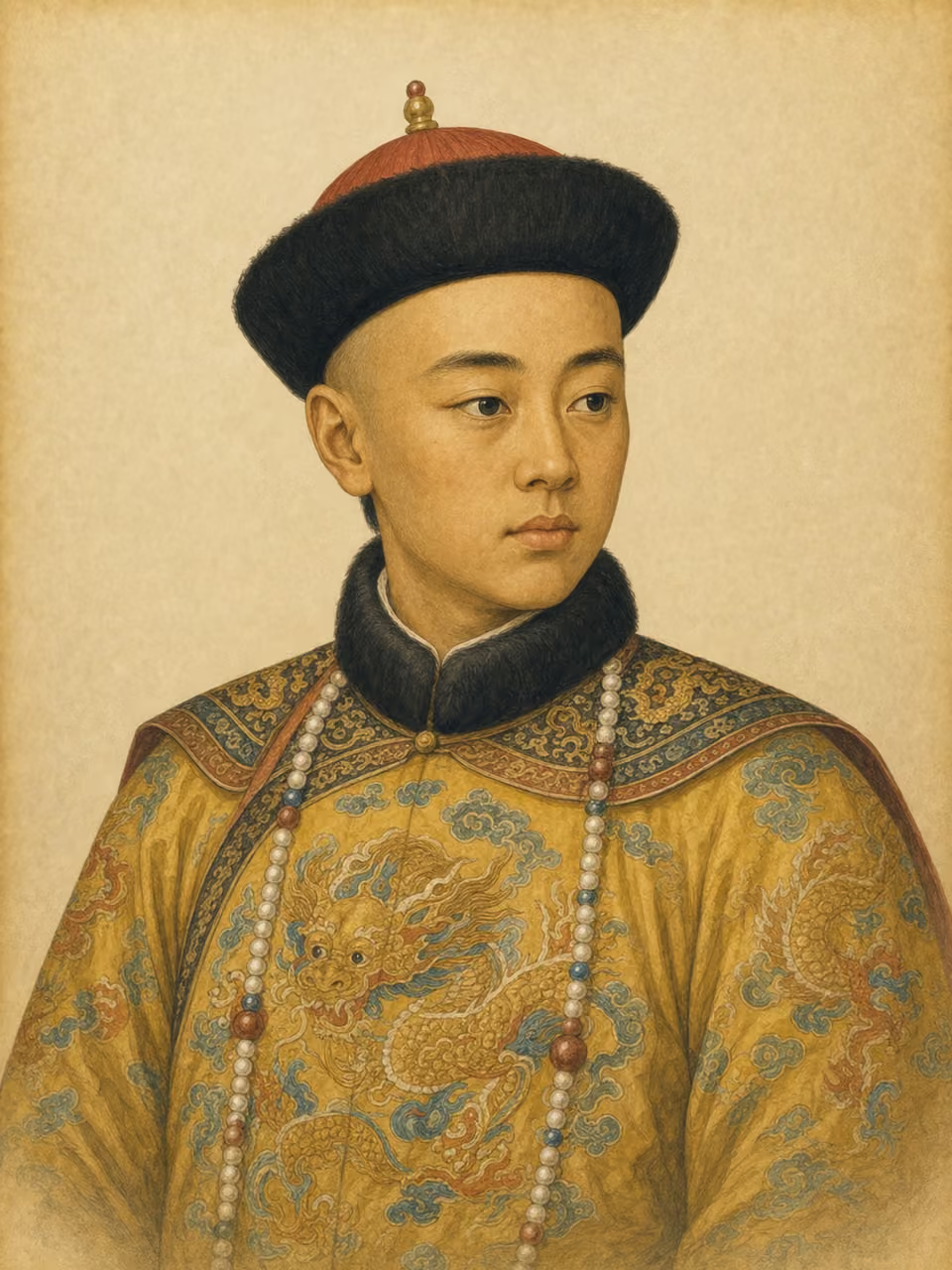
Guangxu Emperor

Portrait: AI-generated imagined likeness

Guangxu Emperor

Emperor · Monarch

Years
1871–1908
Birthplace
China
Birth polity
Qing dynasty
Era
Modern
Field
Politics
Occupations
Emperor · Monarch

An emperor at the end of the Qing Dynasty who attempted to reform the system through a modification of the Dog. It sought modernization amidst pressure from the great powers and domestic crisis. It represents the conflict between reform and conservatism at the end of the Qing Dynasty. This is also important when considering the limits of imperial power.

View in catalog

Historical context

Places

  • Beijing

    Birth

  • Forbidden City

    Work

Events

  • Hundred Days' Reform

    1898

    Political event · Leader

Origins

Origins map
Birth country
Birth country
China

Map: Natural Earth (PD)

Biography

Early life

He succeeded Emperor Tongzhi at a young age and ascended the throne under the strong influence of Empress Dowager Cixi. Although he was constrained by court politics, he approached reformers amidst a sense of crisis after the Sino-Japanese War.

Achievements

Using Kang Youwei and other reformers, he promoted changes to the Bodu law and ordered reforms to the political, educational, and military systems. However, due to the opposition of conservatives and the political change of the Empress Dowager Cixi, the reform was quickly thwarted.

Character & anecdotes

Although Emperor Guangxu was emperor, he was unable to fully grasp real power. Although his reforms failed, this setback contributed to the growing sense of crisis towards the late Qing new government and revolutionary movements.

Historical Impact

Studying Emperor Guangxu, we learn that the modernization of the Qing Dynasty was not simply delayed, but was hindered in complex ways by court power, bureaucracy, and pressure from the great powers. Understand the turning points in modern Chinese history. We can also see a trend where reform failures lead to revolutions.