
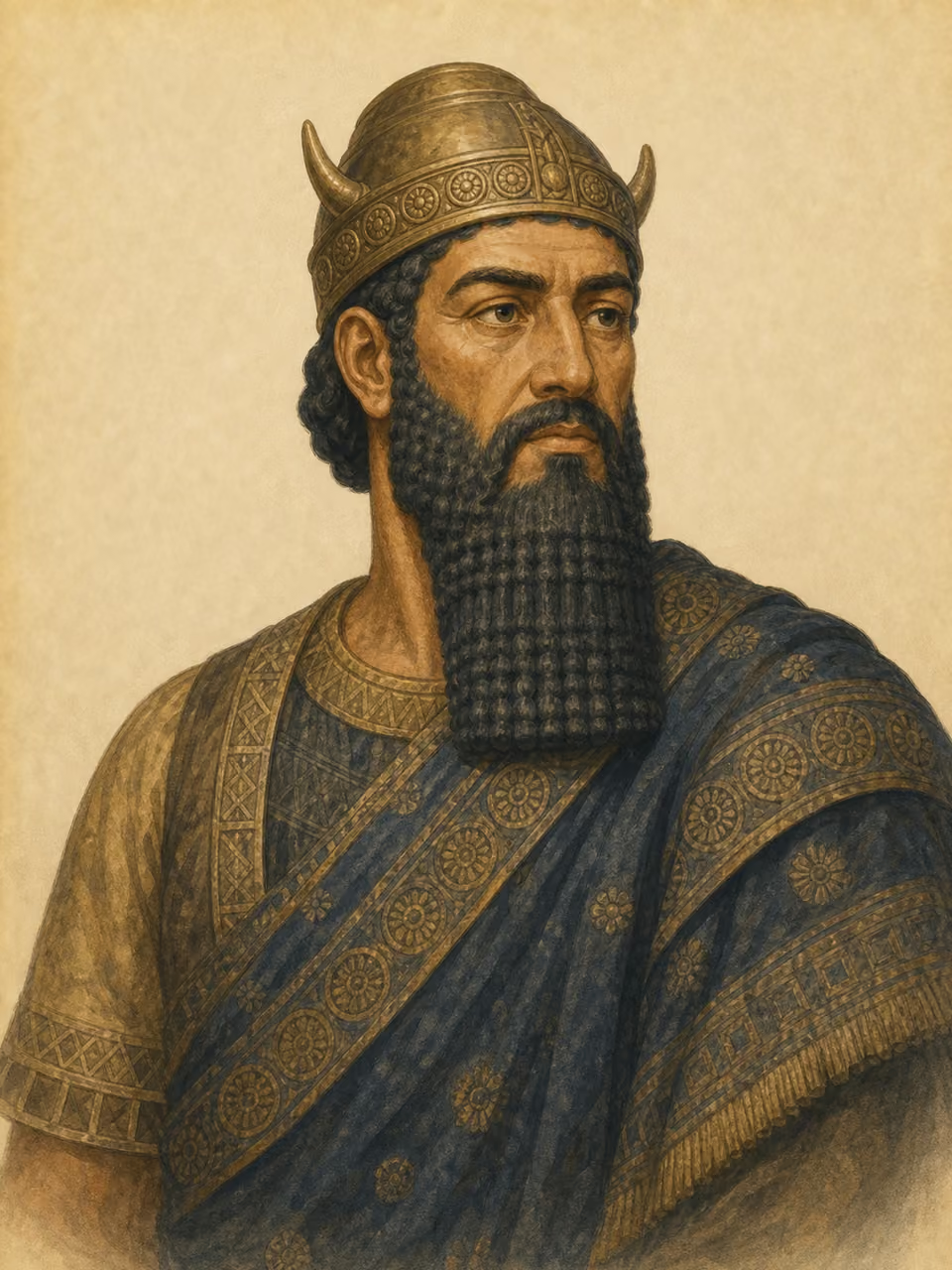
Hammurabi

Portrait: AI-generated imagined likeness

Hammurabi

Monarch · Politician

Years
1810 BC–1750 BC
Birthplace
Iraq
Birth polity
Old Babylonian Kingdom
Era
Ancient
Field
Politics
Occupations
Monarch · Politician

King of the ancient Babylonian kingdom. Unified Mesopotamia and is known for the Code of Hammurabi. He is a person who thinks about kingship, law, and urban society in the ancient Orient.

View in catalog

Historical context

Places

  • Babylon

    Work

Works & achievements

  • Code of Hammurabi

    Law

Events

  • Unification of Mesopotamia under Babylon

    1792 BC–1750 BC

    Political event · Leader

Origins

Origins map
Birth country
Birth country
Iraq

Map: Natural Earth (PD)

Biography

Early life

Born into a royal family in Babylon, he ascended the throne in Mesopotamia, where surrounding city-states competed. They ruled in an urban civilization that combined irrigated agriculture, trade, and a temple economy.

Achievements

They expanded their power militarily and diplomatically, establishing control over Babylon. The legal code detailed social status, family, commercial transactions, and punishment, and expressed the idea that the king would uphold justice.

Character & anecdotes

The Code of Hammurabi is famous for its expression "an eye for an eye," but in reality it has complex provisions that include differences in social status and property relations. It specifically conveys the idea of ​​order of ancient society.

Historical Impact

When we study King Hammurabi, we learn that law was used in ancient states to legitimize royal power, control society, and stabilize economic activity. It is also useful for comparison with ancient Egyptian and Chinese governance ideas. It can also be used for comparison with surrounding areas from the same era.