
Harriet Tubman

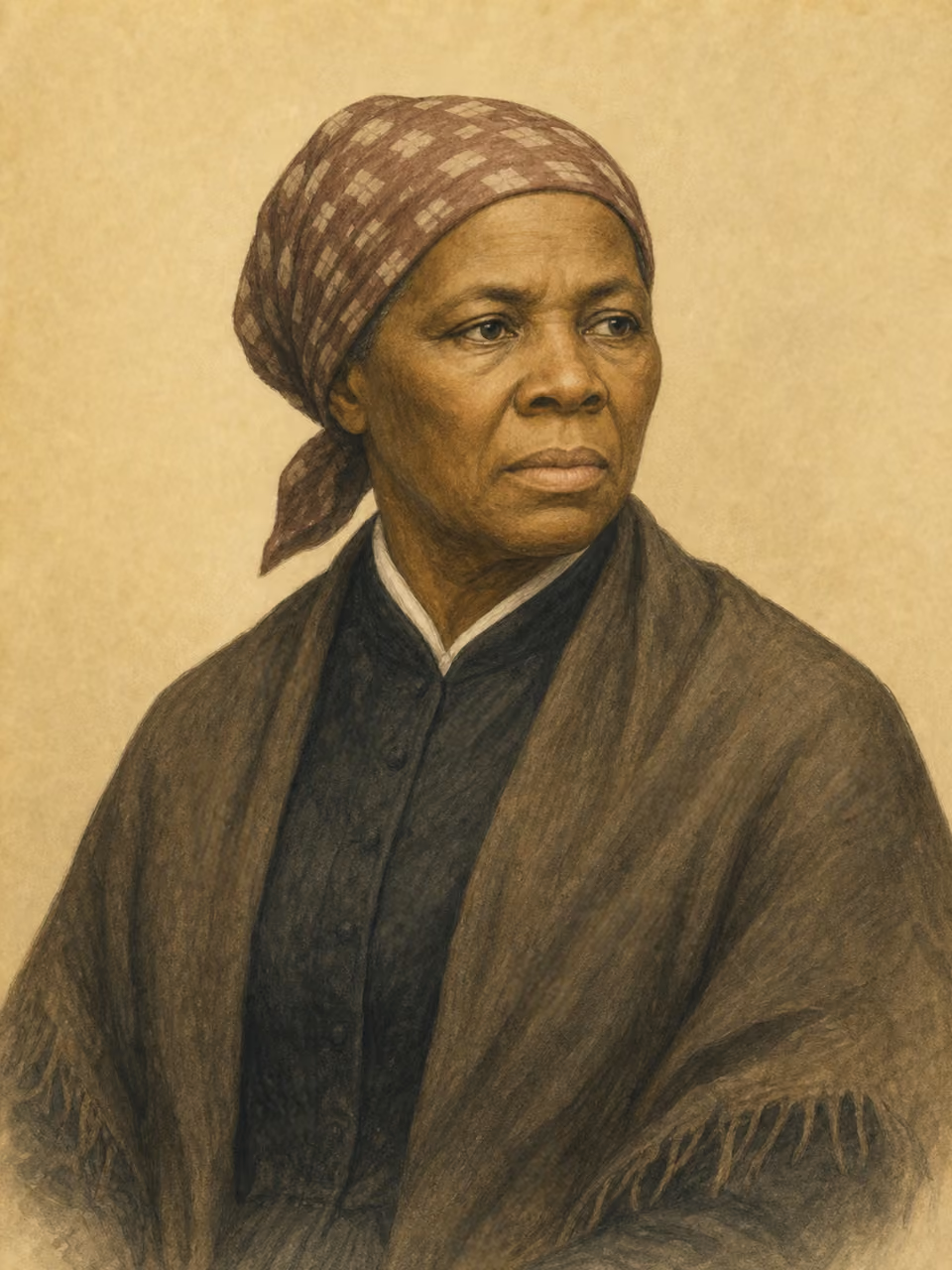
Portrait: AI-generated imagined likeness

Harriet Tubman

Abolitionist · Political activist · Suffragist

Years
c. 1822–1913
Birthplace
United States
Birth polity
United States
Era
Modern
Field
Social reform
Occupations
Abolitionist · Political activist · Suffragist

After escaping slavery in 1849, Tubman repeatedly returned south through the Underground Railroad to guide relatives and others out of bondage, turning liberation into a sequence of planned journeys rather than a single personal escape. During the Civil War she moved into nursing, intelligence, and support for the Combahee River Raid, showing that antislavery struggle also operated through military and logistical labor.

View in catalog

Historical context

Places

  • Dorchester County, Maryland

    Birth

  • Auburn, New York

    Residence

Events

  • Underground Railroad

    Movement · Leader

  • Combahee Ferry Raid

    1863

    Battle · Leader

Origins

Origins map
Birth country
Birth country
United States

Map: Natural Earth (PD)

Biography

Early life

Harriet Tubman was born into slavery in Maryland around 1822 and endured harsh labor and violence from childhood. A serious head injury left lifelong effects, but it did not break her determination to live free. After escaping in 1849, she returned again and again to rescue relatives and others.

Achievements

Tubman became one of the most famous conductors on the Underground Railroad, helping enslaved people reach safety in the North and in Canada. During the Civil War she worked for the Union as a nurse, cook, scout, and intelligence operative, and after the war she supported the movement for women's suffrage.

Character & anecdotes

She was often called Moses because of her ability to lead people through danger toward liberation. Her role in the Combahee River Raid in 1863 made her one of the few women directly associated with a military operation that freed large numbers of enslaved people.

Historical Impact

Tubman remains central because her life reveals resistance to slavery as organized action involving movement, secrecy, care, and political commitment all at once. Her place in American memory also matters for another reason: it makes Black women's leadership visible inside the history of emancipation, war, and citizenship rather than at the margins.