
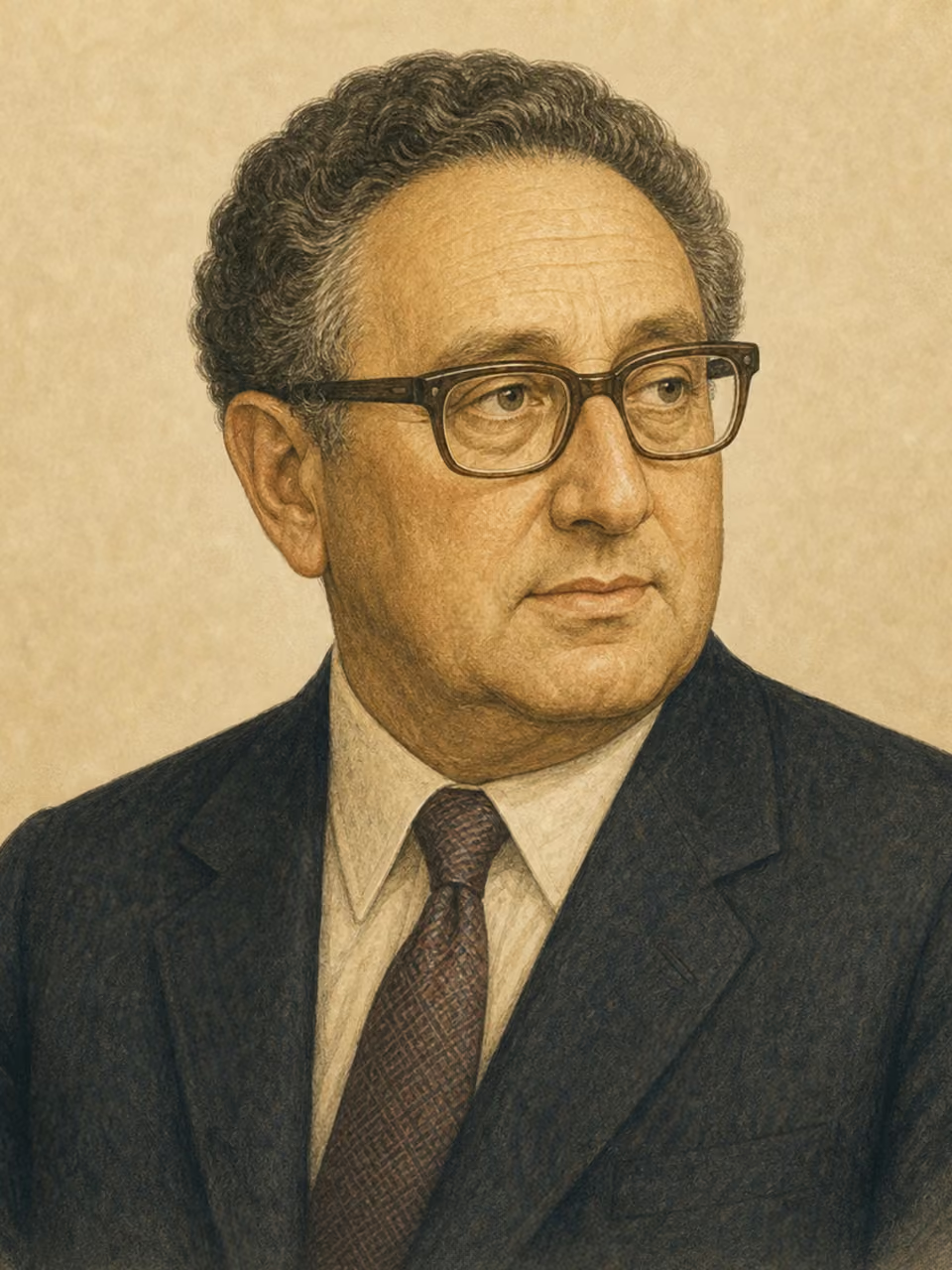
Henry Kissinger

Portrait: AI-generated imagined likeness

Henry Kissinger

Politician · Writer · Teacher

Years
1923–2023
Birthplace
United States
Birth polity
Weimar Republic
Era
Contemporary
Field
Politics
Occupations
Politician · Writer · Teacher

American diplomat and political scientist. During the Nixon administration, he was involved in the US-China rapprochement and the Vietnam peace negotiations, and symbolized the pragmatic diplomacy of the Cold War era. He is a person who thinks about the international order in the latter half of the 20th century.

View in catalog

Historical context

Places

  • Harvard University

    Education

  • Washington, D.C.

    Work

Works & achievements

  • Diplomacy

    1994

    Book

Events

  • Nixon visit to China

    1972

    Political event · Participant

  • Paris Peace Accords

    1973

    Political event · Participant

Origins

Origins map
Birth countryAssociated countries
Birth country
United States
Associated countries
Germany

Map: Natural Earth (PD)

Biography

Early life

Born in Germany to a Jewish family, he immigrated to the United States to escape Nazi persecution. After World War II, he studied at Harvard University and distinguished himself as a researcher of international politics and diplomatic history.

Achievements

As National Security Advisor and Secretary of State, he promoted closer ties between the United States and China, détente, and peace negotiations in Vietnam. It emphasized secret diplomacy and balance among great powers, and had a major influence on the dynamics of the Cold War.

Character & anecdotes

Although he received the Nobel Peace Prize, he also received strong criticism for his bombing of Cambodia and policy towards Chile. His evaluations differ depending on how his diplomatic achievements and impact on human rights and democracy are viewed.

Historical Impact

Kissinger shows that Cold War diplomacy was driven not only by ideology but also by military force, great power negotiations, and the management of regional conflicts. Studying him, you will also understand that while realism in international politics creates stability, it can also come at a heavy cost to local societies.