
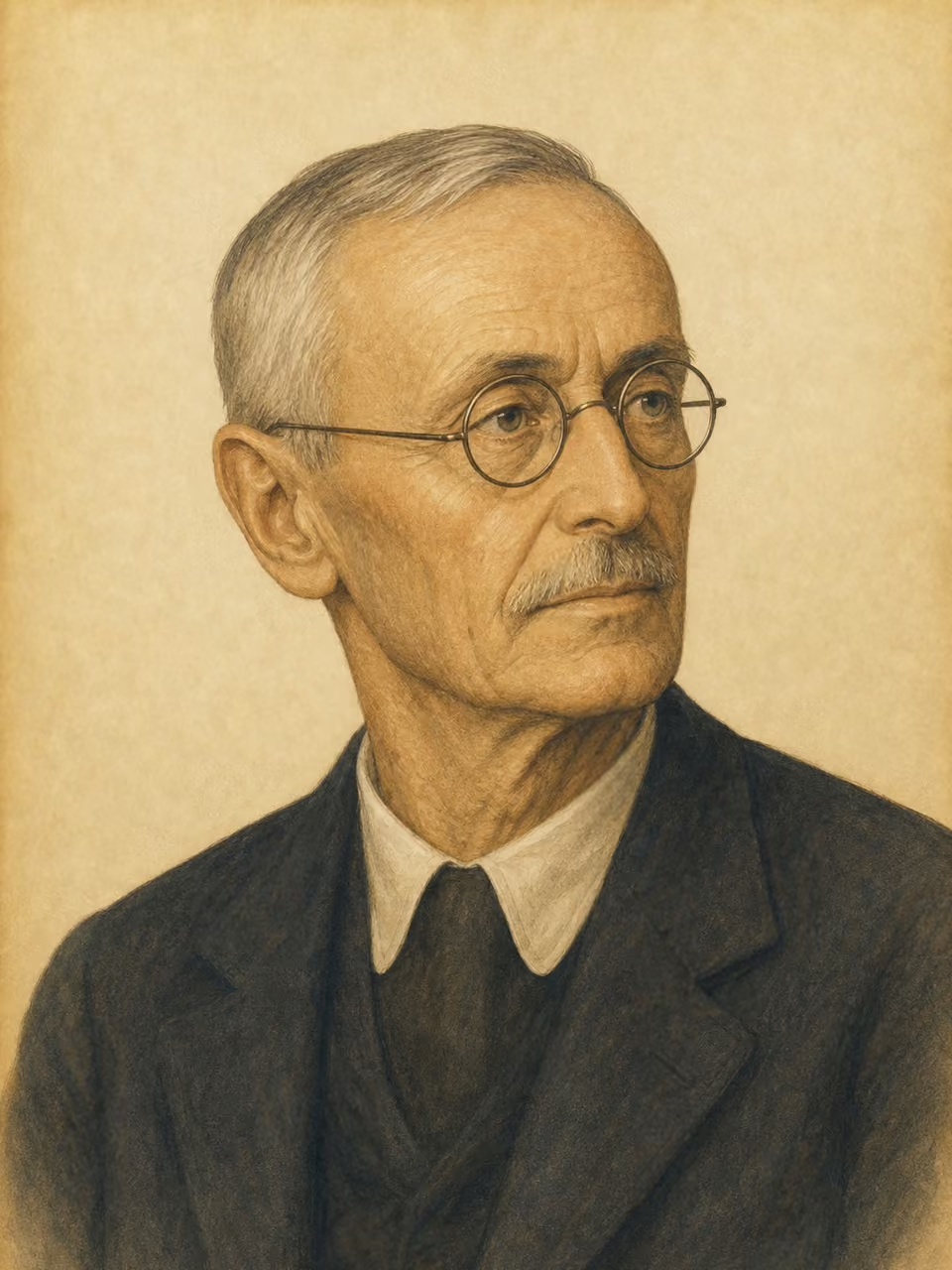
Hermann Hesse

Portrait: AI-generated imagined likeness

Hermann Hesse

Novelist · Poet · Writer

Years
1877–1962
Birthplace
Germany
Birth polity
German Empire
Era
Contemporary
Field
Literature
Occupations
Novelist · Poet · Writer

A German-speaking writer known for ``Demian'' and ``Siddhartha.'' It depicts an individual's inner life, religious exploration, and discomfort with modern civilization. It is important when considering 20th century literature and spiritual culture.

View in catalog

Historical context

Places

  • Calw

    Birth

  • Montagnola

    Residence

Works & achievements

  • Demian

    1919

    Book

  • Siddhartha

    1922

    Book

Origins

Origins map
Birth countryAssociated countries
Birth country
Germany
Associated countries
Switzerland

Map: Natural Earth (PD)

Biography

Early life

Born into a pietistic family in southern Germany, he turned to literature as a result of his opposition to seminary life and his experience working in a bookstore. Later, he lived in Switzerland, where he created works depicting his mental crisis after World War I.

Achievements

He received the Nobel Prize for Literature in 1946 for his works such as ``Under the Wheel,'' ``Demian,'' ``Siddhartha,'' and ``The Glass Bead Game.'' His interest in Eastern thought and psychology was also reflected in his works.

Character & anecdotes

Hesse's work was also reevaluated in youth culture in the 1960s. This is because readers tired of the system and war read it as a story of seeking inner freedom.

Historical Impact

When we study Hesse, we understand that 20th century literature expressed the times not only through political events, but also through personal anxieties, religious exploration, and criticism of civilization. It provides clues to read the inner lives of modern people. It will also be easier to understand how it will be accepted by the post-war generation.