
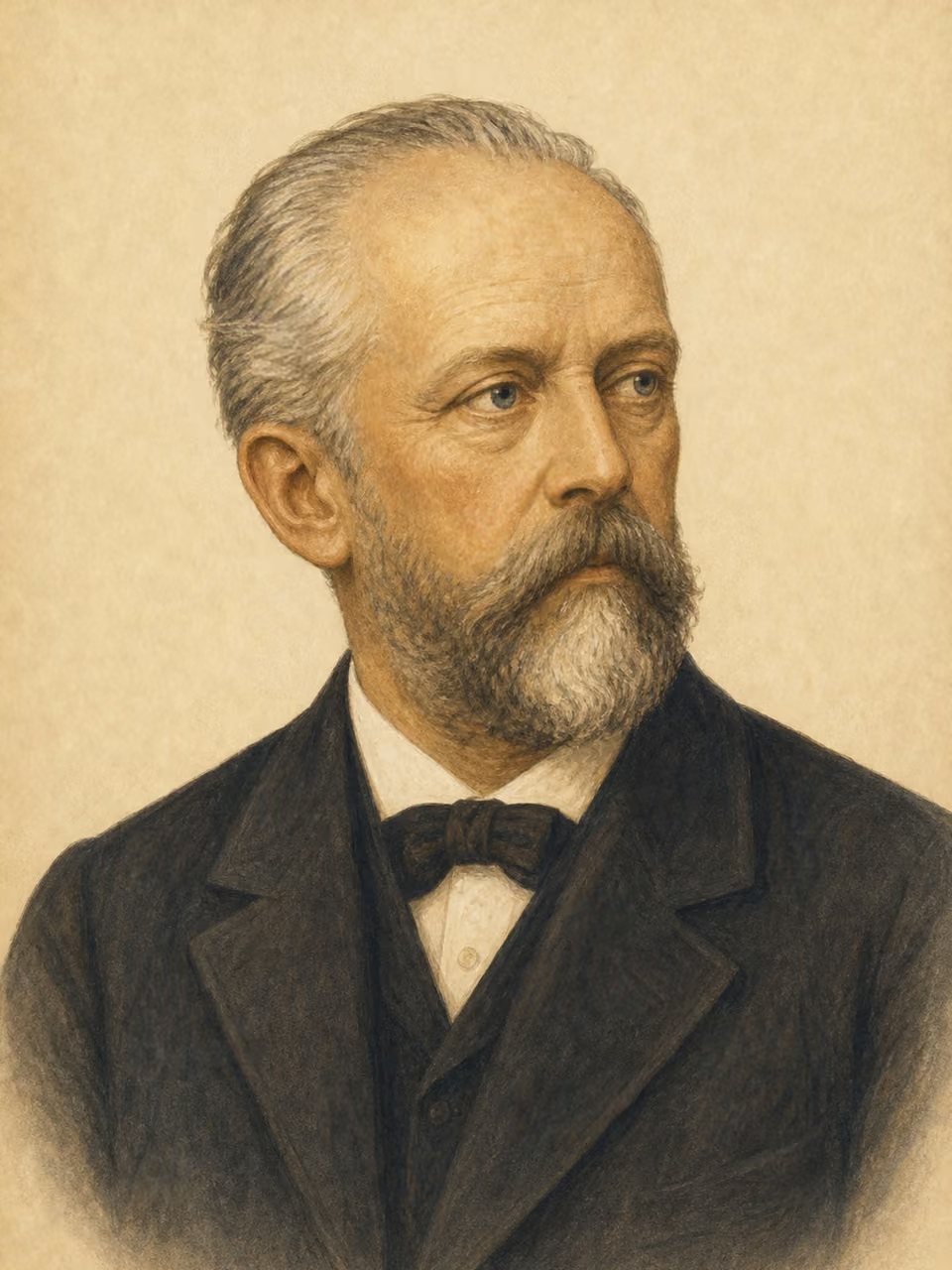
Hermann von Helmholtz

Portrait: AI-generated imagined likeness

Hermann von Helmholtz

Physicist · Physician

Years
1821–1894
Birthplace
Germany
Birth polity
Kingdom of Prussia
Era
Modern
Field
Science
Occupations
Physicist · Physician

A 19th century German physicist and physiologist known for his energy conservation law and sensory research. He conducted research across medicine, physics, and psychology. This is important when considering the specialization of modern science.

View in catalog

Historical context

Places

  • Potsdam

    Birth

  • Berlin

    Work

Works & achievements

  • On the Conservation of Force

    1847

    Theory

Origins

Origins map
Birth country
Birth country
Germany

Map: Natural Earth (PD)

Biography

Early life

Born in Potsdam, Prussia, he was trained as a military doctor. While training in medicine, he expanded his interest to mathematics and physics, and sought to explain the body and natural phenomena using the same scientific laws.

Achievements

In 1847, he published research on the conservation of force and developed ideas that linked heat, motion, and work. He also researched the physiology of hearing and vision, and contributed to the development of scientific instruments.

Character & anecdotes

Helmholtz's work shows the breadth of nineteenth-century science, in which doctors could also be physicists. It reflects the state of knowledge before and after the university and research institute systems were established.

Historical Impact

When you study Helmholtz, you can see that modern science has shifted from natural philosophy to a system that emphasizes experiments, measurements, and mathematical models. I can also understand the era when medicine and physics worked together. You can also see the image of a scientist who transcends his field of expertise.