
Hildegard of Bingen

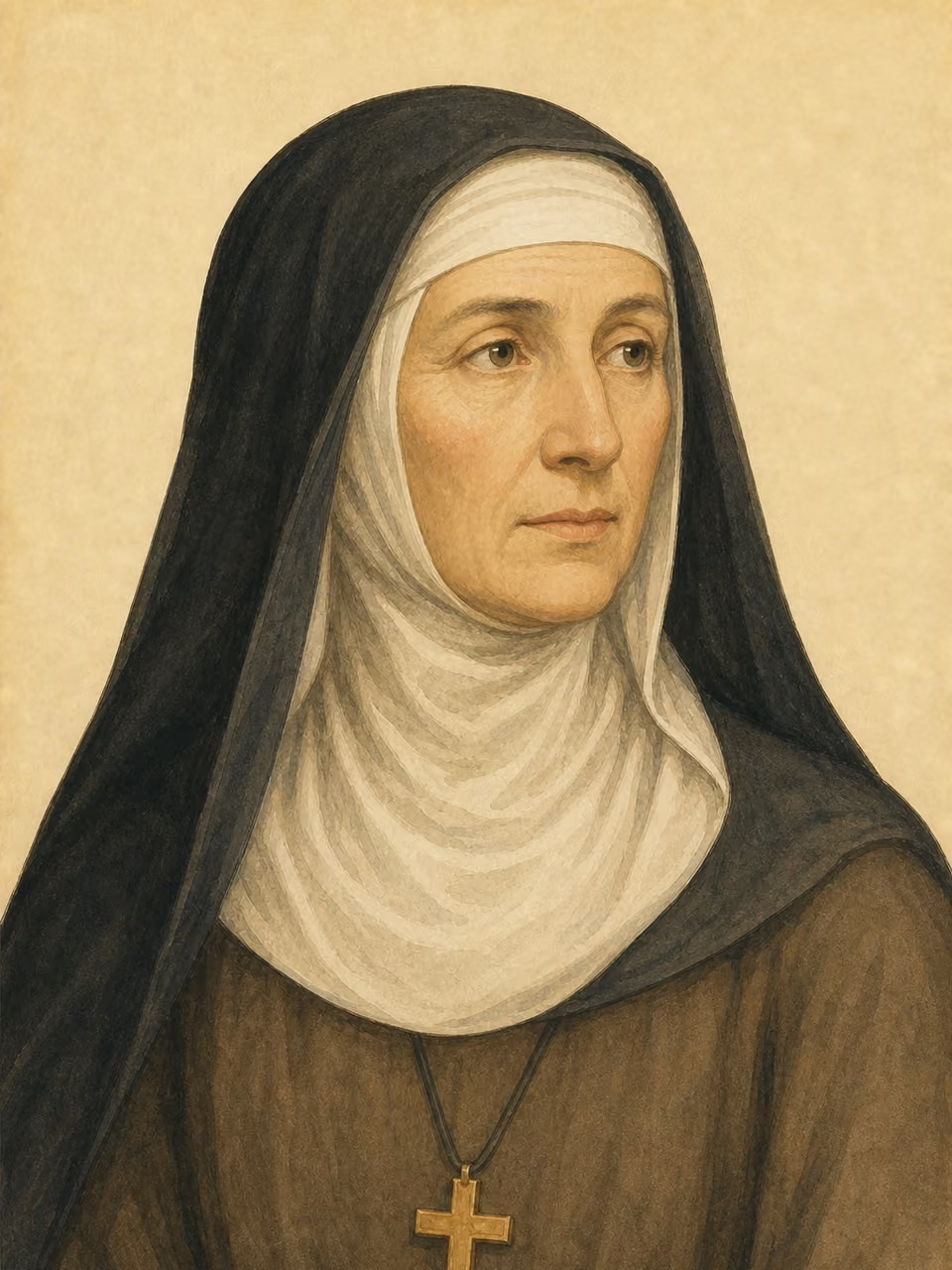
Portrait: AI-generated imagined likeness

Hildegard of Bingen

Composer · Abbess · Mystic

Years
1098–1179
Birthplace
Germany
Birth polity
Holy Roman Empire
Era
Medieval
Field
Music
Occupations
Composer · Abbess · Mystic

Hildegard of Bingen turned visionary experience in the monastery into books, letters, music, and eventually a public voice that reached beyond the cloister. Her soaring liturgical songs and her interventions in church affairs show a figure who translated spiritual authority into intellectual and artistic production.

View in catalog

Historical context

Places

  • Bermersheim vor der Hoehe

    Birth

  • Bingen am Rhein

    Work

Works & achievements

  • Scivias

    –1151

    Book

  • Ordo Virtutum

    Music

Origins

Origins map
Birth country
Birth country
Germany

Map: Natural Earth (PD)

Biography

Early life

Hildegard was born in 1098 in the Rhineland and entered religious life at an early age. Her own writings describe visionary experiences from childhood, while monastic life gave her the institutional setting in which those experiences became books, music, and public authority.

Achievements

She produced major visionary works, composed a large body of sacred songs, and created the morality play Ordo Virtutum. As founder of the Rupertsberg convent and a prolific correspondent, she also intervened in ecclesiastical and political life far beyond her cloister.

Character & anecdotes

Hildegard preached publicly in an era when women's authority was tightly constrained, and late in life she even faced disciplinary conflict with church officials. Those episodes underline how exceptional her range of action was within the twelfth century.

Historical Impact

Her work became a key example of how religious authority, learning, and artistic creation could be joined in the life of a medieval woman. Modern revivals in early music, medieval studies, theology, women's history, and even environmental or medical history have all found Hildegard useful precisely because her legacy reaches across institutional boundaries.

Notes

Her musical corpus survives in unusual abundance for a medieval composer, which is one reason her work remains so audible today.