
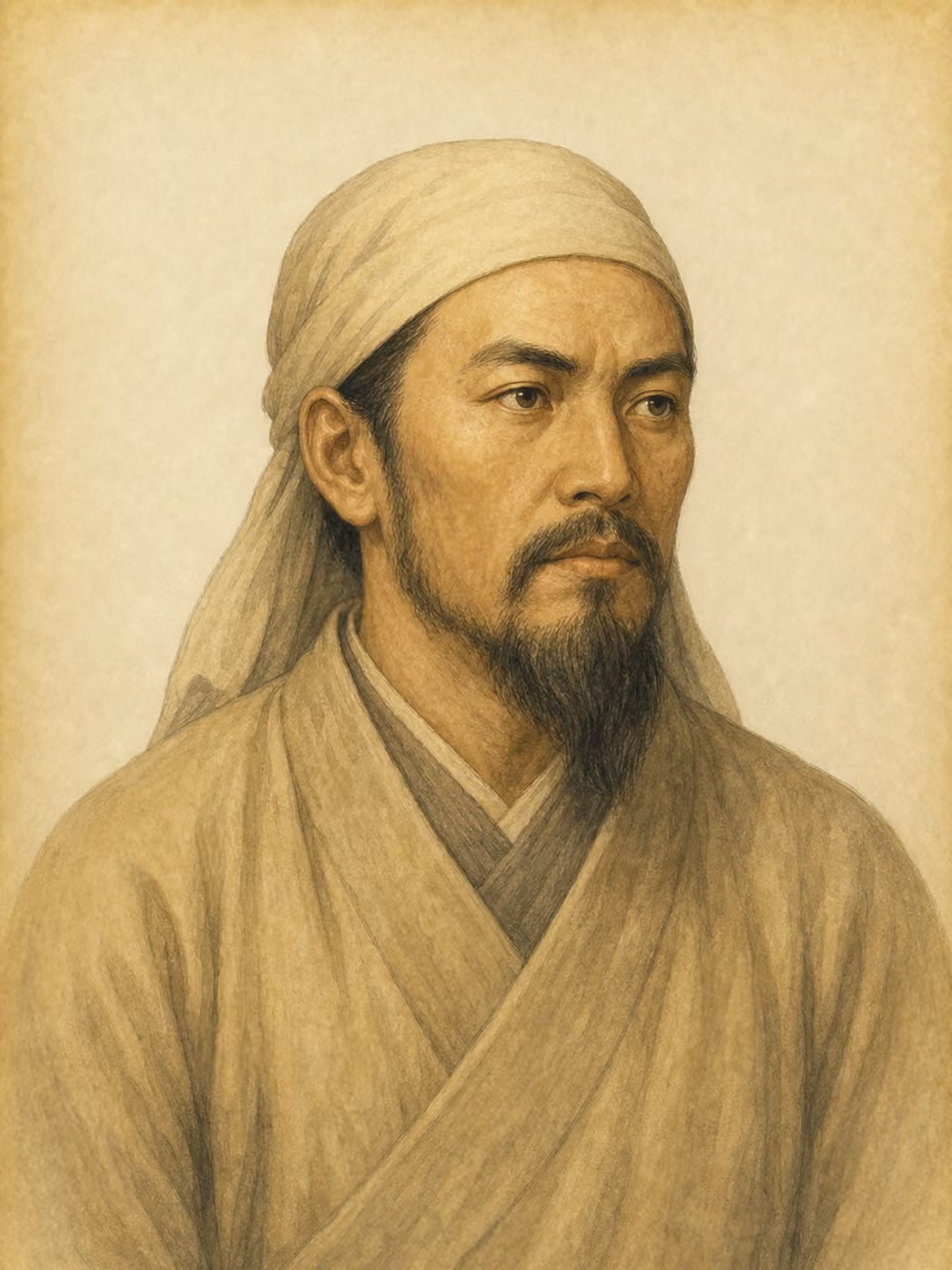
Hong Xiuquan

Portrait: AI-generated imagined likeness

Hong Xiuquan

Religious leader · revolutionary

Years
1814–1864
Birthplace
China
Birth polity
Qing dynasty
Era
Modern
Field
Religion
Occupations
Religious leader · revolutionary

A religious rebel leader in the late Qing Dynasty who founded the Taiping Kingdom. Advocating a unique faith that incorporated Christian elements, he led a large-scale rebellion against the Qing Dynasty. It is an example of the crisis in China in the 19th century.

View in catalog

Historical context

Places

  • Hua County, Guangdong

    Birth

  • Nanjing

    Work

Events

  • Taiping Rebellion

    1851–1864

    Revolution · Leader

Origins

Origins map
Birth country
Birth country
China

Map: Natural Earth (PD)

Biography

Early life

Born in the Hakka society of Guangdong, he had the experience of failing the imperial examination. After coming into contact with the missionaries' writings, he formed his own religious views and attracted people who were dissatisfied with society.

Achievements

In 1851, he proclaimed the Taiping Kingdom and established a government with Nanjing as Tianjing. Although the movement advocated reforms in the land system and gender relations, the movement collapsed in 1864 due to internal conflict and a counterattack by the Qing army and Goyong.

Character & anecdotes

Hong Xiu-quan is said to have positioned himself as the younger brother of Christ. It is characterized by the fact that the fragmented acceptance of Western religion was combined with Chinese folk beliefs and social dissatisfaction.

Historical Impact

Studying Hong Xiuquan reveals that the crisis at the end of the Qing Dynasty was deepened not only by external pressure, but also by domestic population growth, poverty, dissatisfaction with the civil society, and religious movements. This book serves as an entry point for thinking about rebellion and reform in modern China. We can also see the combination of religion and social movements.