
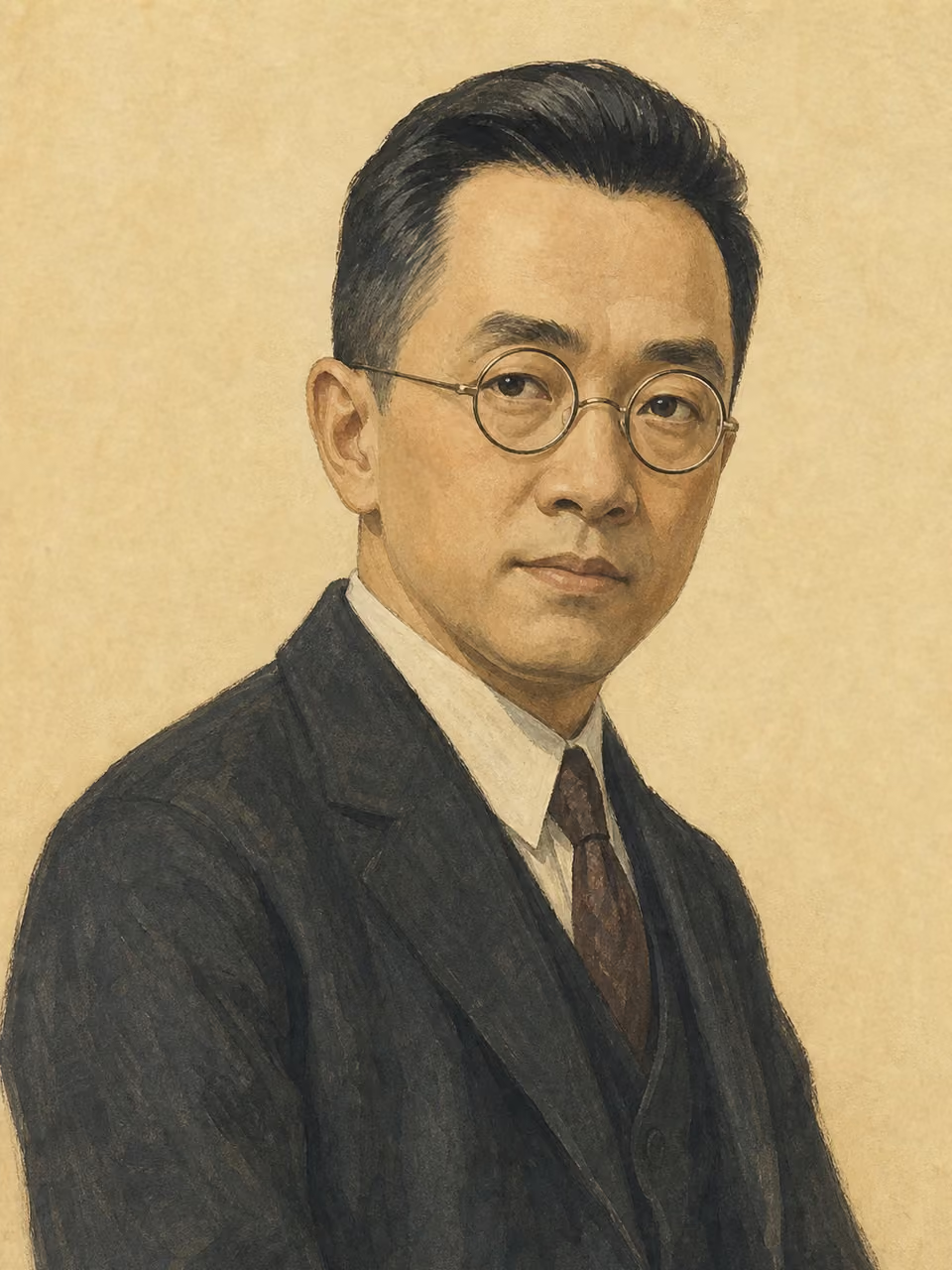
Hu Shih

Portrait: AI-generated imagined likeness

Hu Shih

Philosopher · Writer · Politician · Teacher

Years
1891–1962
Birthplace
China
Birth polity
Qing dynasty
Era
Modern
Field
Philosophy
Occupations
Philosopher · Writer · Politician · Teacher

A modern Chinese thinker and literary figure who promoted the White Talk Literature movement. As one of the central figures of the new cultural movement, he advocated colloquial expressions and experimentalism in place of classical writing styles. This is the key to thinking about modern Chinese intellectuals.

View in catalog

Historical context

Places

  • Jixi

    Birth

  • Peking University

    Work

Events

  • New Culture Movement

    1915–1923

    Movement · Leader

Origins

Origins map
Birth countryAssociated countries
Birth country
China
Associated countries
Taiwan · United States

Map: Natural Earth (PD)

Biography

Early life

Originally from Anhui Province, he came into contact with pragmatism and modern scholarship through studying in the United States. After returning to Japan, he taught at Peking University and advocated for cultural reform during the first political change in the late Qing Dynasty.

Achievements

He advocated literary reform through white conversation, and criticized the traditional literary-centered culture through magazines such as Shinseinen. He had a great influence on modern Chinese thought in terms of his academic methods and liberal stance.

Character & anecdotes

Hu Shi placed more emphasis on empirical research and gradual reform than on revolutionary radicalism. Although he was involved in the same New Culture Movement as Lu Xun and others, there were differences in the way he approached politics and culture.

Historical Impact

Studying Hu Shi reveals that the transformation of modern China was not only a political revolution, but also a cultural reform involving language, education, literature, and academic methods. He is an important figure when considering the relationship between tradition and modernization and the politics of language reform.