
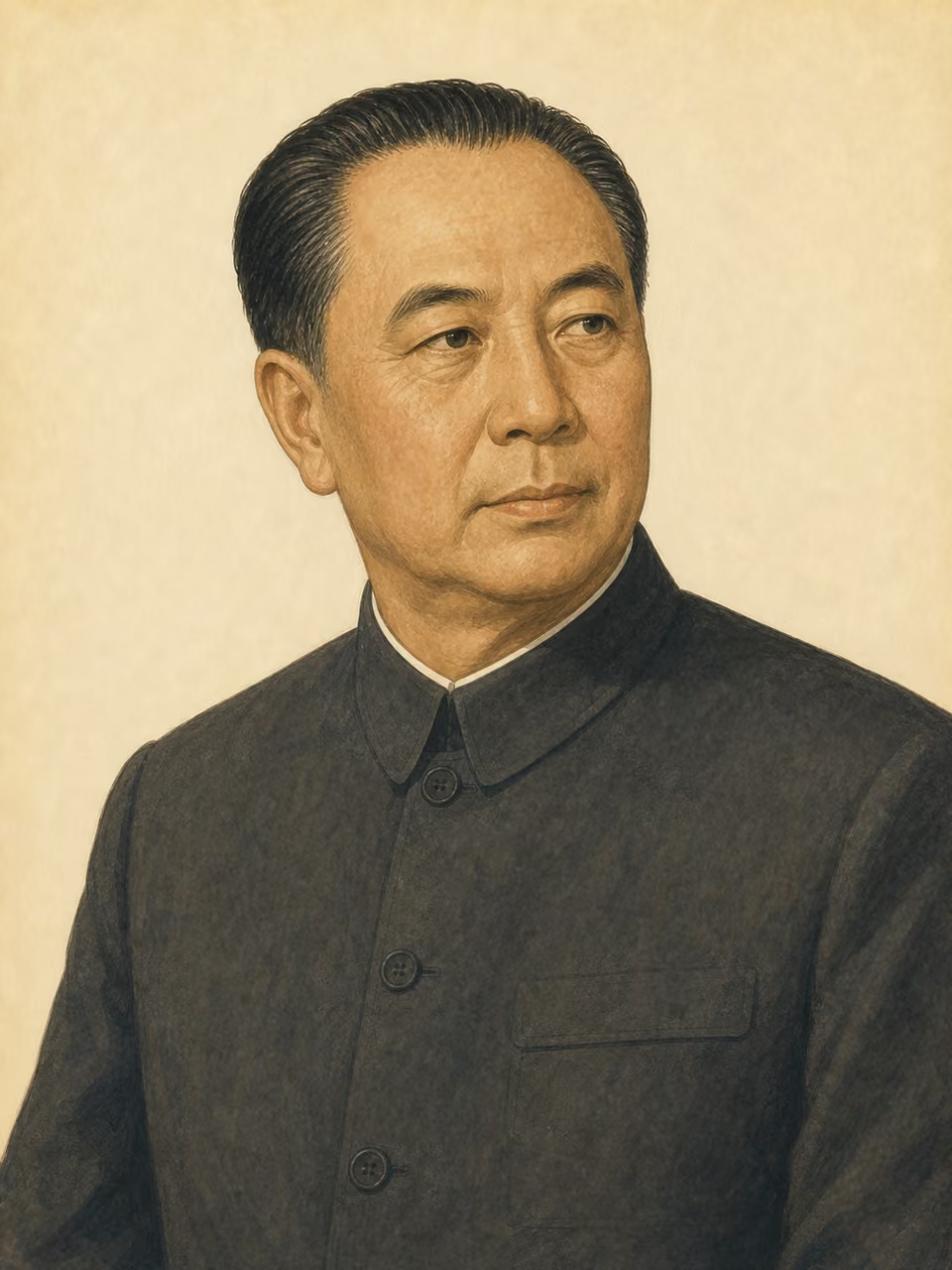
Hua Guofeng

Portrait: AI-generated imagined likeness

Hua Guofeng

Politician

Years
1921–2008
Birthplace
China
Birth polity
Republic of China
Era
Contemporary
Field
Politics
Occupations
Politician

Chinese Communist Party politician. After Mao Zedong's death, he briefly became the supreme leader and was responsible for arresting the Gang of Four and transferring power. Eventually, he handed over control to Deng Xiaoping. He is a person who thinks about the turning point in modern China.

View in catalog

Historical context

Places

  • Beijing

    Work

Events

  • Post-Mao political transition

    1976–1978

    Political event · Leader

Origins

Origins map
Birth country
Birth country
China

Map: Natural Earth (PD)

Biography

Early life

Born in Shanxi Province, he participated in Communist Party activities during the Anti-Japanese War. After the establishment of the People's Republic of China, he was promoted in local administration and approached central politics during the Cultural Revolution.

Achievements

In 1976, he became Prime Minister and Party Chairman as Mao Zedong's successor, and arrested the Gang of Four, bringing the Cultural Revolution to an end. However, the inheritance of Mao Zedong's line, symbolized by ``two things,'' was criticized by reformers.

Character & anecdotes

Because Hua Guofeng was China's supreme leader for a short period of time, he is often overshadowed by Deng Xiaoping. Still, it plays an important role as a political bridge from the Mao Zedong era to reform and opening up.

Historical Impact

If you study Hua Guofeng, you will see that major system changes did not occur all at once, but proceeded through the continuation of old lines, power struggles, and practical policy changes. This is the key to reading the post-Mao era. The difficulty of changing leadership can also be seen.