
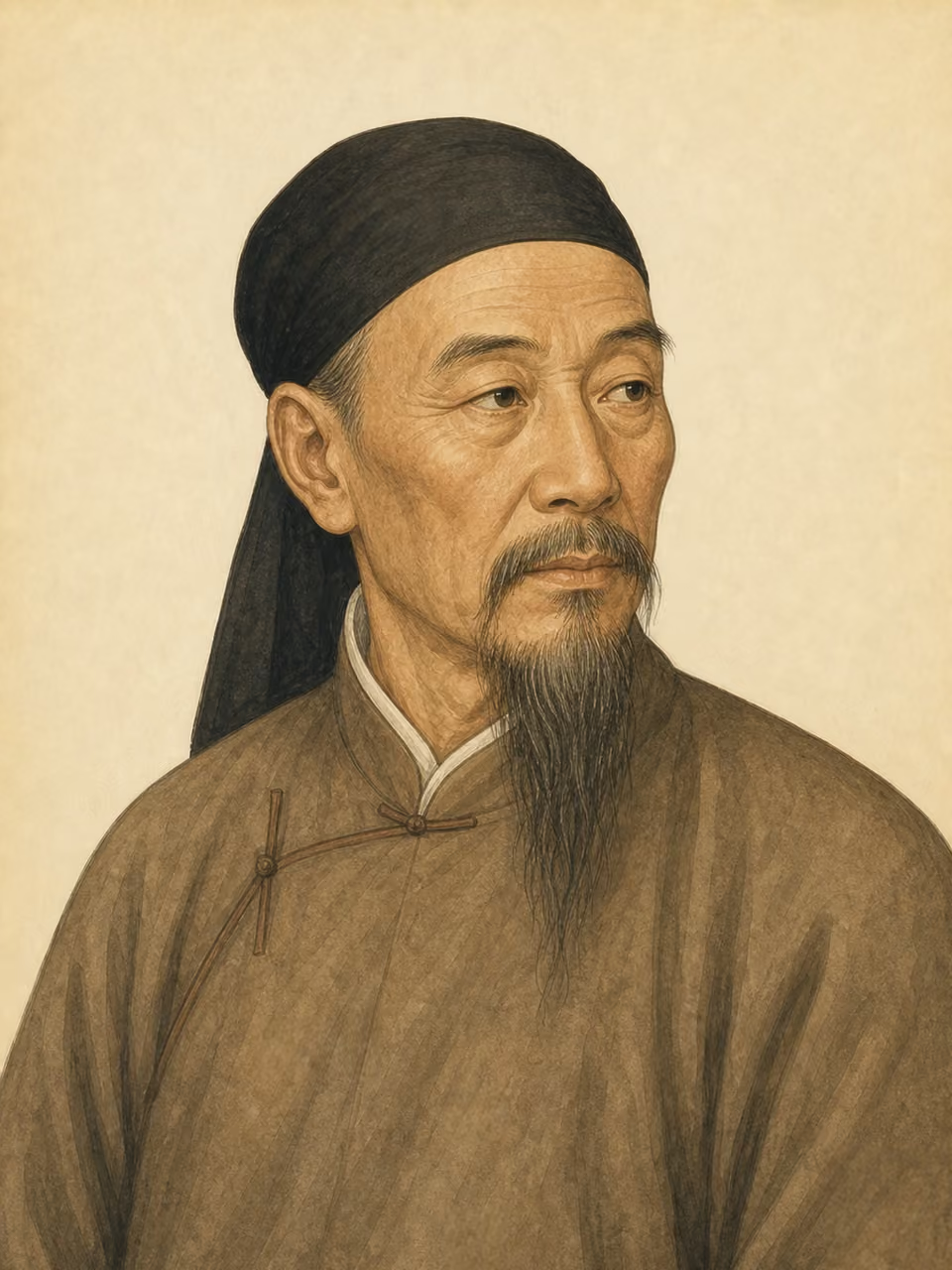
Huang Zongxi

Portrait: AI-generated imagined likeness

Huang Zongxi

Philosopher · historian · Writer

Years
1610–1695
Birthplace
China
Birth polity
Ming dynasty
Era
Early modern
Field
Philosophy
Occupations
Philosopher · historian · Writer

A thinker and historian from the late Ming and early Qing dynasties. After experiencing the fall of the Ming Dynasty, he developed a political theory that criticized the dictatorship of the monarchy. He is a person who considers early modern Chinese thought and dynastic change.

View in catalog

Historical context

Places

  • Zhejiang

    Work

Works & achievements

  • Mingyi daifang lu

    1663

    Book

Origins

Origins map
Birth country
Birth country
China

Map: Natural Earth (PD)

Biography

Early life

Born into an intellectual family in Zhejiang, he was exposed to an atmosphere of political criticism associated with the Donglin school. At the end of the Ming era, there was a combination of eunuch politics, financial crisis, peasant revolt, and the advance of Manchu powers.

Achievements

In ``Meiyi Taiboroku,'' he criticized the monarch's personalization of the country and presented a political concept that emphasized the roles of schools and the prime minister. He did not serve the Qing dynasty, but maintained his status as a member of the Ming Dynasty through his studies and writings.

Character & anecdotes

Huang Zongxi was involved in the anti-Qing movement, but eventually chose to record the era through scholarship rather than armed resistance. He was a thinker who reexamined the political system from the perspective of the losers.

Historical Impact

If you study Huang Zongxi, you will find that Chinese political thought included sharp criticism of monarchical power and a theory of institutional reform. This provides a clue to the impact that the Ming and Qing changes had on the world of thought. It can also be used for comparison with surrounding areas from the same era.