
Huiyuan

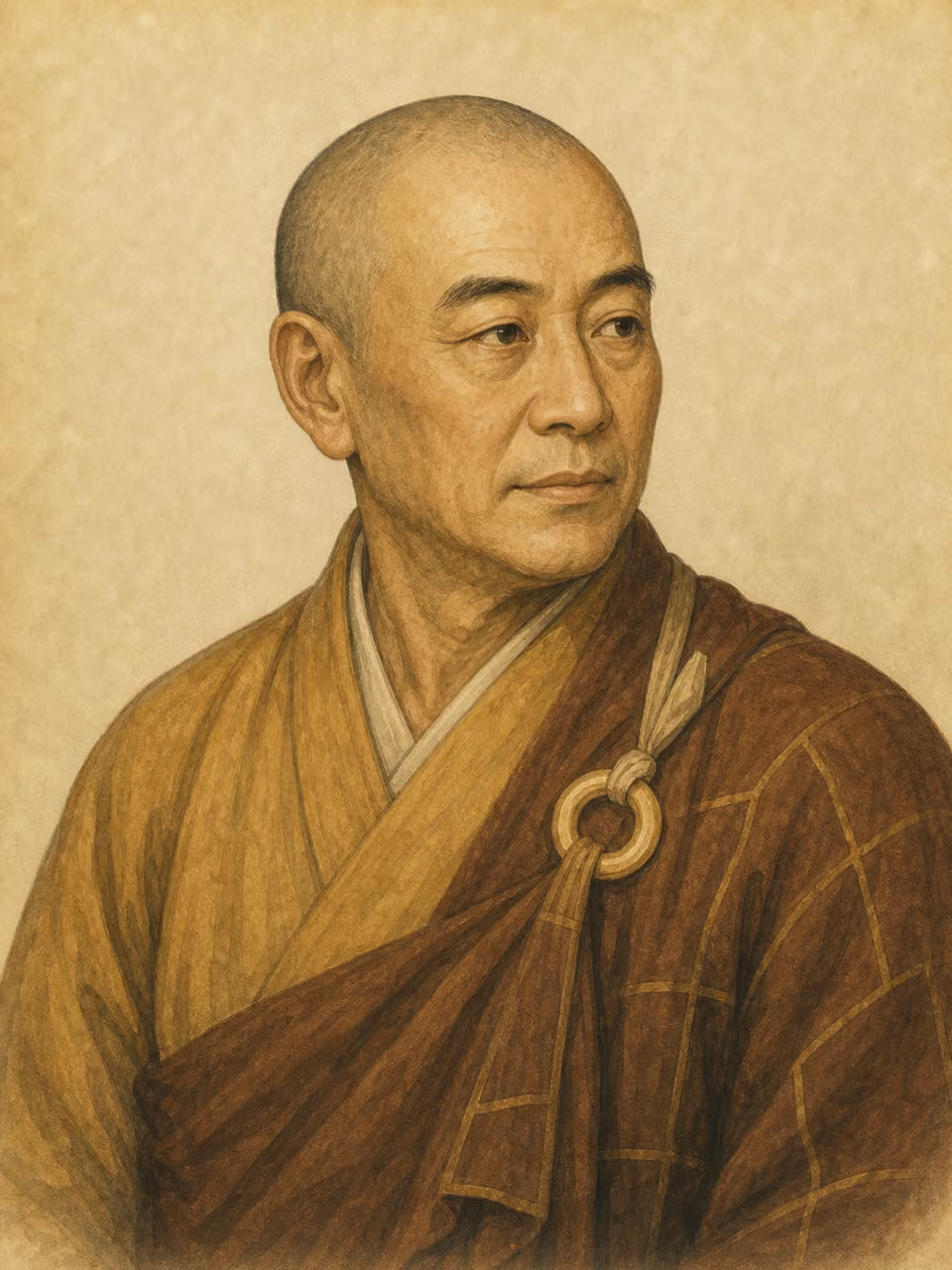
Portrait: AI-generated imagined likeness

Huiyuan

Buddhist monk · Religious leader · Philosopher · translator

Years
334–416
Birthplace
China
Birth polity
Eastern Jin
Era
Ancient
Field
Religion
Occupations
Buddhist monk · Religious leader · Philosopher · translator

A monk from the Eastern Jin Dynasty. He formed a Buddhist order in Lushan and played an important role in the development of Pure Land belief. He is a person who understands the process by which Chinese Buddhism became localized.

View in catalog

Historical context

Places

  • Shanxi

    Birth

  • Mount Lu

    Work

Events

  • White Lotus Society

    Movement · Leader

  • Formation of Chinese Pure Land Buddhism

    380–416

    Cultural event · Participant

Origins

Origins map
Birth country
Birth country
China

Map: Natural Earth (PD)

Biography

Early life

Born in northern China, he studied Buddhism connected to the Doan school of thought. Due to the turmoil in the Sixteen Kingdoms of the Five Hus and the Nandu of Eastern Jin, Buddhist intellectuals were required to take on a new social role.

Achievements

He built a community of training and learning centered around Torinji Temple in Lushan, and spread faith in Amida Buddha. He discussed the distance between Buddhist organizations and state power and advocated the autonomy of monks.

Character & anecdotes

Huiyuan is also known for the legend that he never descends from the mountain, and is associated with the ideal image of a monk who distances himself from secular power. He is a character whose seclusion and the formation of a religious group are talked about at the same time.

Historical Impact

Studying Huiyuan, we can see that Chinese Buddhism took root not only through an understanding of the scriptures, but also through the practice community, Pure Land faith, and relationship with the state. He is an important figure in the history of East Asian Buddhism. It can also be used for comparison with surrounding areas from the same era.