
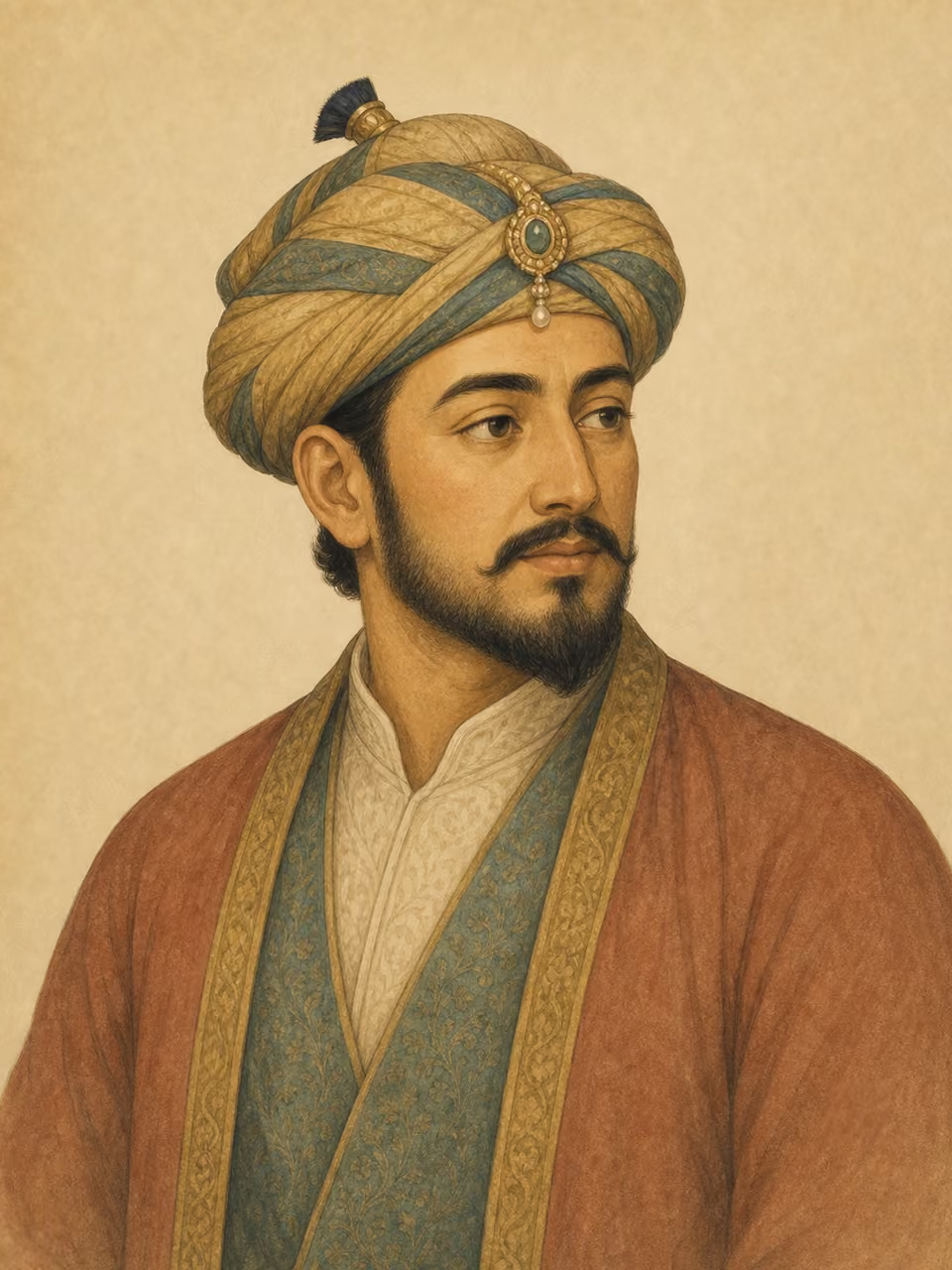
Humayun

Portrait: AI-generated imagined likeness

Humayun

Emperor · Monarch

Years
1508–1556
Birthplace
Afghanistan
Birth polity
Timurid-Mughal milieu
Era
Early modern
Field
Politics
Occupations
Emperor · Monarch

He was the second emperor of the Mughal Empire and inherited the empire of his father Babur, but was once chased away by the Sur dynasty. He experienced exile and reinstatement and created the premises for the Akbar era. This is important when considering the formation of kingship in early modern South Asia.

View in catalog

Historical context

Places

  • Kabul

    Birth

  • Delhi

    Work

  • Lahore

    Campaign

Events

  • Mughal restoration

    1555

    Political event · Leader

Origins

Origins map
Birth countryAssociated countries
Birth country
Afghanistan
Associated countries
India · Pakistan

Map: Natural Earth (PD)

Biography

Early life

Born in Kabul as the son of Babur, he grew up in a Timurid-style sense of royal authority and a political culture that spanned Central Asia and India. After his father's death, he inherited a vast but unstable territory.

Achievements

Although he was defeated by Sher Shah and lost India, he regained power with the support of the Safavids. He died shortly after retaking Delhi and reestablishing the Mughal Empire in 1555.

Character & anecdotes

Humayun's reign tends to be told as a story of failure and comeback. His experience in exile also served as an opportunity for Persian culture to deeply enter the Mughal court.

Historical Impact

When we study Humayun, we learn that the Mughal Empire was not a large, stable empire from its early days, but was rebuilt amidst political relationships in Central Asia, Iran, and India. It is important as a preliminary step to understanding Akbar's rule.