
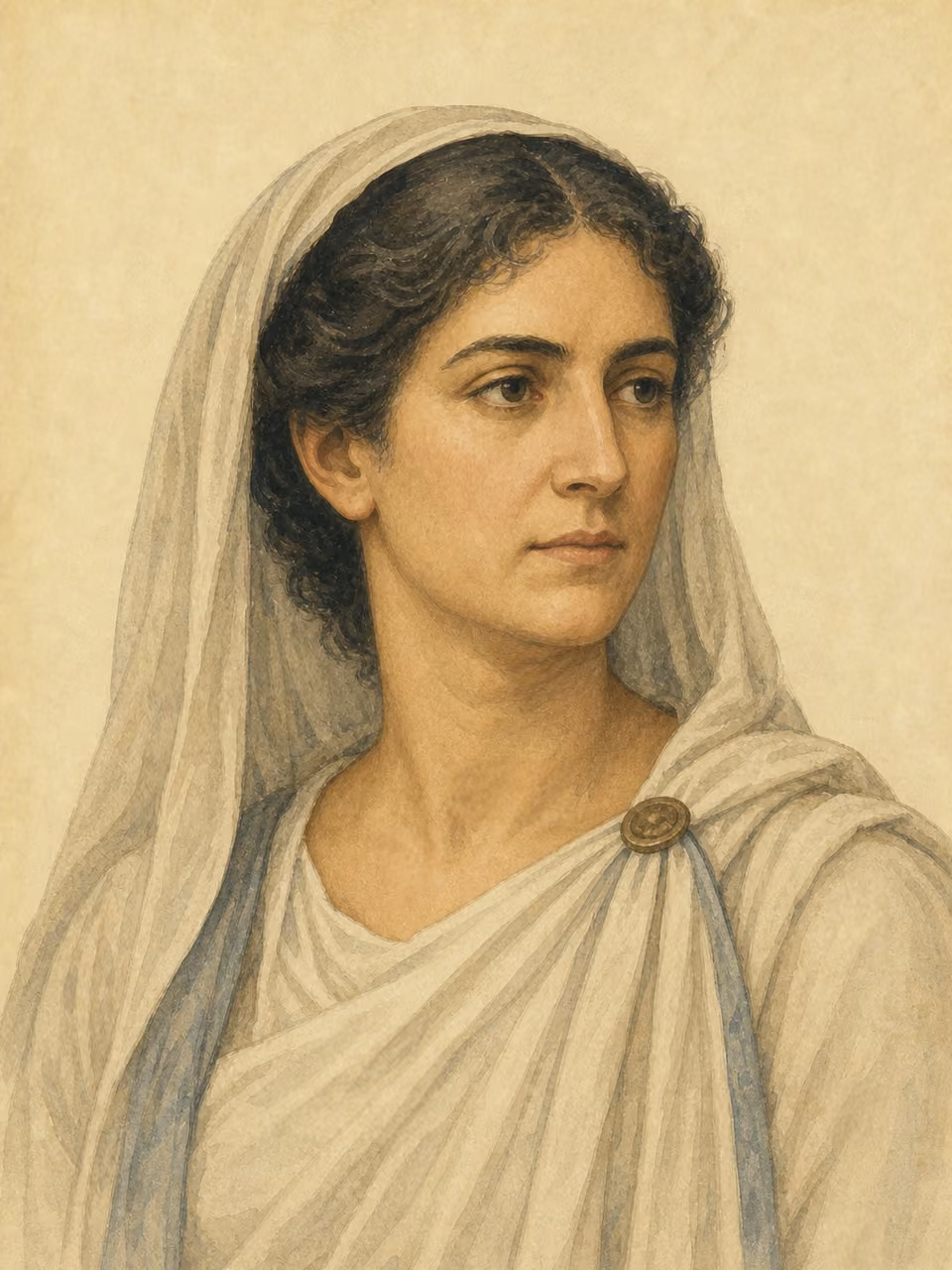
Hypatia

Portrait: AI-generated imagined likeness

Hypatia

Mathematician · Astronomer · Philosopher

Years
c. 360–415
Birthplace
Egypt
Birth polity
Eastern Roman Empire
Era
Ancient
Field
Science
Occupations
Mathematician · Astronomer · Philosopher

Hypatia taught mathematics and philosophy in Alexandria as a public intellectual within a city where scholarship, civic rivalry, and religious politics were tightly entangled. Her murder by a mob in 415 made her life impossible to separate from the question of what happens when learning becomes exposed to urban conflict.

View in catalog

Historical context

Places

  • Alexandria

    Birth

Events

  • Murder of Hypatia

    415

    Political event · Subject

Origins

Origins map
Birth country
Birth country
Egypt

Map: Natural Earth (PD)

Biography

Early life

Hypatia was probably born in Alexandria in the later fourth century as the daughter of the mathematician Theon. She emerged from a city that still carried the prestige of older intellectual traditions in mathematics, astronomy, and philosophy.

Achievements

She taught Neoplatonic philosophy and appears to have worked within the commentary traditions surrounding authors such as Diophantus and Ptolemy. Even with fragmentary evidence, she stands out as an important mediator of classical learning at a time of political and religious change.

Character & anecdotes

In 415 she was murdered by a mob amid fierce urban conflict in Alexandria. Her death has often been retold as a symbol of the vulnerability of scholarship within polarized public life, though the event also belonged to the specific politics of her city.

Historical Impact

Later memory made Hypatia stand at the crossing point of several histories at once: the transmission of classical knowledge, the vulnerability of intellectual life, and the place of women in learned culture. Because so little of her own writing survives, her reputation itself became a powerful cultural instrument in modern debates about reason, education, and scientific participation.

Notes

Much of what is claimed about her work must be reconstructed from indirect testimony rather than from surviving books of her own.