
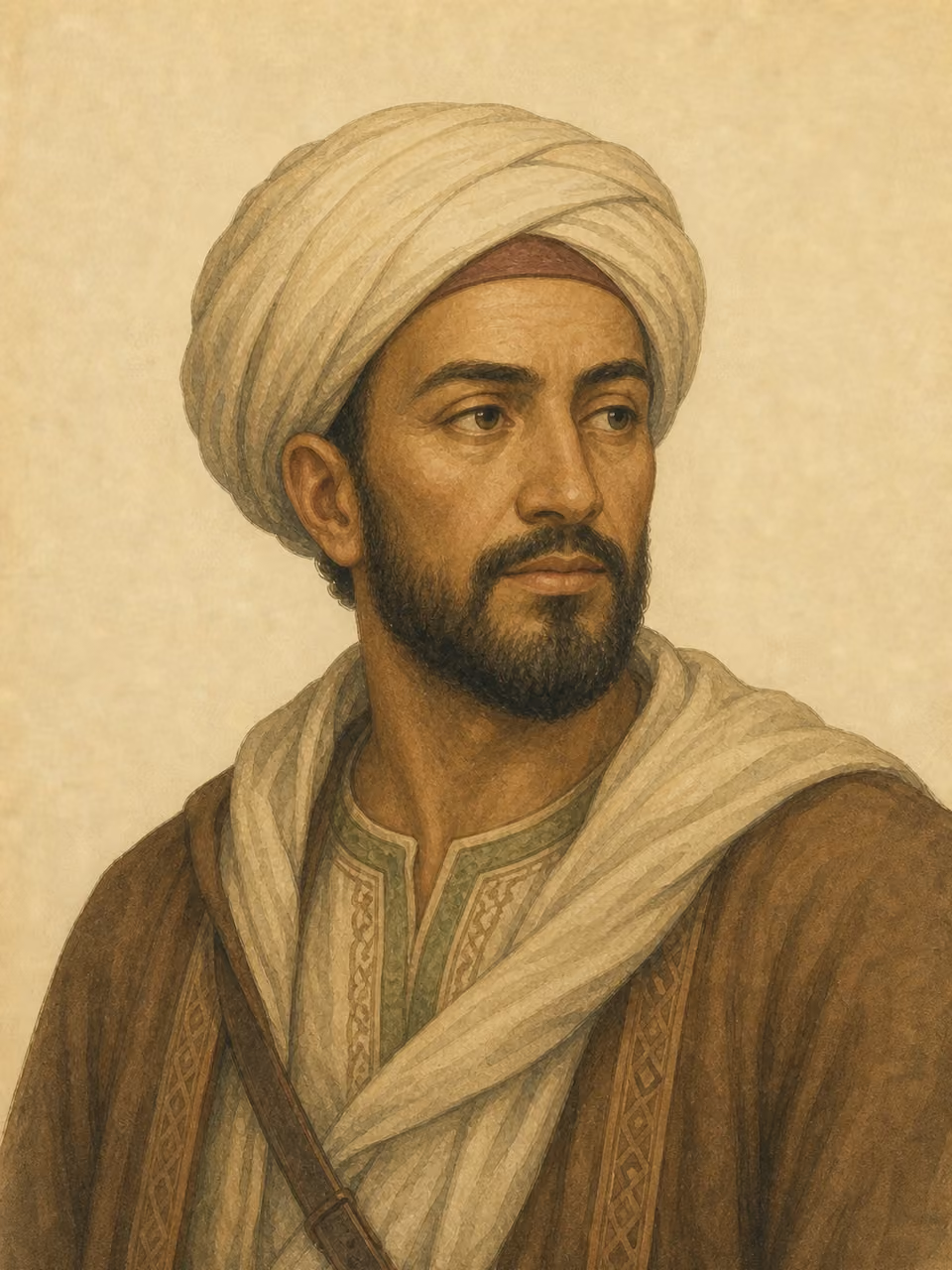
Ibn Battuta

Portrait: AI-generated imagined likeness

Ibn Battuta

Explorer · Writer

Years
1304–c. 1368
Birthplace
Morocco
Birth polity
Marinid Sultanate
Era
Medieval
Field
Exploration
Occupations
Explorer · Writer

Ibn Battuta set out as a young jurist intending to make the pilgrimage to Mecca, then kept going for decades through ports, courts, commercial routes, and centers of learning across Afro-Eurasia. The Rihla preserves that motion in scenes of shipwreck, patronage, frustration, and opportunity, making travel feel like a social skill rather than mere adventure.

View in catalog

Historical context

Places

  • Tangier

    Birth

Works & achievements

  • Rihla

    c. 1355

    Book

Events

  • Ibn Battuta's travels

    1325–1354

    Voyage · Participant

Origins

Origins map
Birth country
Birth country
Morocco

Map: Natural Earth (PD)

Biography

Early life

Born in Tangier in 1304, Ibn Battuta set out first as a young man trained in Islamic law and intending to make the pilgrimage to Mecca. The trip expanded into decades of movement through courts, ports, scholarly centers, and commercial routes linked by the wider Islamic world.

Achievements

He traveled through North and East Africa, the Middle East, Central and South Asia, and further east, and the account later compiled from his dictation became known simply as the Rihla. The work mixes observation, memory, and report, but it remains indispensable for understanding mobility and social life in the fourteenth century.

Character & anecdotes

Ibn Battuta often moved not as a detached observer but as a jurist, guest, or functionary embedded in local institutions. That makes the narrative especially vivid, though it also means readers must weigh performance, prestige, and hearsay alongside first-hand description.

Historical Impact

His narrative shows how strongly the fourteenth-century Islamic world and its neighboring regions were linked by religion, law, trade, hospitality, and patronage. Later generations often compared him with Marco Polo, but Ibn Battuta remains distinctive because he recorded that connected world from within its institutions rather than from the edge of them.