
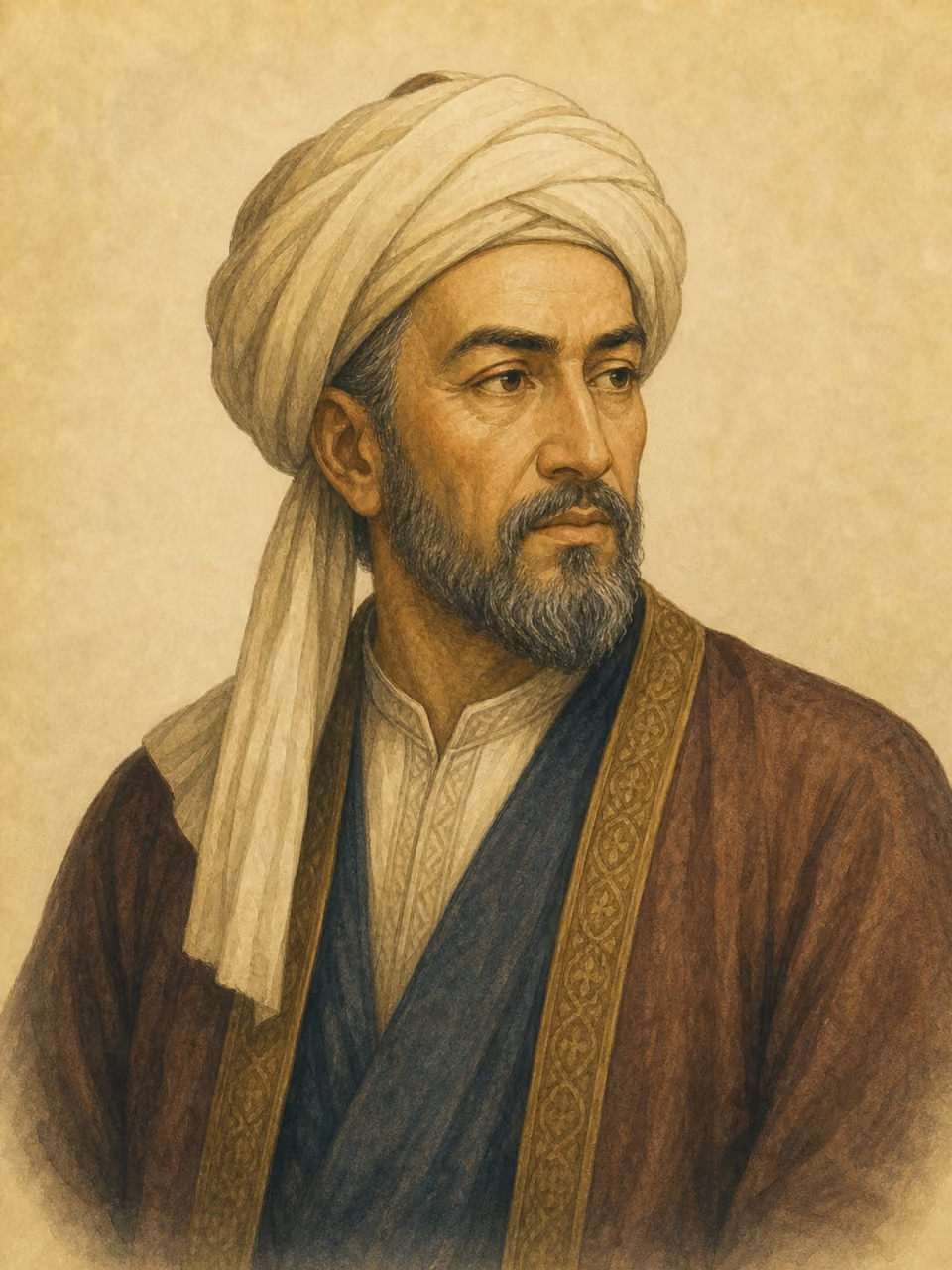
Ibn Khaldun

Portrait: AI-generated imagined likeness

Ibn Khaldun

historian · Philosopher · Writer · Politician

Years
1332–1406
Birthplace
Tunisia
Birth polity
Hafsid Tunis
Era
Medieval
Field
Philosophy
Occupations
historian · Philosopher · Writer · Politician

North African historian and thinker. In his ``Introduction to History,'' he analyzed the rise and fall of dynasties and social cohesion, and grasped history theoretically. He is a person who reads the academic wisdom of the Islamic world.

View in catalog

Historical context

Places

  • Tunis

    Birth

  • Cairo

    Work

Works & achievements

  • Muqaddimah

    1377

    Book

Events

  • Islamic scholarship in the Maghreb

    1332–1406

    Cultural event · Participant

Origins

Origins map
Birth countryAssociated countries
Birth country
Tunisia
Associated countries
Egypt

Map: Natural Earth (PD)

Biography

Early life

Born into a prominent family in Tunis, he moved through the political worlds of the Maghreb and Egypt, becoming involved in academics and government. The unstable environment of changing dynasties formed the background for this historical perspective.

Achievements

In his ``Historical Introduction,'' he explained the rise and fall of dynasties by focusing on nomads and urbanites, their sense of solidarity, and the corruption of power. He showed an attitude of going beyond mere chronicle and exploring the laws of society.

Character & anecdotes

Ibn Khaldun was a scholar as well as a politician and judge. His experience not only in theory but in actual court politics supported his calm historical analysis.

Historical Impact

When we study Ibn Khaldun, we understand that the historiography of the Islamic world included a high degree of social analysis. It is highly worth comparing as a historical theory that predates modern social science. It can also be used for comparison with surrounding areas from the same era.