
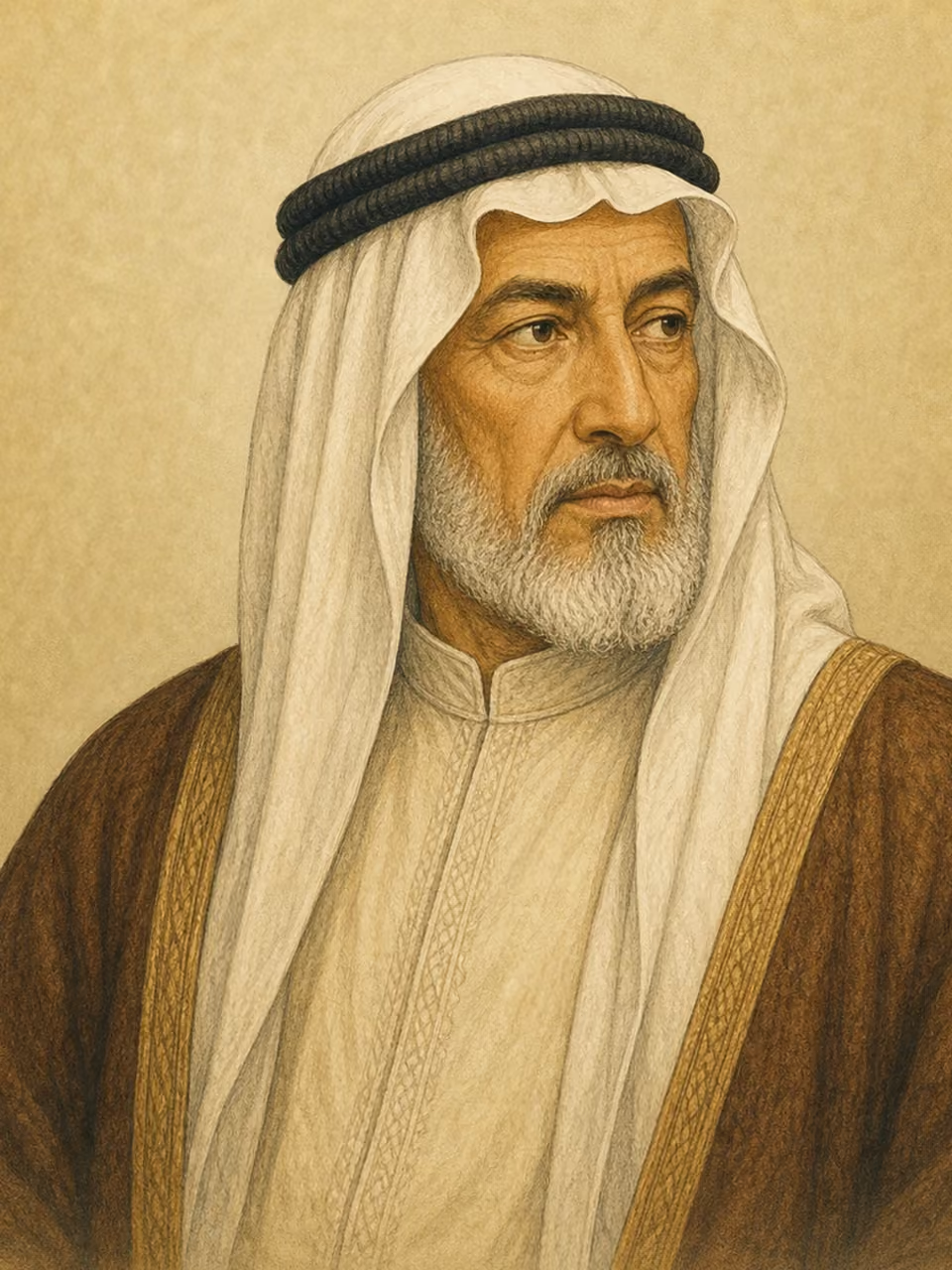
Ibn Saud

Portrait: AI-generated imagined likeness

Ibn Saud

Monarch · Politician · Military leader

Years
1876–1953
Birthplace
Saudi Arabia
Birth polity
Riyadh under the Second Saudi State
Era
Modern
Field
Politics
Occupations
Monarch · Politician · Military leader

Founder of the Kingdom of Saudi Arabia. After recapturing Riyadh, he proceeded with the unification of the Arabian Peninsula and established the Kingdom in 1932. He is a person who thinks about the formation of states in the modern Middle East.

View in catalog

Historical context

Places

  • Riyadh

    Work

Events

  • Capture of Riyadh

    1902

    Battle · Leader

  • Founding of Saudi Arabia

    1932

    Political event · Leader

Origins

Origins map
Birth country
Birth country
Saudi Arabia

Map: Natural Earth (PD)

Biography

Early life

Born into the Saud family of Najd, he experienced the downfall of his family and exile during his childhood. It grew in the Arabian Peninsula, where Ottoman influence, tribal societies, religious movements, and the interests of great powers intersected.

Achievements

He recaptured Riyadh in 1902 and gradually brought the surrounding area under his control. He unified a wide territory including the Hijaz and founded the Kingdom of Saudi Arabia.

Character & anecdotes

His unification efforts combined tribal alliances, religious orthodoxy, and military action. Later, as oil development progressed, the kingdom's international position changed significantly.

Historical Impact

Studying Ibn Saud reveals that the borders and monarchical states of the modern Middle East were formed from the overlap of nomadic societies, religious movements, great power diplomacy, and resource development. This is the starting point for understanding Saudi Arabia. This is also important when considering the premises of contemporary Gulf politics.