
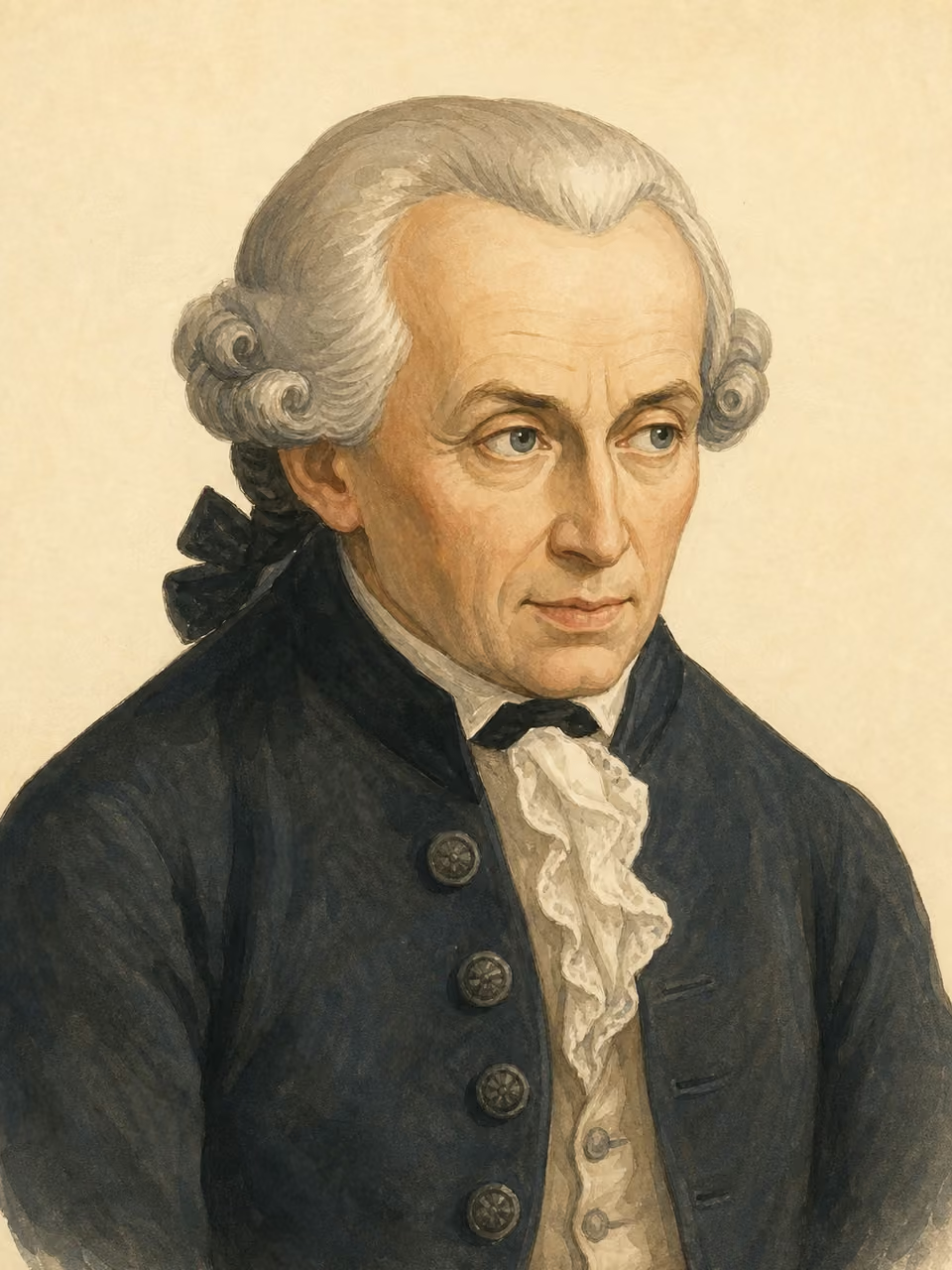
Immanuel Kant

Portrait: AI-generated imagined likeness

Immanuel Kant

Philosopher · Writer · Physicist · Mathematician · Naturalist

Years
1724–1804
Birthplace
Germany
Birth polity
Kingdom of Prussia
Era
Early modern
Field
Philosophy
Occupations
Philosopher · Writer · Physicist · Mathematician · Naturalist

Prussian philosopher. He questioned the limits and possibilities of reason, and had a great influence on modern thought with his ``Critique of Pure Reason'' and ``What is Enlightenment?'' He is a person who thinks about Enlightenment ideas.

View in catalog

Historical context

Places

  • Konigsberg

    Work

Works & achievements

  • Critique of Pure Reason

    1781

    Book

  • What Is Enlightenment?

    1784

    Essay

Origins

Origins map
Birth countryAssociated countries
Birth country
Germany
Associated countries
Russia

Map: Natural Earth (PD)

Biography

Early life

Born in Königsberg, East Prussia, he studied natural science and philosophy at university. In 18th century Europe, Enlightenment ideas, natural science, and criticism of religion were changing the intellectual world.

Achievements

In ``Critique of Pure Reason,'' he questioned the conditions of cognition and attempted to critically integrate empiricism and rational theory. In moral philosophy, he emphasized autonomy and duty, and in political theory, he proposed a concept of eternal peace.

Character & anecdotes

Kant lived most of his life in Königsberg and was known for his orderly lifestyle. It is impressive that he discusses global citizenship, reason, and peace from a narrow sphere of life.

Historical Impact

When you study Kant, you realize that the Enlightenment was not simply an optimism about progress, but a critical examination of reason itself. He created the foundations of modern philosophy, ethics, and international peace theory. It can also be used for comparison with surrounding areas from the same era.