
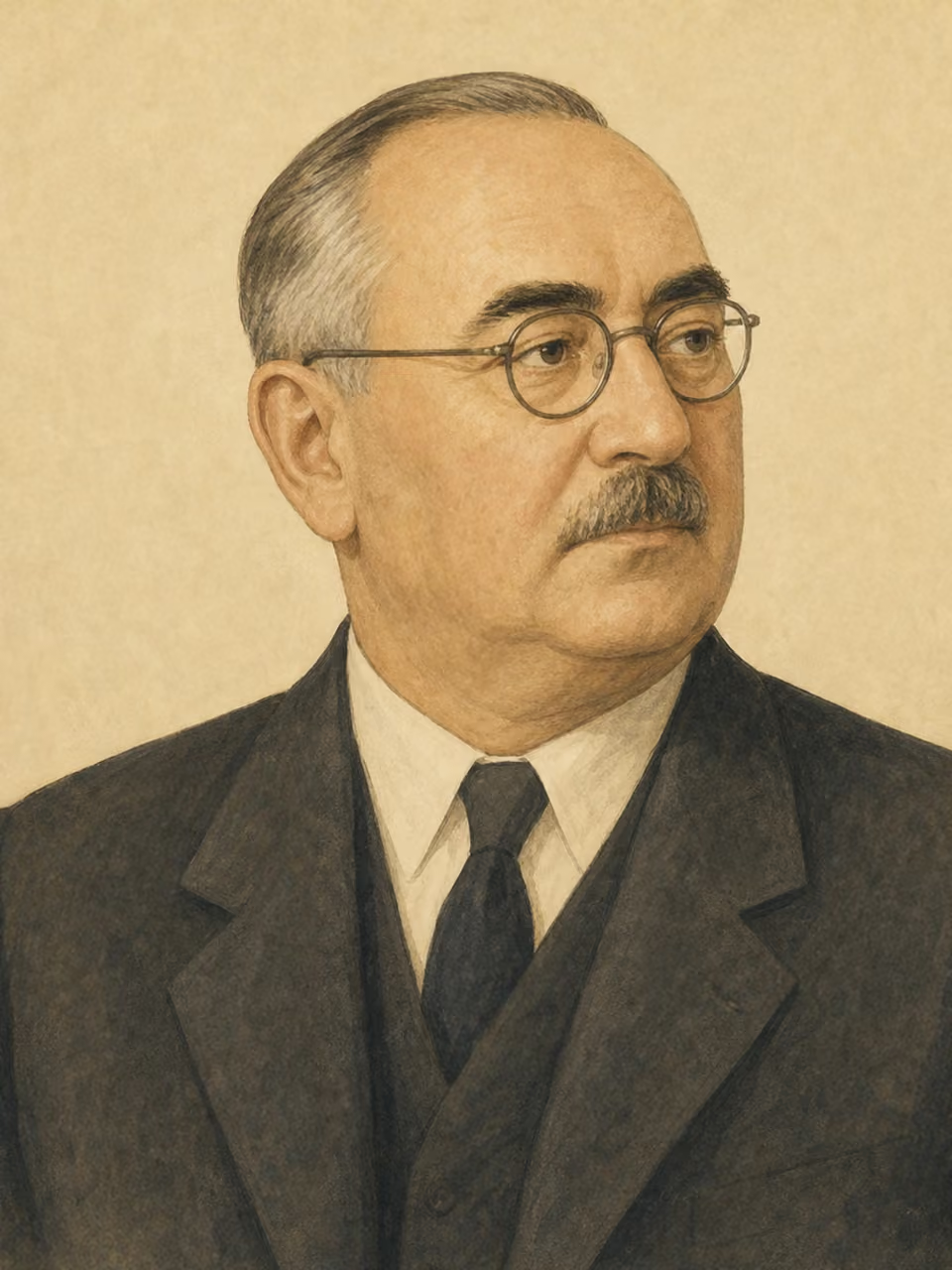
Imre Nagy

Portrait: AI-generated imagined likeness

Imre Nagy

Politician

Years
1896–1958
Birthplace
Hungary
Birth polity
Austria-Hungary
Era
Contemporary
Field
Politics
Occupations
Politician

A Hungarian politician who became a reformist leader during the 1956 Hungarian Uprising. They sought neutrality and a multiparty system within the Soviet-style socialist system. He is an important figure in understanding Eastern Europe during the Cold War.

View in catalog

Historical context

Places

  • Kaposvar

    Birth

  • Budapest

    Work

Events

  • Hungarian Revolution of 1956

    1956

    Revolution · Leader

Origins

Origins map
Birth country
Birth country
Hungary

Map: Natural Earth (PD)

Biography

Early life

Born in Kaposvár under the Austro-Hungarian Empire, he was influenced by World War I and the Russian Revolution. He became involved in the communist movement and became a politician in postwar Hungary's socialist regime.

Achievements

He became prime minister during the 1956 popular uprising and announced reforms, the withdrawal of Soviet troops, and withdrawal from the Warsaw Pact. However, his regime collapsed due to Soviet military intervention, and he was later executed.

Character & anecdotes

Imre Nagy was treated as a counter-revolutionary for a long time after his execution, but his honor was restored in 1989. The reburial ceremony became a symbol of Hungary's regime change.

Historical Impact

When we study Imre Nagy, we learn that a movement calling for reform and the restoration of sovereignty arose from within socialist states in Eastern Europe during the Cold War. It provides clues for thinking about the relationship between Soviet rule, national sovereignty, and democratization, and the meaning of 1956.