
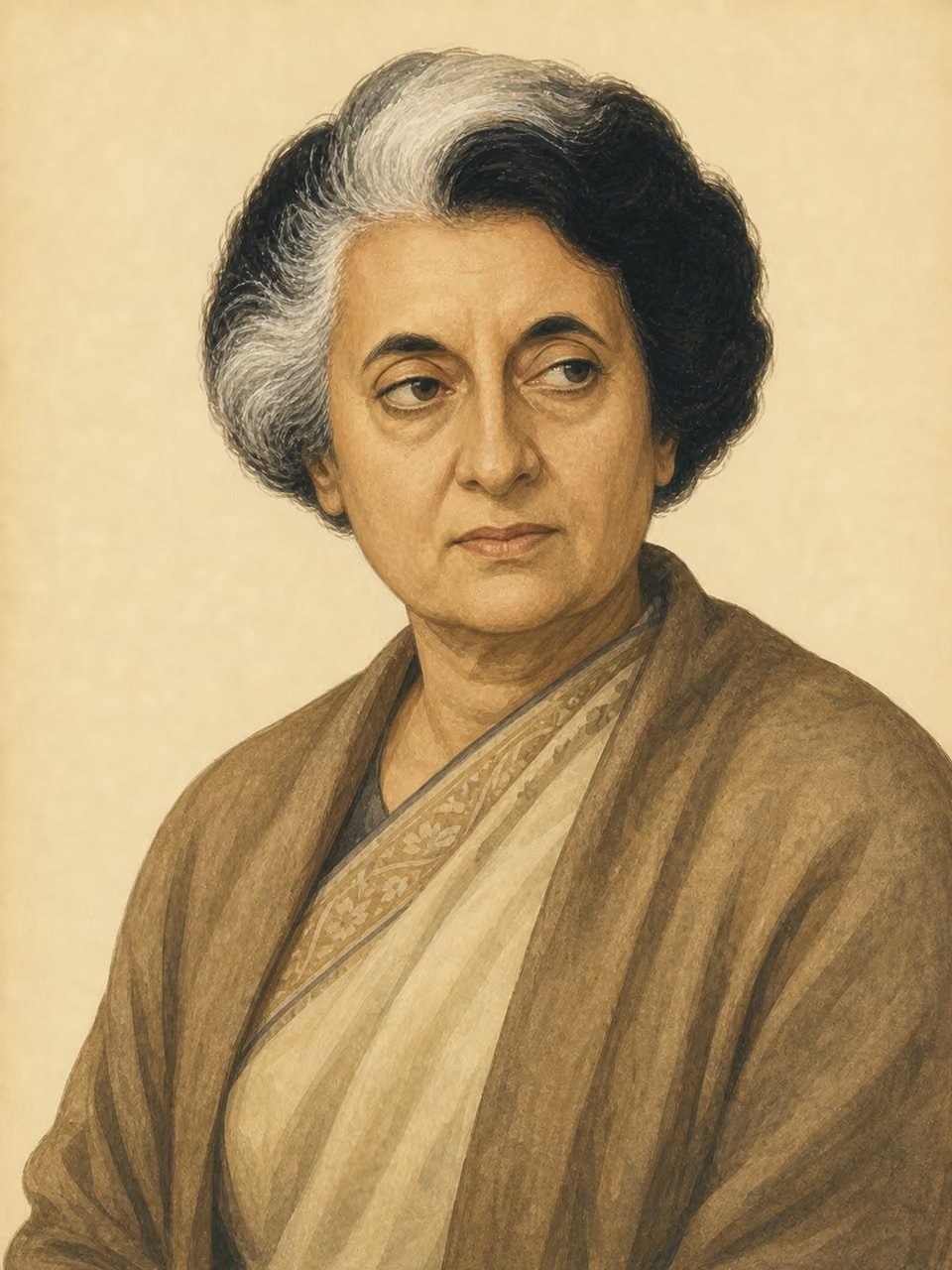
Indira Gandhi

Portrait: AI-generated imagined likeness

Indira Gandhi

Politician · Writer

Years
1917–1984
Birthplace
India
Birth polity
British Raj
Era
Contemporary
Field
Politics
Occupations
Politician · Writer

Indian politician. As prime minister, he increased agricultural production, supported Bangladesh's independence, and declared a state of emergency. He is a person who thinks about democracy and authoritarian politics in India after independence.

View in catalog

Historical context

Places

  • New Delhi

    Work

Events

  • Bangladesh Liberation War

    1971

    War · Supporter

  • The Emergency in India

    1975–1977

    Political event · Leader

Origins

Origins map
Birth country
Birth country
India

Map: Natural Earth (PD)

Biography

Early life

Born into the Nehru family, he grew up in the atmosphere of the independence movement. Her father, Jawaharlal Nehru, was the first prime minister of independent India, and she was deeply involved in the politics of the Nationalist Congress Party.

Achievements

As Prime Minister, he supported the Green Revolution and supported Bangladesh's independence during the Third Indo-Pakistan War in 1971. Meanwhile, in 1975, it declared a state of emergency and tightened control over the press and opposition.

Character & anecdotes

Indira Gandhi gained support as a ``strong leader,'' but that strength also had the risk of undermining democratic institutions. In 1984, he was assassinated by a Sikh police officer.

Historical Impact

When we study Indira Gandhi, we learn that post-independent India, while maintaining an electoral democracy, was shaken by poverty, war, religious conflict, and concentration of power. He is an important figure in modern South Asian history. We can also see the merits and demerits of strong national management.