
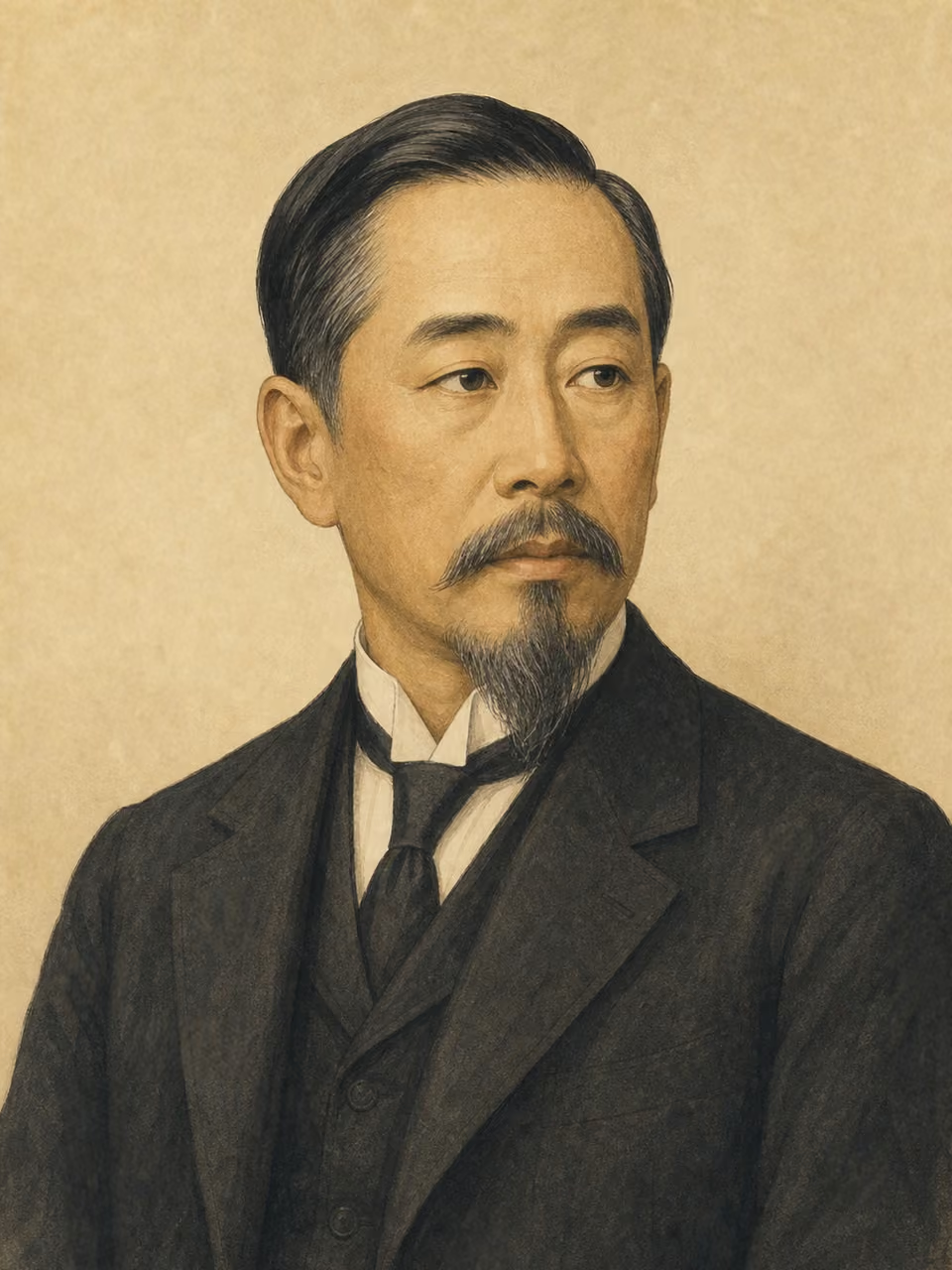
Ito Hirobumi

Portrait: AI-generated imagined likeness

Ito Hirobumi

Politician

Years
1841–1909
Birthplace
Japan
Birth polity
Tokugawa shogunate
Era
Modern
Field
Politics
Occupations
Politician

A politician from Meiji Japan who became the first Prime Minister. He was involved in the establishment of the Constitution of the Empire of Japan and the development of the modern national system. At the same time, he was deeply involved in imperialist policy as the Superintendent of Korea.

View in catalog

Historical context

Places

  • Hagi

    Birth

  • Tokyo

    Work

  • Residency-General of Korea

    Work

Works & achievements

  • Meiji Constitution

    1889

    Law

Events

  • Japan-Korea Protectorate Treaty

    1905

    Political event · Participant

Origins

Origins map
Birth countryAssociated countries
Birth country
Japan
Associated countries
South Korea · China

Map: Natural Earth (PD)

Biography

Early life

Born into a family of lower-class samurai in the Choshu domain, he was influenced by Shoshita Sonjuku and the Sonno-joi movement. At the end of the Edo period, he stowed away in England, and the experience of learning Western systems and technology influenced his later political ideas.

Achievements

He held important positions in the Meiji government, and was involved in the creation of the cabinet system, the formulation of the constitution, and the operation of the Privy Council. While referring to the Prussian-style constitutional system, he proceeded with the institutional design of an imperial system.

Character & anecdotes

Hirobumi Ito is praised as a system designer for constitutional government, but he was also the person who promoted South Korea's establishment as a protectorate as its commander-in-chief. We need to look at the achievements of modernization and the harms of imperialism at the same time.

Historical Impact

If you study Ito Hirobumi, you will understand that the formation of a modern nation in Meiji Japan involved the development of a constitution, parliament, and bureaucracy, as well as external expansion. Modern Japanese history can be considered from the perspective of domestic reform, control of East Asia, and empire formation.