
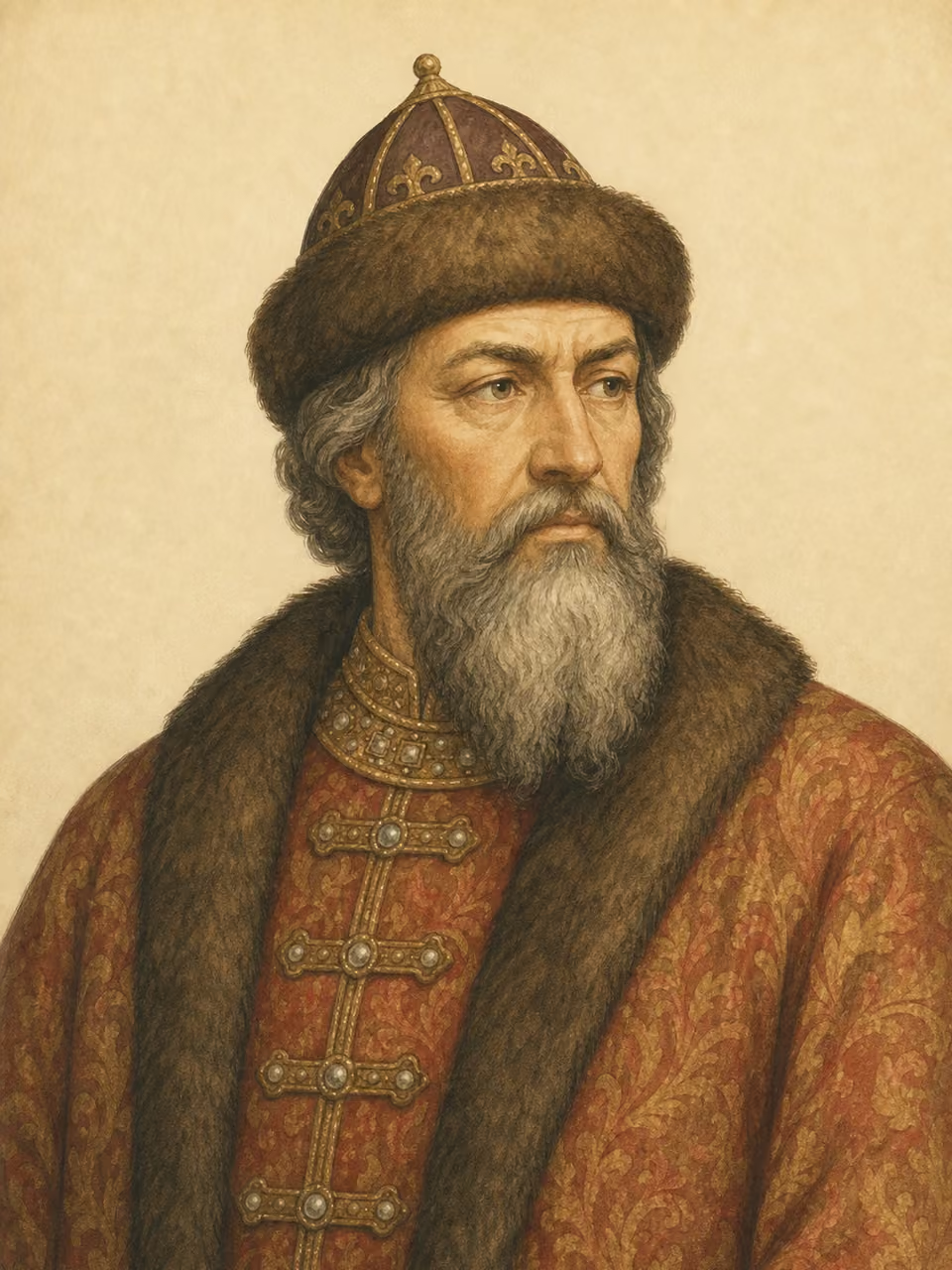
Ivan III of Moscow

Portrait: AI-generated imagined likeness

Ivan III of Moscow

Monarch · Politician

Years
1440–1505
Birthplace
Russia
Birth polity
Grand Duchy of Moscow
Era
Early modern
Field
Politics
Occupations
Monarch · Politician

Grand Duke of Moscow. He annexed Novgorod, gained independence from Tatar rule, and laid the foundations for the formation of the Russian state. He is a person who understands the transition from medieval to early modern Russia.

View in catalog

Historical context

Places

  • Moscow

    Birth

  • Novgorod

    1478

    Campaign

Events

  • Gathering of the Russian lands

    1462–1505

    Political event · Leader

  • Great Stand on the Ugra River

    1480

    Battle · Leader

Origins

Origins map
Birth country
Birth country
Russia

Map: Natural Earth (PD)

Biography

Early life

Born into a Moscow grand duchy family, he grew up in an environment surrounded by surrounding principalities and the Jochi Urus clan. The sense of succession in the Orthodox world after the fall of the Byzantine Empire also influenced politics.

Achievements

They took Novgorod under their control and expanded their territory around Moscow. The confrontation on the Ugra River in 1480 is said to be an event that symbolized independence from Mongol rule.

Character & anecdotes

Ivan III married the Byzantine princess Zoe and adopted imperial symbols such as the double-headed eagle. The idea of ​​seeing Moscow as the center of the Orthodox world became stronger.

Historical Impact

By studying Ivan III, we can understand the process by which Russia transformed from a principality to a regional state, combining Orthodoxy, autocracy, and external independence. It can also be used to compare the formation of early modern states. It can also be used for comparison with surrounding areas from the same era.