
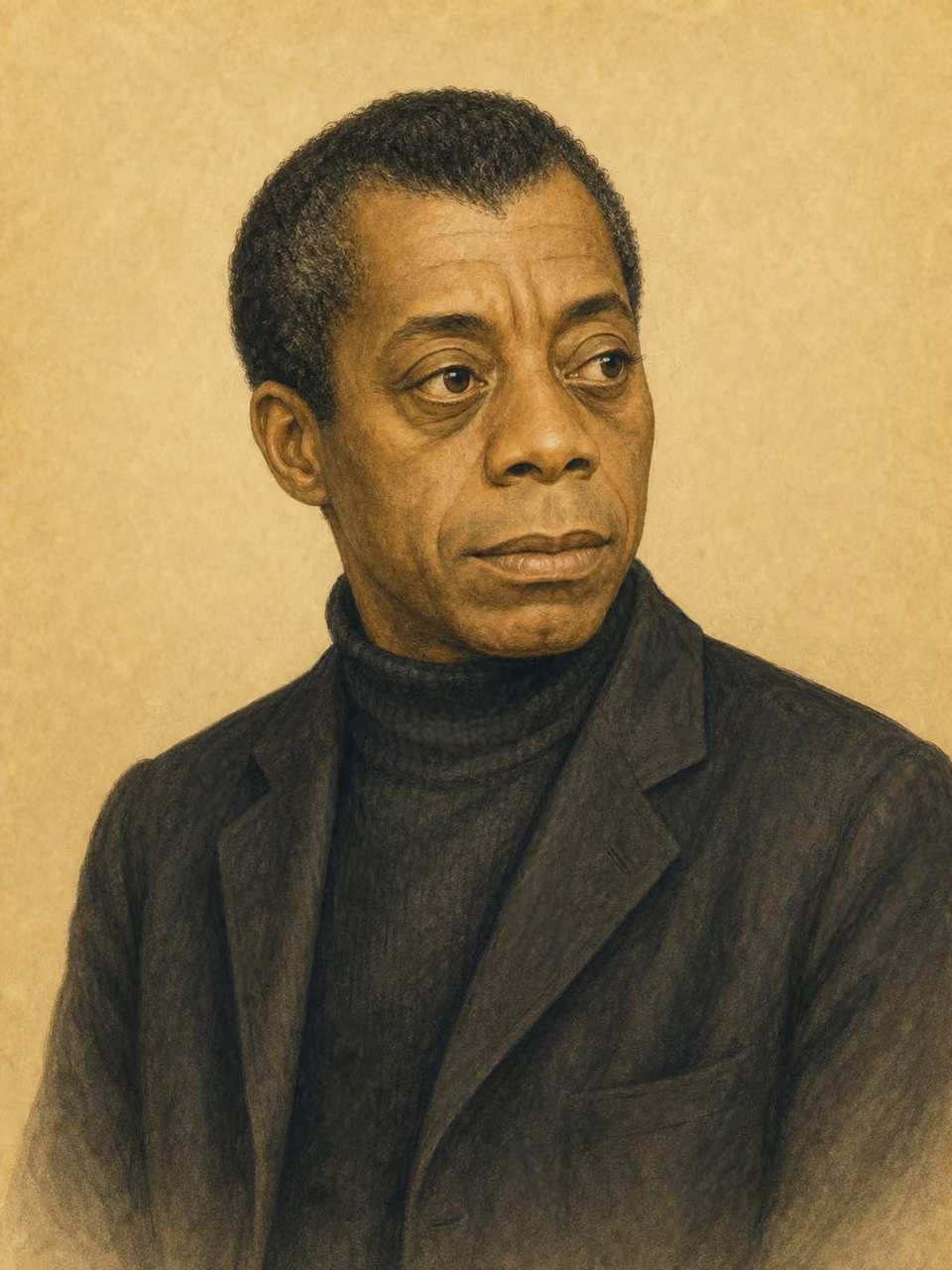
James Baldwin

Portrait: AI-generated imagined likeness

James Baldwin

Writer · Novelist

Years
1924–1987
Birthplace
United States
Birth polity
United States
Era
Contemporary
Field
Literature
Occupations
Writer · Novelist

After moving to Paris, James Baldwin wrote about the United States with a sharpened sense of distance, turning essays and novels into scenes of confrontation with race, religion, and national innocence. He carried that same pressure into debates and lectures, making literary prose function as a form of public argument.

View in catalog

Historical context

Places

  • Harlem

    Birth

  • Saint-Paul-de-Vence

    Residence

Works & achievements

  • Go Tell It on the Mountain

    1953

    Book

  • The Fire Next Time

    1963

    Essay

Origins

Origins map
Birth countryAssociated countries
Birth country
United States
Associated countries
France

Map: Natural Earth (PD)

Biography

Early life

James Baldwin was born in Harlem in 1924 and grew up amid poverty, church life, and the pressures of segregation in the United States. His youthful experience as a preacher left a lasting mark on the cadence, urgency, and moral intensity of his prose.

Achievements

In works such as Go Tell It on the Mountain, Giovanni's Room, Notes of a Native Son, and The Fire Next Time, Baldwin exposed the structures of race and self-deception within American life. He was especially important because he wrote across essay and fiction without separating Black identity, queerness, exile, and national criticism into isolated themes.

Character & anecdotes

His move to Paris in the late 1940s gave him distance from the United States and sharpened his analysis of it. During the civil rights era he also became a major presence in debate and public speaking, making him not only a literary figure but one of the era's most consequential public intellectuals.

Historical Impact

Baldwin changed American letters by refusing to separate Black identity, queerness, exile, and democratic criticism into tidy compartments. His continuing return in the twenty-first century reflects more than admiration: his work still provides a language for dismantling national myth and for thinking race and sexuality together.

Notes

Giovanni's Room remains one of the major twentieth-century novels of sexuality and exile.