
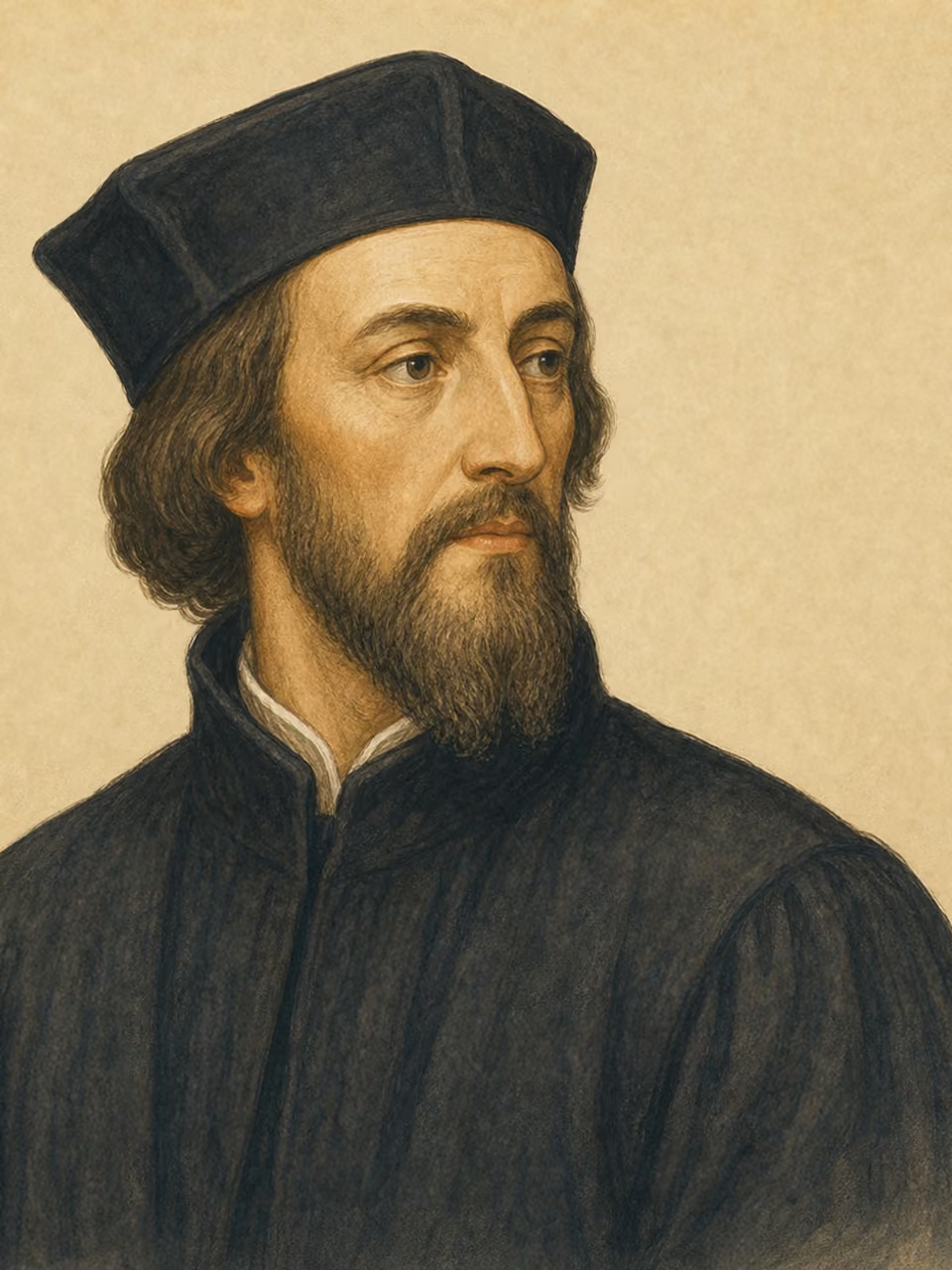
Jan Hus

Portrait: AI-generated imagined likeness

Jan Hus

theologian · Religious leader · Writer · Teacher

Years
1370–1415
Birthplace
Czechia
Birth polity
Kingdom of Bohemia
Era
Medieval
Field
Religion
Occupations
theologian · Religious leader · Writer · Teacher

Bohemian theologian and religious reformer. He criticized the church and was found guilty of heresy at the Council of Constance and executed. He is a figure who represents the reform movement at the end of the Middle Ages, which preceded the Religious Reformation.

View in catalog

Historical context

Places

  • Prague

    Work

Works & achievements

  • De Ecclesia

    1413

    Book

Events

  • Council of Constance

    1415

    Trial · Subject

Origins

Origins map
Birth country
Birth country
Czechia

Map: Natural Earth (PD)

Biography

Early life

Born in Bohemia, he studied at the University of Prague and became a teacher and preacher. Influenced by the ideas of Wycliffe, he became more critical of the wealth of the church and the corruption of the clergy.

Achievements

Through his sermons in Czech, he gained wide support and reconsidered the state of faith and the church system. He attended the Council of Constance, but refused to recant and was burned at the stake in 1415.

Character & anecdotes

His execution, despite having a safe passage, shocked his supporters. After his death, the Hussite movement spread in Bohemia, leading to armed conflict.

Historical Impact

Huss's ideas and martyrdom are important prehistory of the Reformation before Luther. When you study him, you realize that the Reformation did not suddenly begin, but was born from an accumulation of universities, preaching, ethnic consciousness, and criticism of the church.