
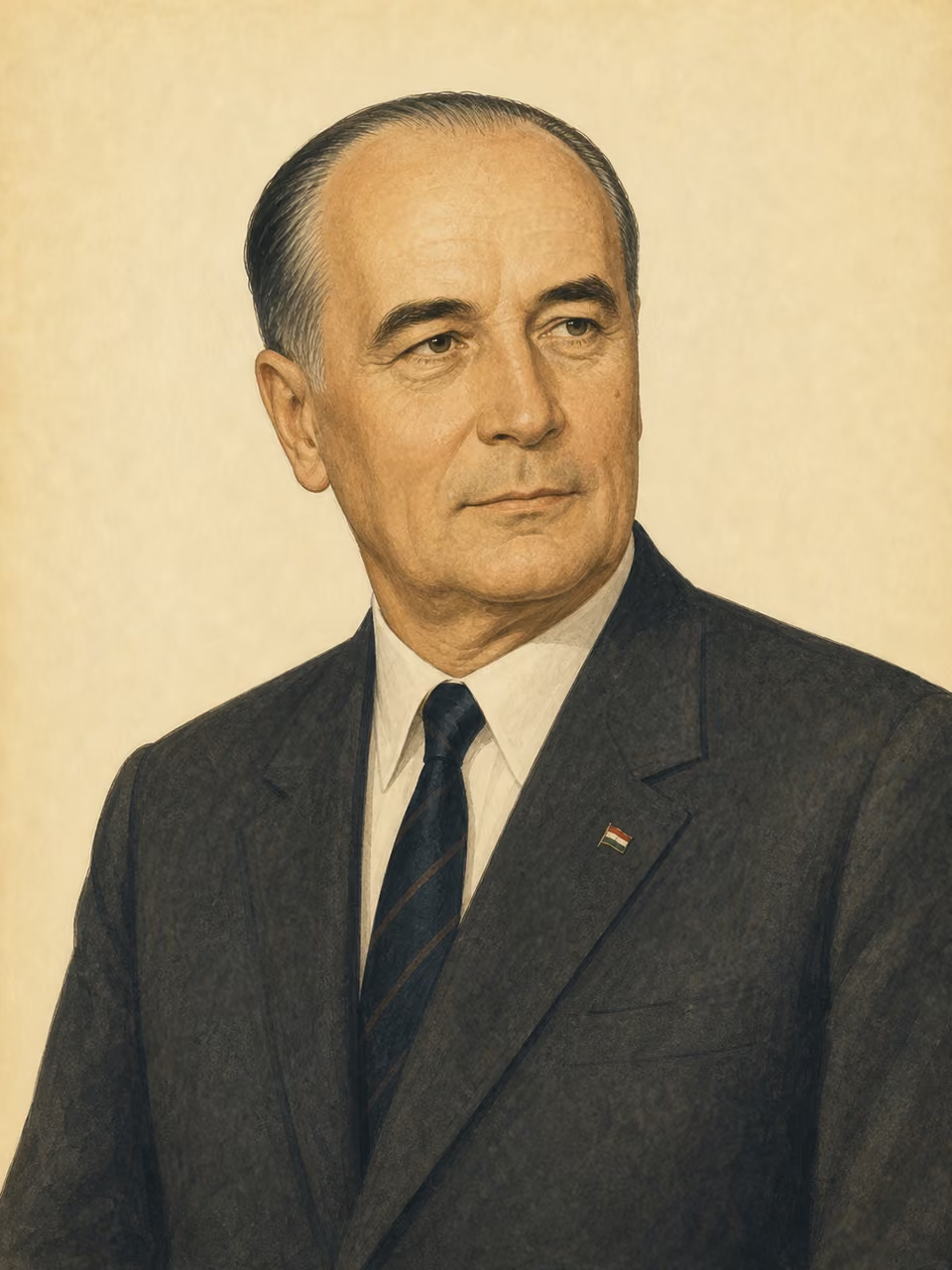
János Kádár

Portrait: AI-generated imagined likeness

János Kádár

Politician

Years
1912–1989
Birthplace
Hungary
Birth polity
Austria-Hungary
Era
Contemporary
Field
Politics
Occupations
Politician

Hungarian politician. He came to power after the Hungarian Uprising in 1956 and established a relatively flexible socialist system within the Soviet Union. He is a person who thinks about Eastern Europe during the Cold War.

View in catalog

Historical context

Places

  • Budapest

    Work

Events

  • Hungarian Revolution of 1956

    1956

    Revolution · Opponent

  • Kádár regime

    1956–1988

    Political event · Leader

Origins

Origins map
Birth countryAssociated countries
Birth country
Hungary
Associated countries
Croatia

Map: Natural Earth (PD)

Biography

Early life

Born in Fiume, then part of the Austro-Hungarian Empire, he participated in the labor movement and Communist Party activities. After World War II, Hungary became socialist under the influence of the Soviet Union.

Achievements

After the 1956 uprising, he seized power with the support of the Soviet Union. Although it initially engaged in repression, it later improved living standards and carried out limited economic reforms, creating a system known as "goulash communism."

Character & anecdotes

Kádár is remembered as a suppressor of upheaval, but also as a leader who provided a relatively stable daily life in Eastern Europe. That assessment remains complicated in Hungarian society.

Historical Impact

Studying Kádár reveals that Eastern European socialism during the Cold War was not monolithic, but oscillated between subordination to the Soviet Union, domestic control, life improvement, and limited reform. He is an important figure in modern Eastern European history. There is also a possible relationship between stability of control and restrictions on freedom.