
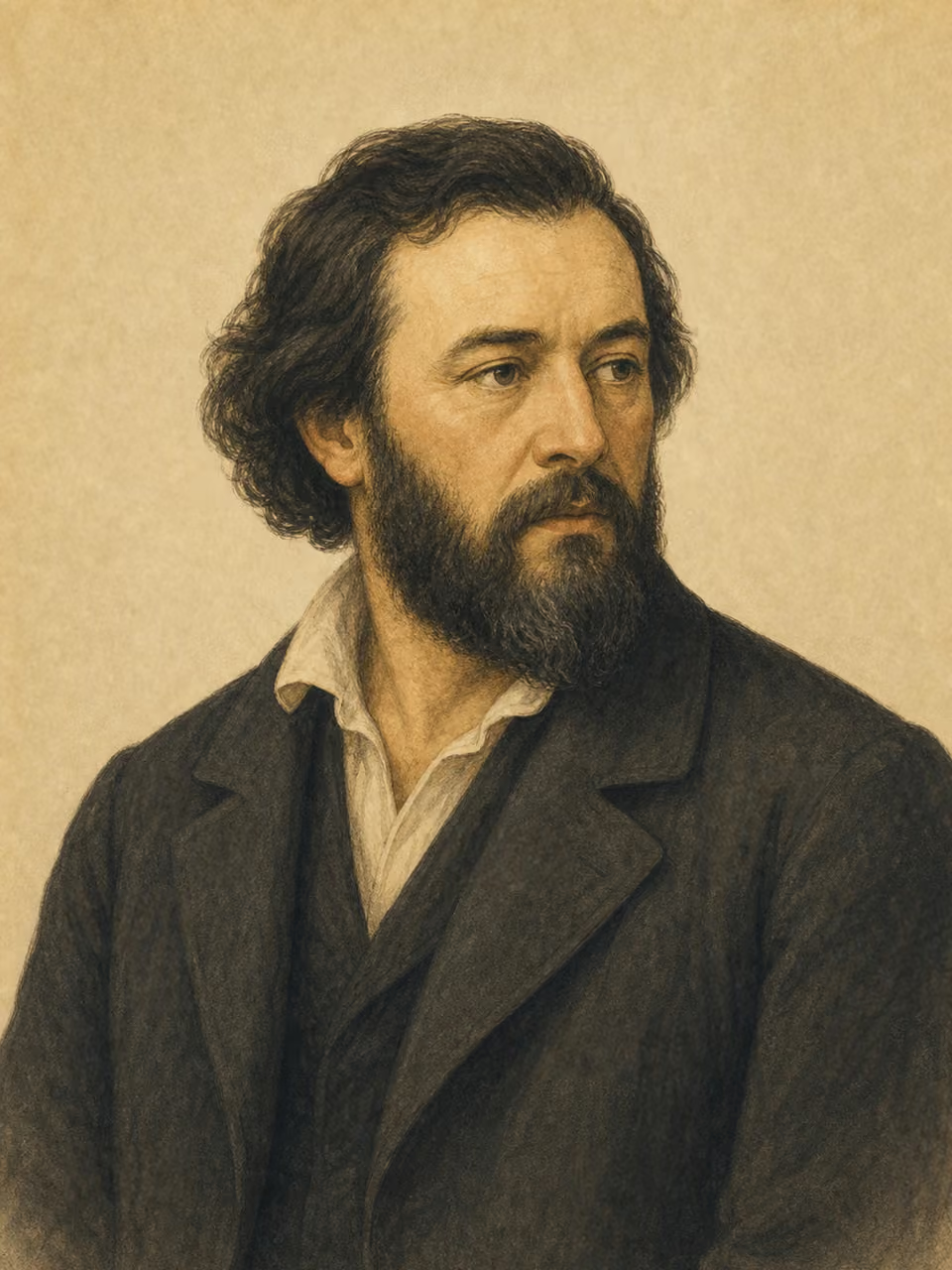
Jean-Francois Millet

Portrait: AI-generated imagined likeness

Jean-Francois Millet

Painter

Years
1814–1875
Birthplace
France
Birth polity
French Empire
Era
Modern
Field
Art
Occupations
Painter

A 19th century French painter who depicted the labor and prayers of peasants in quiet paintings. He is known as a member of the Barbizon school, and is famous for his works ``Gleanings'' and ``Banshō.'' This is an entry point to thinking about modern society and rural representations.

View in catalog

Historical context

Places

  • Gruchy

    Birth

  • Barbizon

    Work

Works & achievements

  • The Gleaners

    1857

    Painting

  • The Angelus

    1857–1859

    Painting

Events

  • Barbizon school

    Movement · Participant

Origins

Origins map
Birth country
Birth country
France

Map: Natural Earth (PD)

Biography

Early life

Born into a farming family in Normandy, he studied painting in Paris. While active in the urban art market, his experiences in rural areas led him to focus on working people as his subject matter.

Achievements

Moving to Barbizon, he painted the labor, rest, and prayer of peasants with the weight of a large historical painting. ``The Gleaners'' is a work that proudly depicts a poor peasant woman, and was received with social significance during the same period.

Character & anecdotes

Millet's paintings were later loved for their pious and idyllic images, but at the same time they were also associated with poverty and class issues. This is an example of a work whose meaning changes depending on the era in which it is viewed.

Historical Impact

If you study Millet, you will see that 19th century art began to depict not only royalty and myths, but also ordinary workers and farmers as historical subjects. You can also understand how people's views on rural areas were shaped during the era of industrialization.