
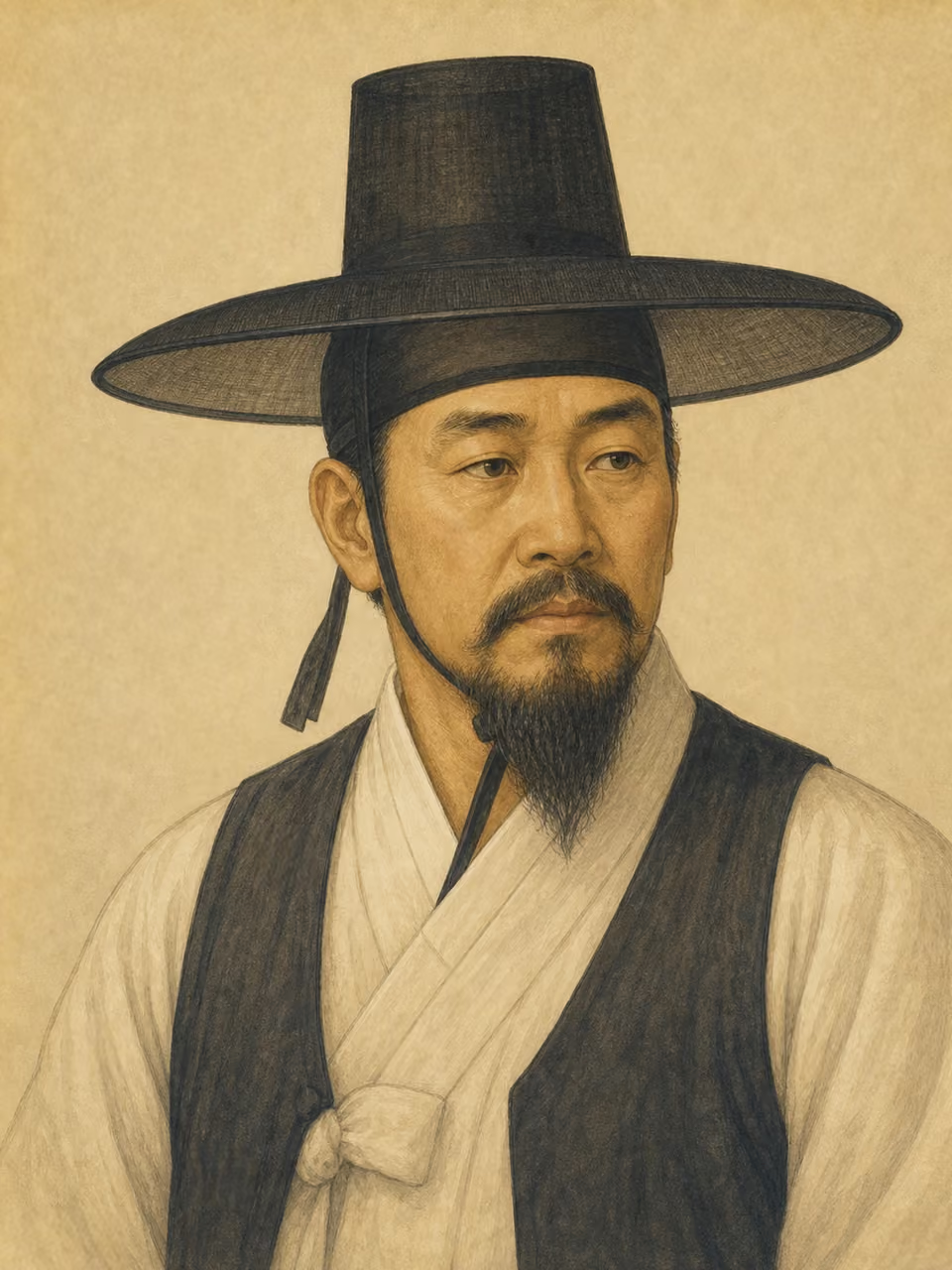
Jeon Bong-jun

Portrait: AI-generated imagined likeness

Jeon Bong-jun

revolutionary · Political activist

Years
1855–1895
Birthplace
South Korea
Birth polity
Joseon
Era
Modern
Field
Social reform
Occupations
revolutionary · Political activist

He was a leader of the Donghak peasant movement in Korea at the end of the 19th century, and was the person who expanded the Jeolla province's peasant revolt into a nationwide political crisis. This is important when considering the social contradictions and intervention by great powers at the end of the Joseon Dynasty.

View in catalog

Historical context

Places

  • Jeolla Province

    Birth

  • Gobu

    Campaign

Events

  • Donghak Peasant Revolution

    1894–1895

    Revolution · Leader

Origins

Origins map
Birth country
Birth country
South Korea

Map: Natural Earth (PD)

Biography

Early life

Born in a rural society in Jeolla Province, he worked in an environment where Donghak ideology and peasant dissatisfaction were widespread. The background to the peasant uprising was opposition to the expropriation of local officials, social status order, and tax burden.

Achievements

In 1894, he led a rebellion that began in Kofu, calling for the removal of corrupt bureaucrats and reform of people's livelihoods. The movement involved the Korean government, the Qing Dynasty, and Japan, leading to an international crisis that led to the Sino-Japanese War.

Character & anecdotes

Jeon Huk-jun was captured and executed, but he was later reevaluated as a symbol of the people's movement. This is an example of how a defeated rebellion continued to have meaning in modern Korea's reform demands and national memory.

Historical Impact

When we study Jeonhojun, we understand that the changes in the late Joseon Dynasty were driven not only by court diplomacy, but also by dissatisfaction in local society, religious movements, and the politicization of peasants. You can understand the connection between the Donghak peasant movement and the Sino-Japanese War, and you can also see the chain of modernity in East Asia.