
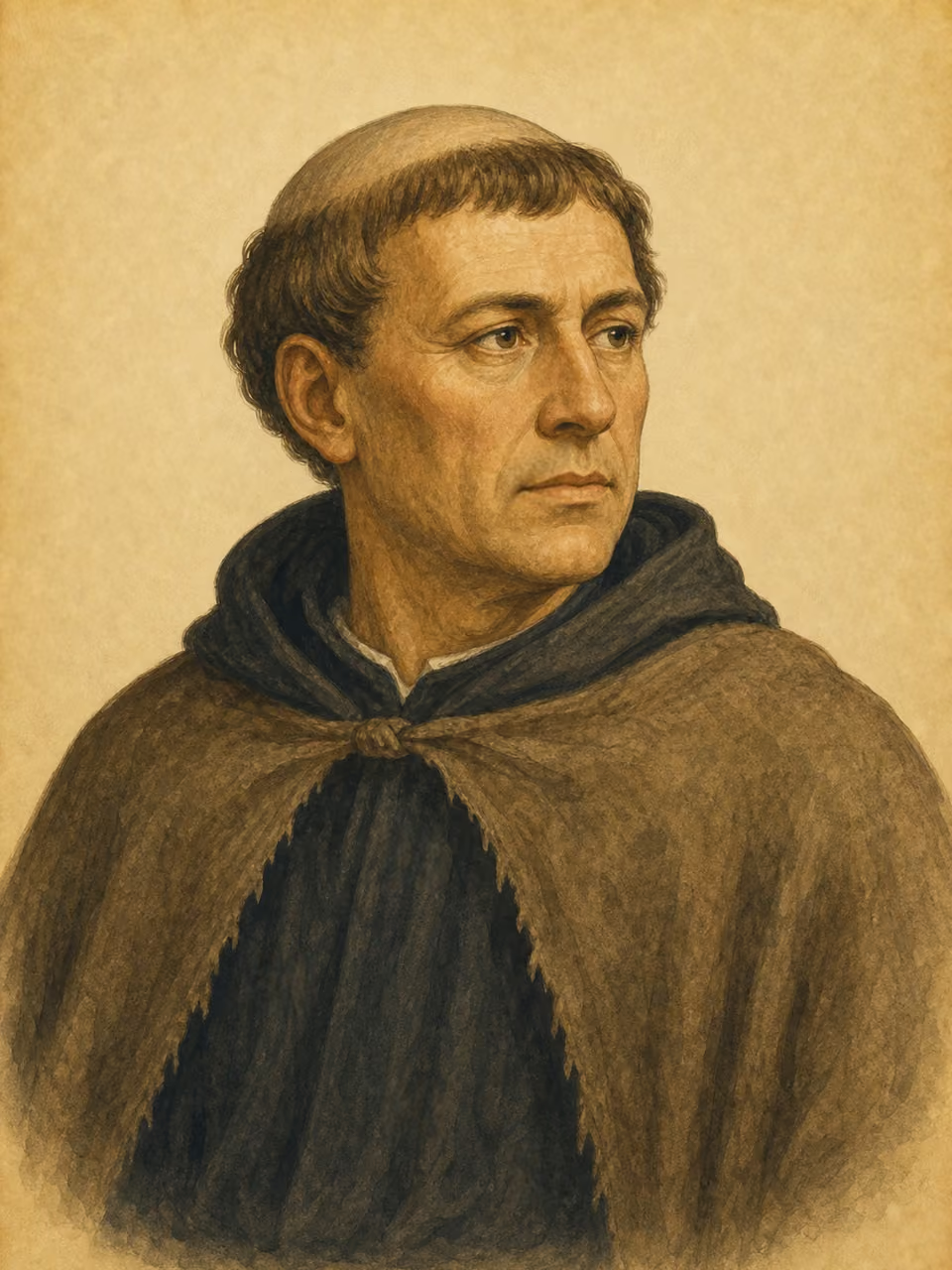
John Ball

Portrait: AI-generated imagined likeness

John Ball

Religious leader · Political activist · Politician

Years
c. 1338–1381
Birthplace
United Kingdom
Birth polity
Kingdom of England
Era
Medieval
Field
Social reform
Occupations
Religious leader · Political activist · Politician

English clergyman and popular activist. It became associated with the appeal for equality during the Wat Tyler Rebellion. He is a person who reads about peasant revolts and social unrest at the end of the Middle Ages.

View in catalog

Historical context

Places

  • England

    Work

  • Smithfield

    Death

Events

  • Peasants' Revolt

    1381

    Revolution · Supporter

Origins

Origins map
Birth country
Birth country
United Kingdom

Map: Natural Earth (PD)

Biography

Early life

Although he was active as a clergyman in England, he became increasingly critical of the church and the monarchy, and was even imprisoned. Labor shortages and stricter taxation after the Black Death increased social dissatisfaction.

Achievements

During the Peasant Revolt of 1381, he was remembered as a preacher who criticized class differences and advocated communal justice. Although the rebellion was suppressed, it sharply demonstrated the contradictions of medieval society.

Character & anecdotes

The words "Who were the nobles when Adam plowed and Eve spun" are associated with John Ball. It was passed down as an expression symbolizing the idea of ​​equality in the Middle Ages.

Historical Impact

When we study John Ball, we learn that in late medieval Europe, farmers and urbanites challenged the class system. It also serves as an entry point for thinking about the connections between the Black Death, labor regulations, and the financial burden of the Hundred Years' War. It can also be used for comparison with surrounding areas from the same era.