
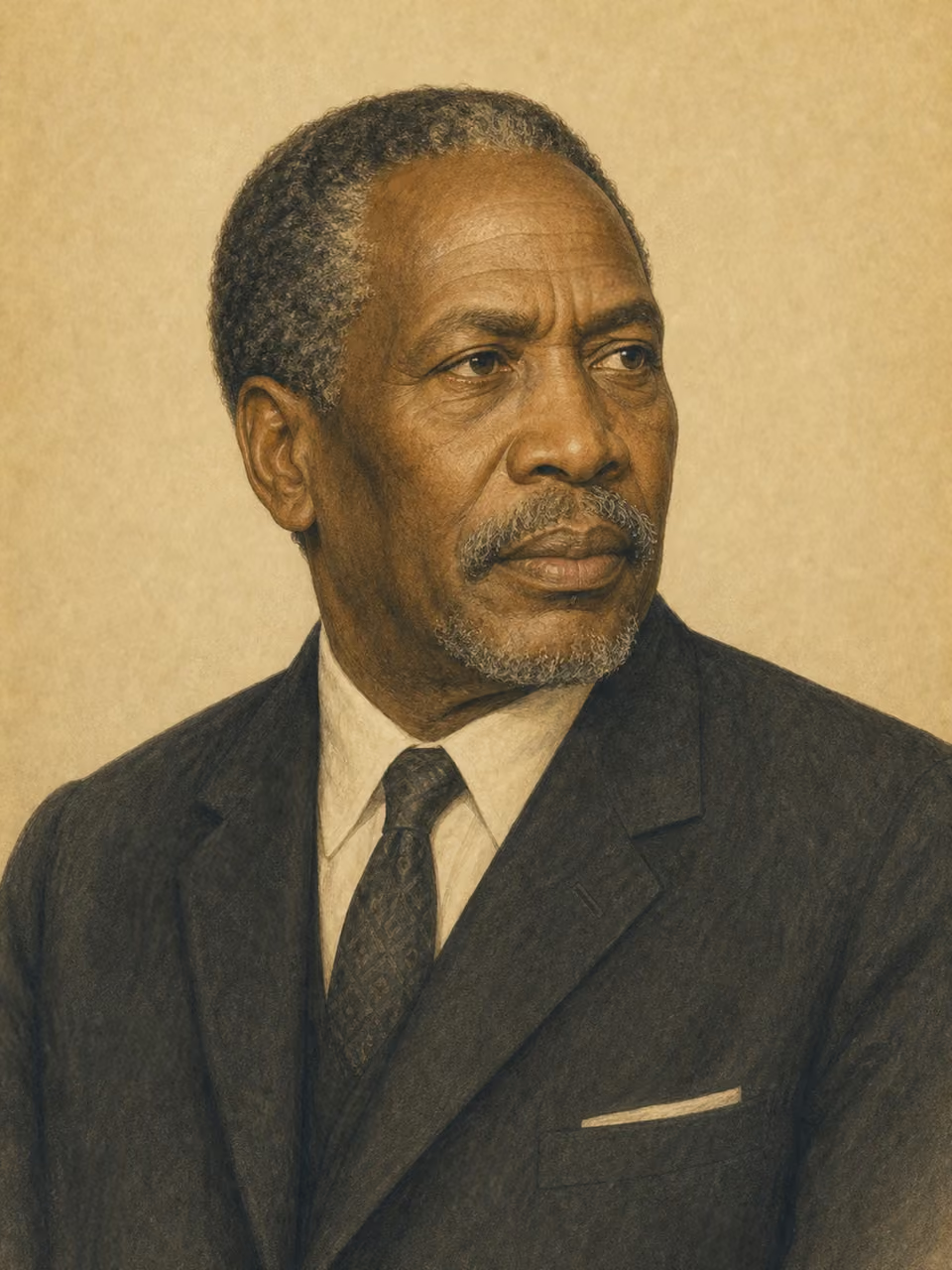
Jomo Kenyatta

Portrait: AI-generated imagined likeness

Jomo Kenyatta

Politician · Journalist · Writer

Years
c. 1893–1978
Birthplace
Kenya
Birth polity
British East Africa
Era
Modern
Field
Politics
Occupations
Politician · Journalist · Writer

He was a leader of the Kenyan independence movement and became the first president after independence. It embodied the process of transition from a national movement under colonial rule to the construction of a new nation. It is important for understanding modern African history.

View in catalog

Historical context

Places

  • Gatundu

    Birth

  • Nairobi

    Work

Events

  • Kenyan independence

    1963

    Political event · Leader

Origins

Origins map
Birth countryAssociated countries
Birth country
Kenya
Associated countries
United Kingdom

Map: Natural Earth (PD)

Biography

Early life

Born into a Kikuyu community, he experienced the world of education and urban labor under colonial rule. He later moved to London and advocated internationally for African rights and land issues.

Achievements

He became the leader of the Kenya African National Union, which was persecuted by the colonial government. After independence, national integration and economic development progressed, but this was also accompanied by the concentration of power and suppression of opposition.

Character & anecdotes

Kenyatta was imprisoned for suspected links to the Mau Mau group, but was later hailed as a symbol of an independent nation. The image of a leader in the anti-colonial movement has both resistance and governance.

Historical Impact

Studying Kenyatta reveals that Africa's independence was not just a declaration, but a difficult process involving land issues, ethnic adjustment, relations with former colonial powers, and the institutionalization of power. You can see concretely the challenges of independence and new nation-building in the Third World.