
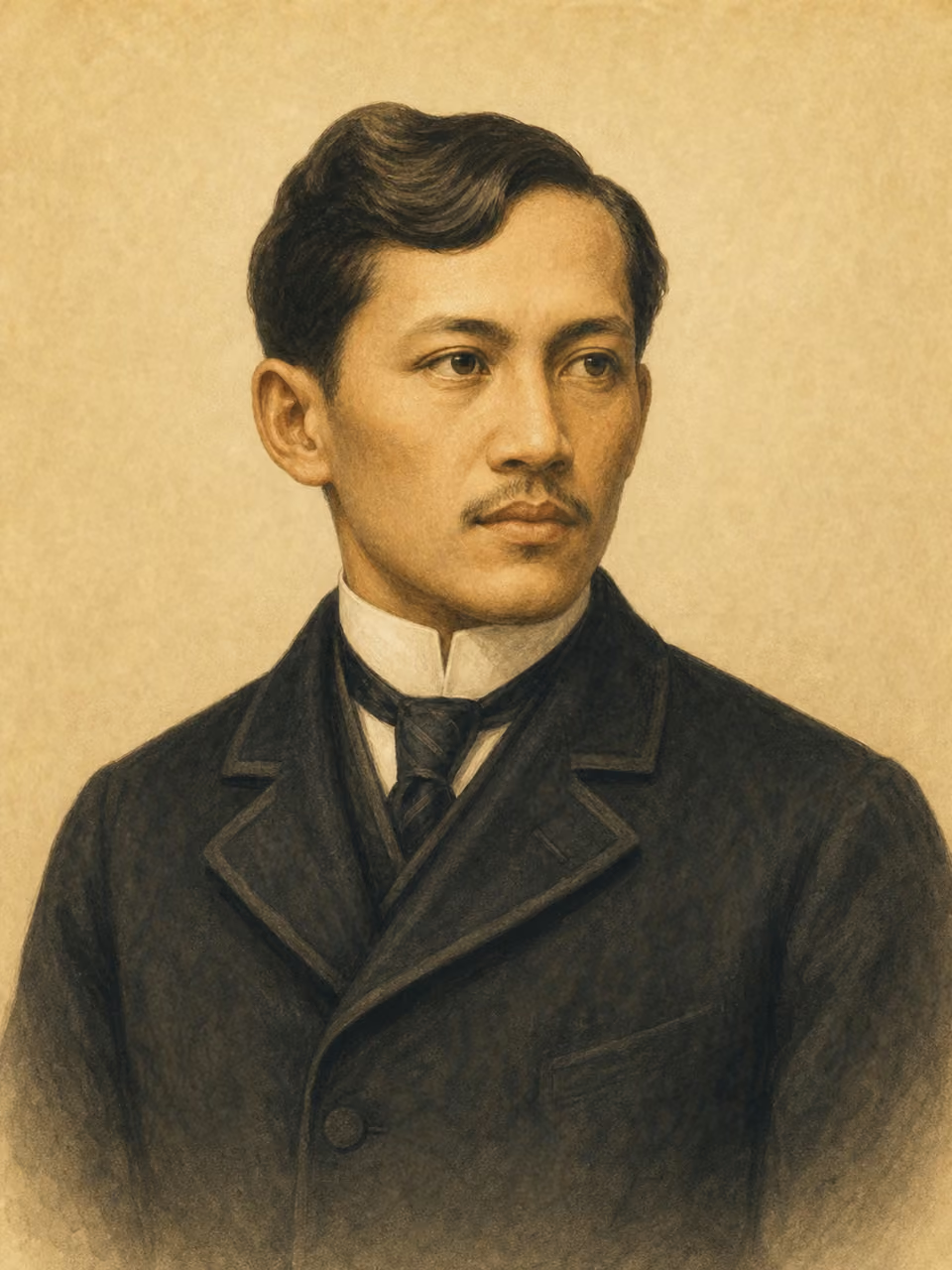
Jose Rizal

Portrait: AI-generated imagined likeness

Jose Rizal

Writer · Physician · Political activist

Years
1861–1896
Birthplace
Philippines
Birth polity
Spanish East Indies
Era
Modern
Field
Social reform
Occupations
Writer · Physician · Political activist

Training in medicine and languages in Manila and Europe gave Rizal the perspective from which he wrote Noli Me Tangere and El Filibusterismo, novels that exposed corruption, clerical abuse, and humiliation under Spanish colonial rule. His reformist organizing in La Liga Filipina and his execution in 1896 turned literary critique into a political event with national consequences.

View in catalog

Historical context

Places

  • Calamba, Laguna

    Birth

  • Dapitan

    Exile

Works & achievements

  • Noli Me Tangere

    1887

    Book

  • El filibusterismo

    1891

    Book

Events

  • Philippine Revolution

    1896–1898

    Revolution · Influenced by

Origins

Origins map
Birth country
Birth country
Philippines

Map: Natural Earth (PD)

Biography

Early life

Jose Rizal was born in 1861 in Calamba on Luzon and received a strong education in a relatively prosperous family setting. Gifted in languages, he studied in Manila and later in Europe, where training in medicine and exposure to wider intellectual currents sharpened his critique of colonial rule.

Achievements

Through Noli Me Tangere and El Filibusterismo, Rizal exposed corruption, hypocrisy, and inequality within the Spanish colonial order. His reformist politics also took organizational form in La Liga Filipina and in essays that argued for education, legal rights, and civic improvement rather than passive submission.

Character & anecdotes

Rizal's work as a physician, including efforts to treat his mother's eyesight, reminds us that he was not only a literary icon but also a practicing professional. Although he did not lead an armed uprising, his execution in 1896 transformed him into a martyr of the nationalist movement.

Historical Impact

Rizal remains central because he showed how fiction, essays, and professional authority could help produce national consciousness before independence was won on the battlefield. Philippine historical memory honors him as a martyr, but his deeper significance lies in the way he translated colonial grievance into public argument, reform language, and cultural self-recognition.