
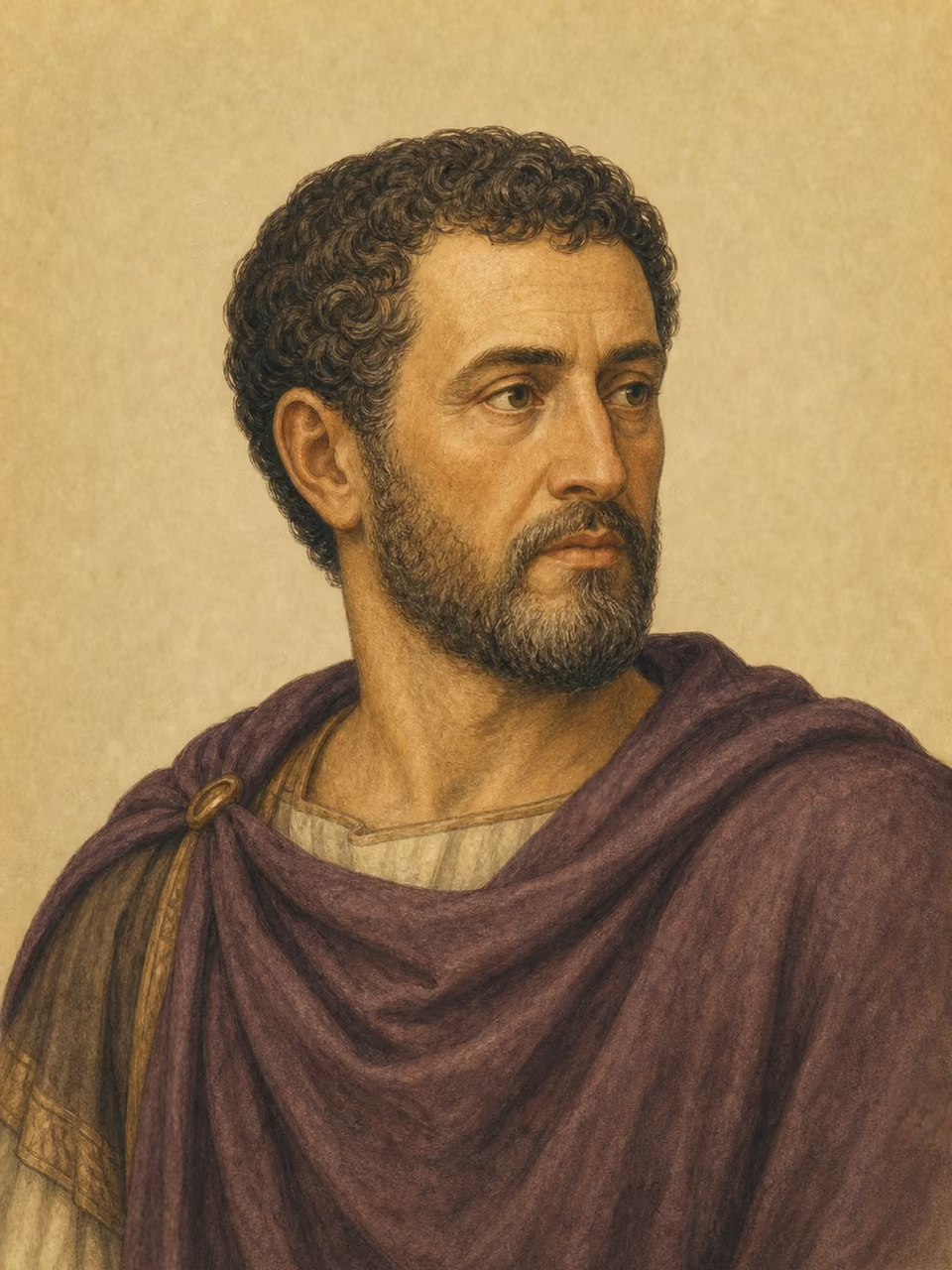
Julian

Portrait: AI-generated imagined likeness

Julian

Emperor · Philosopher · Writer

Years
331–363
Birthplace
Italy
Birth polity
Roman Empire
Era
Ancient
Field
Politics
Occupations
Emperor · Philosopher · Writer

A fourth-century Roman emperor who attempted to restore traditional polytheism in an empire that was becoming increasingly Christian. Later generations called him Julian the Apostate. This is important when considering religious policy at the end of ancient times.

View in catalog

Historical context

Places

  • Constantinople

    Birth

  • Athens

    Education

  • Carrhae

    Campaign

Works & achievements

  • Against the Galileans

    Essay

Events

  • Julian's Persian campaign

    363

    War · Commander

Origins

Origins map
Birth countryAssociated countries
Birth country
Italy
Associated countries
Türkiye · Greece

Map: Natural Earth (PD)

Biography

Early life

Born in Constantinople as a member of the Constantine family, he lost many members of his family in political strife. He was familiar with Greek classical education and philosophy, and achieved results as a military commander in Gaul.

Achievements

When he became emperor, he reconsidered the privileges given to the Christian church and sought to rebuild traditional rituals and the religion of urban communities. In 363, he led an expedition against Sassanid Persia, but died from battle wounds.

Character & anecdotes

Julian not only rejected Christianity, but also called for moral organization on the pagan side. We can see a phenomenon unique to late antiquity, where competing religions became aware of each other's systems.

Historical Impact

When we study Julian, we understand that the Christianization of the Roman Empire was not a simple progression in one direction, but a process in which political power, education, urban rituals, and philosophy were contested. You will be able to concretely understand the religious transition from ancient times to the Middle Ages.